


Your Brain Feels Emotions. But Can It Read Them?

You're Feeling Something. But What?
Imagine standing in the rain without an umbrella. Water is hitting your face, soaking through your jacket, pooling in your shoes. You know you're wet. That's obvious.
Now imagine a different version of the same scenario. The rain is falling. Your skin is wet. Your clothes are heavy. But somewhere between the sensation of water and the recognition "I'm wet," the signal gets lost. You feel the physical discomfort. You just can't name what's causing it.
That's a rough approximation of alexithymia. Not a numbness. Not an absence of feeling. A disconnection between what your body is experiencing and what your mind can articulate about it.
The term was coined in 1973 by psychiatrist Peter Sifneos, who combined three Greek roots: a (without), lexis (words), and thymos (emotions). No words for emotions. It's a beautifully precise name for what it describes. And when Sifneos first proposed it, he was observing something that clinicians had noticed for decades but never had language for: some patients could describe their physical symptoms in exquisite detail but went completely blank when asked how they felt.
Here's the part that might surprise you. Alexithymia isn't rare. It isn't a fringe condition lurking at the far edge of a clinical spectrum. Roughly 10% of the general population scores high on standardized alexithymia measures. That's 1 in 10 people. In a meeting room with 20 colleagues, two of them likely struggle to identify their own emotions in ways that the rest of the room takes completely for granted.
And most of them have no idea there's a name for it.
The Emotion You Can't Describe Is Still an Emotion
Before we go deeper into what alexithymia looks like in the brain, we need to dismantle a common misconception. People with alexithymia are not robots. They are not emotionless. They are not cold, unfeeling, or socially detached (though alexithymia can certainly make social connection harder).
The physiology is all there. Hook someone with high alexithymia to a heart rate monitor, show them a disturbing image, and their heart rate spikes just like anyone else's. Measure their skin conductance during a stressful task, and it rises. Cortisol, adrenaline, autonomic arousal: all present, all functioning.
What's missing is the cognitive layer. The part of the brain that takes those raw physiological signals and says, "This pounding in my chest and this tightness in my throat is anger. Specifically, I'm angry because my coworker took credit for my work."
For most people, that translation happens so quickly and automatically that it feels like the emotion arrives pre-labeled. You don't consciously decode your heartbeat into "anger." You just feel angry. But that automatic translation is itself a sophisticated neural process, one that relies on specific brain regions connecting interoceptive data (signals from inside the body) to semantic and conceptual networks that categorize emotional states.
When those connections are weak, you get the alexithymic experience. The body speaks, but the mind can't interpret the language.
Inside the Alexithymic Brain
So what's actually different, neurologically, in people who struggle to read their own emotions?
The answer centers on a structure that's become one of the most fascinating regions in modern neuroscience: the anterior insula.
The insula is a folded piece of cortex tucked deep within the lateral sulcus, hidden between the temporal and frontal lobes. For decades, it was largely ignored by researchers because it was literally hard to see. But beginning in the early 2000s, a series of neuroimaging studies revealed that the anterior insula plays a starring role in something called interoception, the brain's ability to sense and interpret signals from inside the body.
Your heartbeat. Your breathing rate. The fullness of your stomach. The tension in your muscles. The warmth of your skin. All of these internal signals are routed through the insula, where they're integrated into a coherent sense of "how I feel right now."
Neuroscientist A.D. "Bud" Craig proposed that the anterior insula creates a "sentient self," a moment-by-moment map of the body's internal state that forms the foundation of subjective emotional experience. In Craig's model, emotions aren't abstract mental events. They're the brain's interpretation of what's happening in the body. And the anterior insula is where that interpretation happens.
Here's where alexithymia comes in. Multiple fMRI studies have found that people with high alexithymia show reduced activation of the anterior insula during emotional processing tasks. When asked to identify emotions in faces, reflect on their own emotional states, or respond to emotionally charged images, their insular cortex responds less vigorously than in people with typical emotional awareness.
| Brain Region | Role in Emotional Awareness | Alexithymia Finding |
|---|---|---|
| Anterior insula | Integrates body signals into conscious emotional feelings | Reduced activation during emotional tasks |
| Anterior cingulate cortex | Monitors emotional conflicts, links feelings to actions | Reduced gray matter volume and functional connectivity |
| Amygdala | Rapid threat detection and emotional salience | Normal activation but reduced connectivity to cortex |
| Medial prefrontal cortex | Self-reflection, emotional regulation | Altered activation during self-referential processing |
| Somatosensory cortex | Maps bodily sensations | Reduced responses to interoceptive signals |
The anterior cingulate cortex (ACC) is the other key player. The ACC sits along the medial wall of the frontal lobes and acts as a kind of switchboard between emotional processing and cognitive control. It helps you notice when your emotional state is relevant to a decision, flag when your feelings conflict with your goals, and direct attention toward emotionally important signals.
In alexithymia, ACC function is altered. Studies have found reduced gray matter volume in the ACC, decreased functional connectivity between the ACC and the insula, and weaker ACC responses during tasks requiring emotional discrimination. The two brain regions that should be working together to translate body signals into named emotions are, in alexithymia, talking to each other less.
One of the most striking findings in alexithymia research is the "decoupling" between physiological emotional responses and subjective emotional awareness. People with high alexithymia may show strong autonomic reactions (racing heart, sweaty palms, muscle tension) to emotional stimuli while simultaneously reporting that they feel "nothing" or "fine." Their body is having an emotion. Their conscious mind simply isn't receiving the memo. This decoupling helps explain why alexithymia is associated with higher rates of psychosomatic symptoms: when emotions can't find expression through conscious awareness, they often express themselves through the body.
How You Learned to Name Your Feelings (Or Didn't)
Here's something that might change how you think about emotions entirely. The ability to identify and label emotional states isn't a built-in feature that comes standard with every human brain. It's a skill. A learned one.
Developmental psychologists have long known that children learn to identify emotions through a process called "emotion socialization." A toddler falls down and cries. The parent says, "You're frustrated because you fell. It's okay to feel frustrated." That seemingly simple interaction is doing something remarkable at the neural level. It's teaching the child's brain to associate a specific internal state (the bodily sensations of frustration) with a specific label and conceptual category.
Over thousands of these interactions, children build what psychologist Lisa Feldman Barrett calls an "emotion concept" library, a rich network of associations between body states, contexts, labels, and social meanings. By adulthood, most people have such a well-developed library that emotional identification feels effortless and automatic.
But what happens when those early lessons are missing?
Children raised in environments where emotions were not regularly discussed or acknowledged tend to develop higher alexithymia scores. They never got the tutoring that would have wired their insula-to-cortex connections more strongly. Their brains had the raw hardware for emotional processing, but the software was never properly installed.
This doesn't mean alexithymia is always developmental. There's a significant genetic component, with twin studies suggesting heritability around 30-40%. Some people are born with insular cortex architectures that make interoceptive processing harder. And alexithymia can emerge later in life following brain injury, particularly to the right hemisphere or the insula itself.
But the developmental pathway matters because it suggests something hopeful. If emotional labeling is partly learned, it can be partly re-learned.
What Are the Three Faces of Alexithymia?
Clinical researchers typically break alexithymia into three components, and understanding these components reveals just how multifaceted the trait really is.
Difficulty Identifying Feelings
This is the core feature. When something happens, whether it's receiving criticism at work, watching a moving film, or getting into an argument, the person with alexithymia struggles to figure out what they're feeling. They sense that something is happening internally. There's arousal, there's physical sensation, there's an undifferentiated sense of "something." But they can't sort it into a named category.
A person might say, "My stomach hurts and my chest is tight" when what they're actually experiencing is anxiety. They report the physical sensation because that's what they can access. The emotional interpretation layer, the part that would normally say "this is anxiety, and I'm anxious because of the presentation tomorrow," is absent or unreliable.
Difficulty Describing Feelings
Even when someone with alexithymia can roughly identify an emotional state, putting it into words for another person feels nearly impossible. Ask them "How are you feeling?" and you'll get responses like "fine," "I don't know," "bad," or a description of physical symptoms. The emotional vocabulary is impoverished, not because the person lacks intelligence or verbal ability, but because the link between their emotional experience and their language system is thin.
Externally Oriented Thinking
This is the subtlest component and, in some ways, the most revealing. People with high alexithymia tend to focus their attention outward, on concrete facts, physical details, and external events, rather than inward on subjective experience. Ask them about their weekend and they'll tell you what they did, in precise detail, without mentioning how any of it made them feel. It's not that they're withholding. It's that the internal landscape isn't where their attention naturally goes.
Alexithymia Lives Next Door to Other Conditions
One of the most important recent discoveries about alexithymia is how frequently it co-occurs with, and gets tangled up in, other conditions.
Autism Spectrum Conditions
For decades, clinicians attributed the emotional difficulties seen in autism directly to autism itself. The theory was that autistic brains simply processed emotions differently, leading to reduced emotional recognition and expression.
Then researchers started measuring alexithymia separately from autism, and the picture changed dramatically.
About 50% of autistic individuals score high on alexithymia measures. But the other 50% don't. And when researchers controlled for alexithymia, the emotional processing differences they'd attributed to autism largely disappeared. Autistic people without alexithymia showed typical emotional recognition, typical empathy responses, and typical emotional expression.
This finding, known as the "alexithymia hypothesis" of autism, suggests that many of the emotional difficulties traditionally bundled into the autism diagnosis may actually belong to alexithymia, a separate, overlapping trait. The two conditions share some neural underpinnings (both involve atypical insula function) but are fundamentally distinct.
Depression and Anxiety
Alexithymia is present in roughly 30-40% of people diagnosed with depression. This makes sense when you think about it. If you can't clearly identify what you're feeling, you can't effectively communicate your emotional needs to others, you can't engage in the kind of emotional processing that therapy relies on, and you're more vulnerable to the "emotional storms" that arise when undifferentiated distress overwhelms the system.
Some researchers believe alexithymia isn't just comorbid with depression but may be a risk factor for it. The inability to process and regulate emotions at the conscious level means those emotions express themselves in other ways: rumination, withdrawal, psychosomatic symptoms, and a pervasive sense of emotional confusion that can easily shade into despair.
Eating Disorders and Substance Use
Both eating disorders and substance use disorders show elevated rates of alexithymia, often around 40-60% in clinical samples. The proposed mechanism is straightforward but devastating. When you can't identify what you're feeling, you can't address the emotion directly. You can't say, "I'm lonely, and I need connection." Instead, you feel an undifferentiated internal discomfort and reach for the most available way to manage it: food restriction, binge eating, alcohol, or other substances. The behavior isn't about the substance or the food. It's about managing an emotional experience that has no name.
Reading the Unreadable: How EEG Reveals Emotional Processing Gaps
Traditional alexithymia assessment relies on questionnaires, particularly the Toronto Alexithymia Scale (TAS-20), which asks people to rate statements like "I am often confused about what emotion I am feeling" and "I find it hard to describe how I feel about people." The irony is not lost on researchers: asking someone who can't identify their emotions to accurately self-report on their ability to identify emotions.
This is where neuroimaging, and particularly EEG, offers something more objective.
EEG studies have identified several markers that differ reliably in people with high alexithymia scores. One of the most consistent is a reduced Late Positive Potential (LPP), an event-related potentials component that peaks 300-600 milliseconds after viewing emotionally salient images. The LPP is thought to reflect the conscious allocation of attention to emotional content. In alexithymia, it's blunted, suggesting that emotional stimuli don't grab conscious attention the way they normally would.
Frontal alpha asymmetry is another relevant marker. In typical emotional processing, the left and right frontal lobes show different levels of alpha-band activity depending on whether the person is experiencing approach-related emotions (like interest or excitement) or withdrawal-related emotions (like fear or disgust). In alexithymia, this asymmetry pattern is often flattened or altered, suggesting reduced differentiation of emotional states at the neural level.
There's also emerging work on heartbeat-evoked potentials (HEPs), EEG signals that are time-locked to the heartbeat. These potentials reflect the brain's processing of interoceptive signals, exactly the function that's compromised in alexithymia. People with high alexithymia scores show reduced HEP amplitudes, providing a direct neural measure of the interoceptive deficit.
From Blind Spot to Window: Building Emotional Awareness
If alexithymia were a fixed, permanent feature of brain architecture, understanding it would be interesting but ultimately academic. What makes it clinically exciting is that it appears to be at least partially modifiable.
Several therapeutic approaches have shown promise:
mindfulness-based stress reduction and interoceptive training. Because alexithymia involves a weak connection between body signals and conscious awareness, practices that strengthen interoception can help bridge the gap. Body scan meditations, where you systematically direct attention to physical sensations in different body parts, train the brain to notice and interpret internal signals. Over time, this strengthens the very insula-to-cortex pathways that are underactive in alexithymia.
Emotion-focused therapy. This approach works directly with the client's in-session emotional experience, helping them notice physical sensations as they arise and gradually learn to connect those sensations to emotional labels. The therapist essentially provides the emotion socialization that may have been missing during development.
Neurofeedback. Because alexithymia has identifiable EEG correlates, neurofeedback protocols can target the specific neural patterns associated with the trait. Frontal alpha asymmetry training, for instance, helps the brain develop more differentiated emotional processing patterns. Early research suggests that real-time feedback on brain states can accelerate the development of emotional awareness.
Here's the strange thing about improving emotional awareness in people with alexithymia. The early stages often feel worse, not better. As interoceptive sensitivity increases, people who have spent years ignoring or misinterpreting body signals suddenly start receiving emotional information they have no framework for. A person who has always described their experience as "fine" may begin noticing anxiety, sadness, or anger for what feels like the first time. This isn't new emotion. It's old emotion finally reaching consciousness. Therapists working with alexithymia need to prepare clients for this transition and provide scaffolding for an emotional vocabulary that's being built from the ground up.
The Brain That Watches Itself Feel
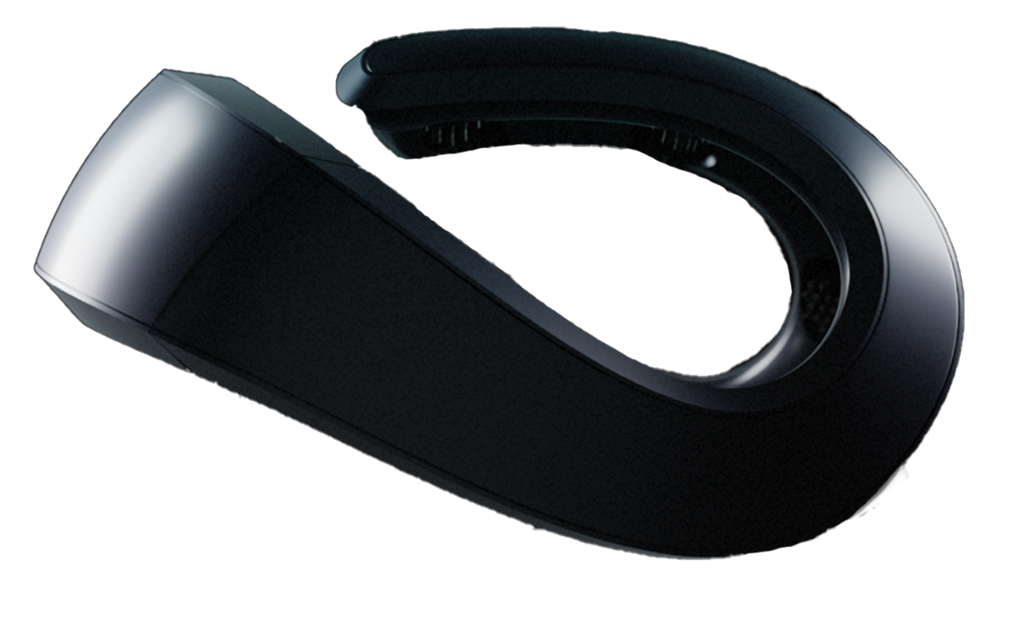
The Neurosity Crown's electrode positions span the frontal (F5, F6), central (C3, C4), centroparietal (CP3, CP4), and parietal-occipital (PO3, PO4) regions that are most relevant to emotional processing and interoceptive awareness. The frontal channels capture the asymmetry patterns that differentiate approach and withdrawal emotions. The central channels pick up signals from somatosensory regions involved in mapping body states. Together, they provide a window into exactly the neural dynamics that alexithymia disrupts.
At 256Hz sampling, the Crown resolves the fast temporal dynamics of emotional processing. The difference between seeing an emotional image and consciously recognizing the emotion it evokes happens in hundreds of milliseconds. That timescale matters because alexithymia appears to involve a delay or failure in the later processing stages, the point where raw sensory-emotional input gets translated into conscious emotional awareness. EEG captures these stages with a precision that fMRI cannot match.
For developers building emotional awareness tools, the JavaScript and Python SDKs open possibilities that didn't exist even a few years ago. An app that monitors frontal alpha asymmetry in real time could provide gentle prompts: "Your brain is showing an emotional response right now. Can you notice what you're feeling in your body?" Through MCP integration, an AI assistant could learn a user's typical patterns and offer increasingly refined emotional vocabulary suggestions, essentially serving as the emotion socialization partner that helps build the skill from the ground up.
The N3 chipset processes everything on-device with hardware-level encryption, which matters enormously here. Emotional processing data is among the most intimate neural information your brain produces. It should never leave the device without your explicit, informed consent.
The Emotion Your Brain Is Already Having
Here's the thought that might stay with you after reading this. Right now, as you sit wherever you're sitting, your body is in an emotional state. Your heart is beating at a certain rate. Your muscles hold a certain tension. Your breathing follows a certain pattern. Your autonomic nervous system is producing a specific cocktail of chemical signals.
For most people, all of that gets automatically compressed into a feeling with a name. "Calm." "Curious." "Slightly anxious about that email."
But for 10% of the population, those signals arrive without labels. The body is speaking a language the mind hasn't learned to translate.
The neuroscience of alexithymia tells us something profound about emotional awareness itself. It's not a given. It's a process, one that depends on specific neural circuits connecting your body to your conscious mind. Those circuits can be weak due to genetics, underdeveloped due to early experience, or disrupted by injury. They can also be strengthened through practice, therapy, and tools that give the brain feedback it can learn from.
The emotion you can't name is still an emotion. It's still shaping your decisions, your relationships, your health. The difference is whether you can see it clearly enough to work with it.
For the first time, we have tools that can show people what their brains are doing in the moments between feeling and knowing. Not in a lab. Not with a referral and a six-month wait list. Right now, in real time, in the context of actual lived experience. And for someone who has spent their entire life sensing that something is happening inside them but never being able to say what, that visibility might be the first step toward a vocabulary they never knew they were missing.