


The Best Evening Routines for Better Sleep and Recovery

Your Evening Routine Is Programming Tomorrow's Brain
Here's something that should change how you think about your nights. While you sleep, your brain isn't resting. It's running the most complex maintenance operation in biology. Cerebrospinal fluid floods through the glymphatic system, flushing out the metabolic waste that accumulated during the day, including beta-amyloid, the protein associated with Alzheimer's disease. Your hippocampus replays the day's experiences and consolidates them into long-term memory. Your prefrontal cortex, which spent all day making decisions and exerting willpower, restores its glucose reserves and rebalances its neurochemistry.
Every single cognitive ability you care about, focus, creativity, emotional regulation, decision-making, learning, depends on the quality of this nightly maintenance cycle. And the quality of that cycle depends almost entirely on what you do in the 90 minutes before you fall asleep.
This isn't a metaphor. Your evening routine literally programs your brain's recovery process. Get it right, and you wake up with a prefrontal cortex that's been freshly serviced. Get it wrong, and you're trying to do knowledge work with yesterday's neural debris still clogging the pipes.
So why do most people treat their evening routine as an afterthought? Why do we obsess over morning routines and productivity hacks but sleepwalk (often literally) through the hours that determine whether any of those hacks actually work?
Because until recently, we couldn't see what was happening. We couldn't measure whether our wind-down was actually winding anything down. That's changed. And the best evening routines for sleep and recovery in 2026 are built on neuroscience, not vibes.
What Your Brain Needs to Fall Asleep (And Why It's Harder Than You Think)
Falling asleep seems like it should be the easiest thing in the world. You're tired. You lie down. You close your eyes. Done.
But sleep isn't a switch you flip. It's a cascade, a precisely orchestrated sequence of neurochemical and electrophysiological events that your brain has to execute in the right order. Disrupt any step, and the whole process stalls.
Here's what has to happen:
Melatonin onset. About 2 hours before your habitual bedtime, your pineal gland starts releasing melatonin. But only if it gets the right signal. The suprachiasmatic nucleus (your brain's master clock) triggers melatonin release in response to dimming light. Specifically, it looks for the absence of blue-wavelength light hitting specialized melanopsin receptors in your retinas. If those receptors keep detecting blue light (from screens, overhead LEDs, even some "warm" bulbs), the signal never arrives and melatonin production stalls.
Sympathetic downregulation. Your autonomic nervous system has two modes: sympathetic ("fight or flight") and parasympathetic ("rest and digest"). During the day, sympathetic tone dominates. Your heart rate is up, cortisol is circulating, your muscles carry baseline tension. For sleep to begin, your nervous system has to flip into parasympathetic dominance. Heart rate drops. Breathing slows. Cortisol falls. Core body temperature decreases by 1-2 degrees Fahrenheit.
Sleep pressure resolution. Throughout the day, a molecule called adenosine builds up in your brain as a byproduct of neural activity. This is sleep pressure. By evening, adenosine levels should be high enough to strongly promote sleep (unless you've been blocking it with caffeine, which has a half-life of 5-6 hours, so that 3 PM latte is still 50% active at 9 PM).
Brainwave transition. This is the part you can actually see with EEG. During waking hours, your brain produces predominantly beta brainwaves (13-30 Hz), the signature of active, alert cognition. As you transition toward sleep, beta decreases and alpha brainwaves (8-13 Hz) increase. This is the relaxed-but-awake state. Then alpha gives way to theta (4-8 Hz), the drowsy, hypnagogic state. Finally, theta gives way to delta waves (0.5-4 Hz), the deep, slow-wave sleep that does most of the heavy restorative work.
Every effective evening routine practice targets one or more of these four processes. The ones that target multiple processes simultaneously are the most powerful.
The Ranked Practices: What Actually Works
1. The Screen Curfew: Saving Your Melatonin From Assassination
This is the single highest-impact change most people can make, and the one they resist the most.
The problem isn't that screens are "stimulating" in some vague sense. The problem is brutally specific. The displays on your phone, tablet, and laptop emit light concentrated around 480 nanometers, right in the blue wavelength range. This is the exact frequency that melanopsin receptors in your retina are most sensitive to. When these receptors fire, they send a "it's still daytime" signal directly to your suprachiasmatic nucleus, which suppresses melatonin production.
A 2014 study from Brigham and Women's Hospital (published in PNAS) compared people who read on an iPad before bed versus a printed book. The iPad readers showed suppressed melatonin levels, delayed melatonin onset by 90 minutes, reduced REM sleep, and reported feeling sleepier the next morning despite getting the same total hours. That's not a subtle effect. That's a 90-minute delay in your entire sleep cascade from a single environmental input.
The protocol:
- Stop all screen use 60-90 minutes before your target bedtime. Non-negotiable.
- If you absolutely must use a screen, use the strongest blue-light filter available (Night Shift at maximum warmth, or dedicated glasses that block wavelengths below 500nm). But understand that even filtered screens emit enough light to partially suppress melatonin.
- Replace screen time with analog activities: reading a physical book, conversation, stretching, journaling (more on this below).
Here's something most people don't realize: melanopsin sensitivity isn't constant throughout the day. Your retinal cells become MORE sensitive to blue light in the evening hours, precisely when you're most likely to be staring at screens. A dose of blue light that wouldn't affect your melatonin at noon can crater it at 10 PM. Your eyes are literally primed to be maximally disrupted by screens at the exact time you use them most.
2. Temperature Manipulation: The Counterintuitive Trick Your Brain Is Waiting For
Your core body temperature follows a circadian curve. It peaks in the late afternoon and needs to drop by about 1-2 degrees Fahrenheit to initiate sleep. This temperature decline is one of the strongest sleep-onset signals your brain responds to. Mess with it, and you lie awake staring at the ceiling. Support it, and you fall asleep faster.
The counterintuitive part: the best way to cool your core temperature isn't to make yourself cold. It's to make yourself warm first.
A warm shower or bath (104-109 degrees Fahrenheit) for 10 minutes, taken 60-90 minutes before bed, dilates blood vessels in your extremities (hands and feet). This vasodilation acts like a radiator, rapidly dumping core body heat through your skin surface. After you step out, your core temperature plummets faster than it would naturally, and this accelerated drop sends a powerful sleep signal to your hypothalamus.
A 2019 systematic review and meta-analysis in Sleep Medicine Reviews analyzed 5,322 studies and found that a warm bath 1-2 hours before bed reduced sleep onset latency by an average of 36%. That's not nothing. That's falling asleep a third faster from a 10-minute shower.
The protocol:
- Warm shower or bath, 104-109 degrees Fahrenheit, for 10 minutes. Time it 60-90 minutes before bed.
- Keep your bedroom between 65-68 degrees Fahrenheit (18-20 Celsius). Yes, that's cooler than most people keep it.
- Consider wearing socks to bed (seriously). Warm extremities promote vasodilation, which promotes core cooling. A study in Nature found that the degree of dilation in blood vessels of the hands and feet was the best physiological predictor of sleep onset latency.
3. Dim Lighting Protocols: Teaching Your Brain That Night Has Arrived
Modern indoor lighting is neurologically confusing. Your ancestors' brains spent millions of years calibrating to a simple signal: when the sun goes down, light dims gradually to near-zero, and melatonin rises. Then we invented electric lights and blew up that signal entirely.
The average living room is lit to about 300 lux. Your brain needs light below 10 lux to fully support melatonin production. That's a 30x gap between where most people live and where their pineal gland needs them to be.
The protocol:
- Starting 90 minutes before bed, switch all lighting to dim, warm sources (below 10 lux). Think candlelight, salt lamps, or dedicated low-lux amber bulbs.
- Overhead lights are the worst offenders because they mimic the sun's angle. Switch to low, indirect table lamps or floor lamps.
- If your bathroom is bright (most are), consider a dim nightlight for the pre-bed routine. Blasting yourself with 500 lux of cool-white bathroom light while brushing your teeth at 10 PM is a melatonin ambush.
Bright office: 500-1000 lux. Your brain reads this as "full daytime."
Average living room: 200-300 lux. Still bright enough to suppress melatonin.
Dim restaurant: 50-100 lux. Getting closer, but not ideal.
Candlelight: 5-10 lux. This is the range your pineal gland has been waiting for.
Full moonlight: 0.1-0.3 lux. What your ancestors slept under for millennia.
4. Breathing Exercises and Meditation: Flipping the Autonomic Switch
Your autonomic nervous system controls the sympathetic-to-parasympathetic shift that has to happen before sleep can begin. And unlike most autonomic functions, you can directly influence this one through your breath.
Here's why: the vagus nerve, the longest cranial nerve in your body, runs from your brainstem to your abdomen and controls parasympathetic activation. Slow, deep exhalation stimulates the vagus nerve and triggers parasympathetic dominance. Your heart rate drops. Blood pressure falls. Cortisol secretion decreases. Your digestive system activates (that "rest and digest" mode).
The most studied protocol is 4-7-8 breathing: inhale for 4 counts, hold for 7, exhale for 8. The extended exhale is the key. It maximizes vagal tone and shifts your autonomic balance toward parasympathetic in minutes, not hours.
A 2018 study in Frontiers in Human Neuroscience using EEG found that just 10 minutes of slow breathing (6 breaths per minute) significantly increased alpha wave power and decreased beta power in frontal regions. That's the exact brainwave shift your brain needs to transition from waking alertness to pre-sleep relaxation.
Meditation works through a similar mechanism. Focused-attention meditation (watching the breath, body scanning) reduces activity in the default mode network, the region responsible for rumination and worry, and those racing thoughts at 11 PM are default mode network activity in overdrive.
The protocol:
- 10-15 minutes of slow breathing or meditation, timed after your warm shower and in your dimly lit environment.
- 4-7-8 breathing for beginners. More experienced meditators can use body scan or yoga nidra techniques.
- Yoga nidra (sometimes called "non-sleep deep rest" or NSDR) deserves special mention. It's a guided relaxation technique where you lie still and systematically relax each body part. A 2020 study showed that yoga nidra increased theta wave activity and produced subjective relaxation states comparable to early-stage sleep, while the practitioner remained conscious.
5. Cognitive Offloading: Journaling Your Way Out of Rumination
If you've ever lain awake with your brain running through tomorrow's to-do list, rehashing a conversation from earlier, or generating anxiety about things that haven't happened yet, you've experienced what neuroscientists call "cognitive hyperarousal." Your prefrontal cortex is still in planning mode. Your default mode network is ruminating. Your brain hasn't gotten the memo that it's supposed to be shutting down.
The fix is surprisingly simple: write it down.
A 2018 study in the Journal of Experimental Psychology found that participants who spent 5 minutes writing a specific to-do list for the next day fell asleep significantly faster than those who wrote about tasks they'd already completed. The effect was comparable to some pharmaceutical sleep aids. Five minutes. With a pen and paper.
The researchers called this "cognitive offloading." By externalizing your pending tasks onto paper, you signal to your prefrontal cortex that these items have been captured and don't need to be held in working memory anymore. Your brain can stop running its background task-monitoring loop.
The protocol:
- 5-10 minutes of journaling, specifically writing tomorrow's to-do list. Be specific. "Work on project" doesn't offload anything. "Draft the introduction section of the Q2 report" tells your brain exactly what's handled.
- Optionally, add a brief gratitude or reflection component. Research from UC Davis found that gratitude journaling reduced pre-sleep worry and improved sleep quality, likely by redirecting default mode network activity away from threat-monitoring and toward positive memory processing.
6. Magnesium Supplementation: The Mineral Most Brains Are Missing
Magnesium is involved in over 600 enzymatic reactions in the body, and several of them are directly relevant to sleep. It acts as a natural NMDA receptor antagonist, calming neural excitability. It helps regulate the parasympathetic nervous system. And it plays a role in melatonin synthesis.
Here's the problem: an estimated 50% of the US population doesn't get enough magnesium from diet alone. Soil depletion, processed food, and chronic stress (which burns through magnesium) have made deficiency remarkably common. And low magnesium correlates with poor sleep quality, restless legs, and nighttime muscle cramps.
Not all magnesium is equal for sleep:
- Magnesium glycinate: The glycine component has its own calming effects. This form is well-absorbed and least likely to cause digestive issues. This is the top recommendation for sleep.
- Magnesium L-threonate: The only form shown to cross the blood-brain barrier effectively. A 2010 study in Neuron found it enhanced synaptic plasticity and memory. For sleep, it may work by directly calming central nervous system excitability.
- Magnesium citrate: Well-absorbed but more likely to have a laxative effect at higher doses. Better for general supplementation than specifically for sleep.
The protocol:
- 200-400mg of magnesium glycinate or L-threonate, taken 30-60 minutes before bed.
- Start at the lower dose and increase gradually.
- Pair with your dim-light, post-shower wind-down window.
- As always, consult a healthcare provider before starting any new supplement, especially if you take medications that interact with magnesium.
7. Stretching and Progressive Muscle Relaxation: Draining the Tension Tank
Throughout the day, your muscles accumulate tension in response to stress, posture, and sympathetic nervous system activation. This tension isn't just uncomfortable. It's a feedback loop. Tense muscles send afferent signals to your brain that reinforce sympathetic dominance. Your brain reads muscular tension as a sign that something threatening is happening, which keeps stress hormones elevated, which keeps muscles tense.
Progressive muscle relaxation (PMR) breaks this loop. By deliberately tensing and then releasing each muscle group, you create a contrast that teaches your nervous system what "relaxed" actually feels like. A meta-analysis in BMC Psychiatry found that PMR significantly reduced anxiety symptoms and improved sleep quality across multiple populations.
Gentle stretching works through a similar mechanism, plus it activates stretch receptors in your muscles and tendons that send calming proprioceptive signals to your brainstem.
The protocol:
- 10-15 minutes of gentle stretching or PMR, focusing on areas where you hold tension (neck, shoulders, hips, lower back).
- For PMR: tense each muscle group for 5 seconds, then release for 30 seconds. Work from your feet upward. Pay attention to the sensation of release. That sensation is parasympathetic activation in action.
- Avoid vigorous stretching or anything that significantly raises heart rate. The goal is parasympathetic, not more sympathetic.
Your Evening Routine Is Invisible. EEG Makes It Visible.
Here's the fundamental problem with every evening routine ever designed: you can't tell if it's working until the next morning.
You do the warm shower, the dim lights, the breathing exercises. You lie down feeling calm (you think). And then either you fall asleep in 10 minutes and assume the routine worked, or you toss for an hour and assume it didn't. But you have no idea what was actually happening in your brain during that wind-down. Maybe the stretching was great but the journaling was agitating. Maybe the breathing exercises calmed your autonomic nervous system but the lighting in your room was still too bright for melatonin. You're operating blind.
This is where EEG changes the game.
The brainwave transition from waking to pre-sleep has a clear, measurable signature. Beta waves (13-30 Hz) decrease as your cortex stops processing demanding tasks. Alpha waves (8-13 Hz) increase as relaxation takes hold. Theta waves (4-8 Hz) emerge as you approach the drowsy, hypnagogic state. With 8-channel EEG, you can watch this transition unfold in real-time.
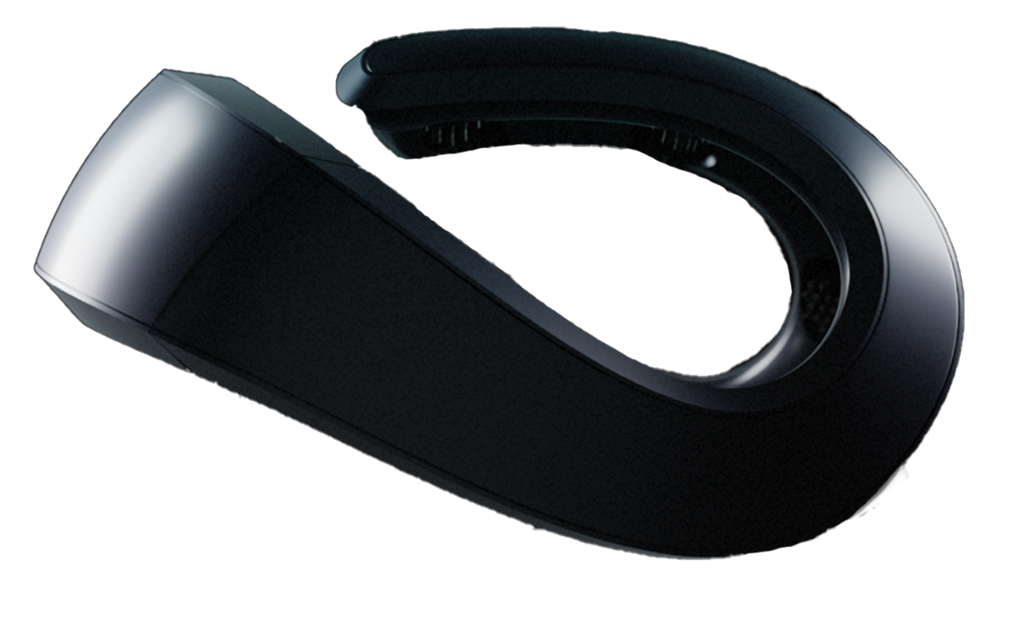
The Neurosity Crown sits on your head like a pair of headphones and samples your brain's electrical activity at 256Hz across 8 channels (positions CP3, C3, F5, PO3, PO4, F6, C4, CP4), covering frontal, central, and parietal regions. This means you can wear it during your evening routine and observe, objectively, whether each practice is producing the neural state changes you're after.
Think about what this makes possible:
- You can A/B test your wind-down practices. Does 4-7-8 breathing drop your frontal beta more than body scan meditation? For YOUR brain, not some population average in a study.
- You can find your optimal timing. Maybe your brain needs 20 minutes of dim light before alpha starts rising, not the 10 minutes you've been giving it.
- You can track your calm score in real-time. The Crown computes this from your alpha activity patterns, giving you a moment-by-moment readout of how relaxed your brain actually is versus how relaxed you feel.
The Crown's on-device N3 chipset processes everything locally. Your brainwave data never leaves the device unless you explicitly allow it. And for developers, the JavaScript and Python SDKs let you build custom evening-routine tracking applications, like an app that logs your brainwave transition speed each night alongside the specific practices you used, revealing over weeks exactly which combinations work best for your individual neurology.
This is the difference between following generic sleep advice and understanding your own brain. And it's the reason the best evening routines in 2026 aren't based on one-size-fits-all recommendations. They're personalized, measured, and refined.
| Evening Practice | Primary Target | Time Needed | Evidence Strength |
|---|---|---|---|
| Screen curfew (60-90 min before bed) | Melatonin onset | 0 min (you stop doing something) | Very strong |
| Temperature manipulation (warm shower + cool room) | Core temperature drop / sleep onset | 10 min shower | Very strong |
| Dim lighting (under 10 lux) | Melatonin onset | Passive (environmental) | Strong |
| Breathing exercises / meditation | Sympathetic downregulation / brainwave shift | 10-15 min | Strong |
| Cognitive offloading (journaling) | Prefrontal deactivation / reduced rumination | 5-10 min | Moderate-strong |
| Magnesium supplementation | Neural calming / NMDA antagonism | 30 seconds | Moderate |
| Stretching / PMR | Muscle tension release / parasympathetic activation | 10-15 min | Moderate |
| EEG-verified wind-down | Objective measurement of all above | Worn during routine | Emerging |
The Complete Evening Protocol: Timing Everything Together
These practices aren't independent. They build on each other. Here's what a neuroscience-optimized evening looks like, timed backward from a midnight bedtime:
10:00 PM (T-120 min): Last screen off. Switch all lighting to dim, warm sources under 10 lux. This starts the melatonin clock. Take magnesium glycinate (200-400mg).
10:15 PM (T-105 min): Warm shower, 10 minutes, 104-109 degrees. Core temperature starts its accelerated descent when you step out.
10:30 PM (T-90 min): Gentle stretching or progressive muscle relaxation in your dimly lit space. 10-15 minutes. Release the day's accumulated tension.
10:45 PM (T-75 min): Cognitive offloading. 5-10 minutes of writing tomorrow's specific to-do list. Optionally, a brief gratitude entry.
10:55 PM (T-65 min): Breathing exercises or meditation. 10-15 minutes. 4-7-8 breathing, body scan, or yoga nidra. This is the final push into parasympathetic dominance.
11:10 PM (T-50 min): Read a physical book or listen to calm audio. No screens. Your brain is now deep into its alpha-dominant pre-sleep state.
11:30-12:00 AM: Lights off. Your brain has had 2 full hours of declining light, a temperature drop protocol, muscular relaxation, cognitive offloading, and autonomic rebalancing. The conditions for deep sleep are set.
Will you do all of this every night? Probably not. And that's fine. These practices stack, but they also work individually. A screen curfew alone is powerful. Temperature manipulation alone makes a measurable difference. Start with one or two, build the habit, and add more as they become automatic.
The Part Nobody Talks About: Recovery Isn't Just Sleep Duration
Here's the "I had no idea" moment. Most people think about sleep regarding hours. "I got 7 hours." "I got 8 hours." But sleep researchers have known for decades that duration is only half the story. Architecture is the other half.
Sleep architecture refers to the specific pattern and proportion of sleep stages you cycle through each night. A healthy night includes roughly 4-6 cycles of about 90 minutes each, moving through light sleep (N1 and N2), deep slow-wave sleep (N3), and REM sleep.
Here's what matters: the first half of the night is dominated by slow-wave sleep (N3), which is when most physical recovery happens. Growth hormone pulses. The glymphatic system runs its cleaning cycle. Damaged cells are repaired. The second half is dominated by REM sleep, which is when emotional processing and memory consolidation peak.
If you go to bed late after a poor wind-down, you don't just lose total sleep time. You disproportionately lose slow-wave sleep from the front end AND reduce the total number of complete cycles. A 6-hour night isn't 75% of an 8-hour night. It's missing almost all of the final REM cycle and a significant chunk of slow-wave sleep. The architecture is fundamentally different.
This is why your evening routine matters more than your alarm time. By creating optimal conditions for sleep onset, you ensure that you enter your first slow-wave cycle quickly and completely, which sets up the entire night's architecture correctly.
The 3 AM Question
Here's something worth sitting with.
You spend roughly one-third of your life asleep. If you live to 80, that's about 26 years. And during those 26 years, your brain is doing work that's arguably more important than anything it does while you're awake. It's consolidating memories. Pruning unnecessary synaptic connections. Clearing toxic metabolic waste. Restoring the neurochemical balance that makes conscious thought possible.
We've known this for years. The neuroscience is settled. And yet we treat sleep like the dead space between productive hours. We optimize our mornings and our work blocks and our exercise routines, but we scroll through our phones until the moment our eyes can't stay open and then wonder why we feel like garbage the next day.
The irony is that every optimization you make to your waking hours depends on the thing you do when you're not awake. Your focus, your creativity, your emotional resilience, your ability to learn, all of it is downstream of sleep quality. All of it.
Your brain already knows how to sleep. It's been doing it since before you were born. The question is whether you'll give it the conditions it needs, or keep fighting 3 million years of neurobiology with one more episode, one more scroll, one more email.
The answer, now, is measurable. 256 times per second.