


Best Use Cases for the Neurosity Crown

A Device That Reads Your Mind (Sort Of)
Let's get the obvious thing out of the way. A device that reads your brainwaves sounds like something from a movie where someone eventually gets telekinesis and the government gets involved.
But here's what's actually happening in the real world, right now, in 2026: a growing community of users is wearing an EEG headset to work, to meditate, to code, to study, and to run experiments on their own brains. Not in a research lab. At their kitchen table.
The Neurosity Crown is an 8-channel electroencephalography device that sits on your head like a pair of headphones and picks up the electrical signals your neurons produce when they fire. It samples those signals 256 times per second across 8 sensor positions (CP3, C3, F5, PO3, PO4, F6, C4, CP4), covering frontal, central, parietal, and occipital regions. All the processing happens on-device through a custom chipset called the N3, which means your raw brain data never leaves your head unless you explicitly say so.
That's the "what." The more interesting question is the "so what." Because the surprising thing about the Crown isn't that it can read brainwaves. Hans Berger proved that was possible in 1929. The surprising thing is how many genuinely useful things you can do with brainwave data once you have access to it.
This guide covers the best use cases for the Crown, organized by the type of person you are and the problems you're trying to solve. Some of these will be obvious. A few might change how you think about what a brain-computer interface is for.
What can knowledge workers do with the Crown?
Tracking Focus Like You Track Steps
Here's a question that sounds simple but isn't: how focused were you today?
Not "do you feel like you were focused." Not "did you get stuff done." How focused were you, actually, based on what was happening in your brain?
Most people can't answer this. They rely on gut feeling, which is notoriously unreliable. You might feel productive after a day of busy work. You might feel unproductive after a day of genuine deep thinking that didn't produce visible output. Your subjective sense of focus and your actual neural focus state are often completely disconnected.
The Crown generates a real-time focus score derived from on-device processing of the raw 8-channel EEG at 256Hz. The focus API is exposed directly through the SDK. When your prefrontal cortex is actively engaged and your attention networks are firing in sync, the score rises. When your mind wanders, it drops.
Wear the Crown during your normal workday for one full week before trying to change anything. You'll build a personal baseline, and the patterns will surprise you. Most people discover that their "productive" hours and their actual peak focus hours don't overlap nearly as much as they assumed.
This gives you something unprecedented: an objective log of your cognitive performance across the day. Not a time tracker that knows which app was in the foreground. An actual brain-state tracker that knows whether you were mentally engaged or mentally elsewhere.
Finding Your Optimal Work Schedule
Once you've tracked your focus for a few days, patterns emerge. And they're not what you'd expect.
The standard productivity advice says to do your hardest work first thing in the morning. But brainwave data tells a more nuanced story. Some people hit peak focus at 10am. Others peak after lunch. Some have a second wind at 4pm that they've been wasting on email. Your chronotype, your sleep quality the night before, your caffeine timing, all of this shows up in the data.
One Crown user, a software engineer, tracked his focus scores for three weeks. He'd always scheduled his deep coding work for the morning because that's what every productivity blog told him to do. His data showed something different: his highest sustained focus scores consistently appeared between 2pm and 4:30pm. He restructured his day, moved meetings and email to the morning, and reported a noticeable jump in code output. The data didn't match the conventional wisdom. It matched his brain.
Meeting Fatigue Is Real (and Now You Can Prove It)
There's a reason you feel like a wrung-out sponge after four hours of video calls. Your brain is working hard during meetings, processing social cues, formulating responses, suppressing the urge to check your phone, but it's a different kind of work than focused problem-solving. Research on cognitive performance generally suggests that alpha and theta oscillations shift in characteristic ways with sustained attention and memory demands (Klimesch, 1999, Brain Research Reviews). A Microsoft Human Factors Lab EEG study of back-to-back video meetings also found that stress markers rose across consecutive calls, with short breaks dampening the effect. Meeting-heavy days tend to show patterns on EEG consistent with mounting cognitive effort and declining sustained attention as the day progresses.
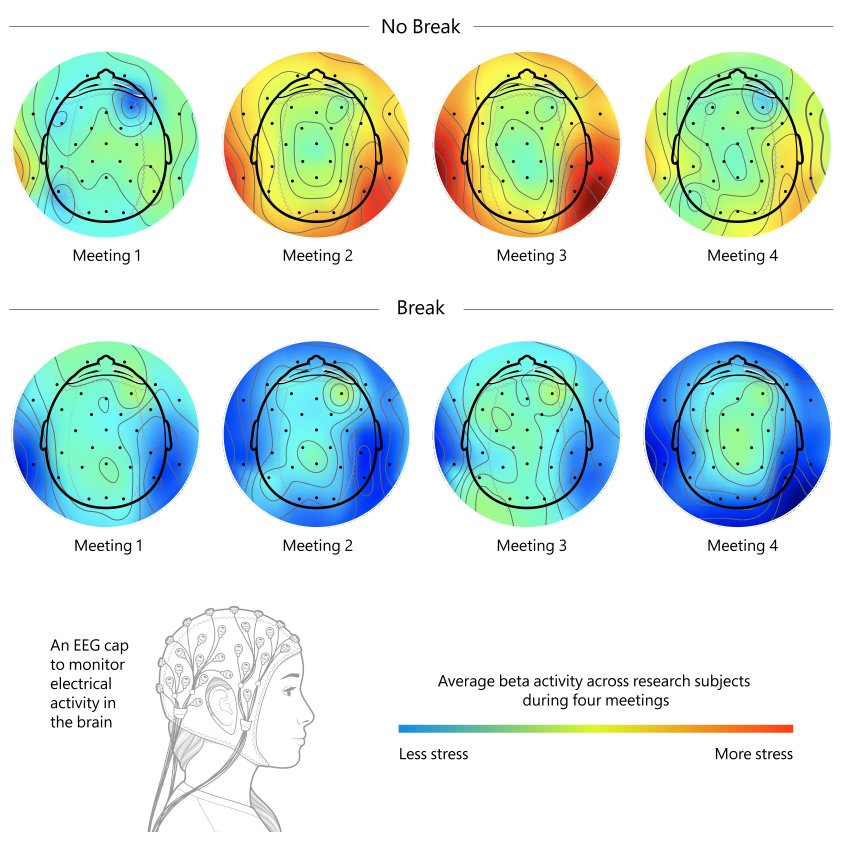
Crown users have started using this data to make the case for meeting-free blocks. When you can show your team lead a chart of your focus score cratering after the third consecutive meeting, it's a lot more persuasive than saying "I feel tired."
What can developers build with the Crown?
Your First Neuro-App in an Afternoon
This is where the Crown's developer story stands out. Many brain-sensing headbands hide the raw data behind a polished app. The Crown is built the other way around, data-first, with first-party SDKs in JavaScript and Python.
The Neurosity JavaScript SDK lets you subscribe to real-time brain data streams with a few lines of code. Focus scores, calm scores, raw EEG, frequency-band power, signal quality. It's all available as observable streams that you can pipe into any application you can imagine.
import { Neurosity } from "@neurosity/sdk";const neurosity = new Neurosity();await neurosity.login({ email, password });neurosity.focus().subscribe((focus) => {console.log("Focus score:", focus.probability);// Do something interesting with this number});
That's it. You're now reading brain data in real time. What you do with it is up to you.
Developers have built focus-responsive music players that switch genres when your attention drifts. Notification blockers that only let messages through when your focus score drops below a threshold (meaning you're already distracted, so the interruption costs nothing). Code editors that track which files and functions correlate with your highest engagement. Adaptive lighting systems that shift color temperature based on whether you're in deep work or brainstorming mode.
If you're new to BCI development, start with the focus or calm observables rather than raw EEG. They're pre-processed scores between 0 and 1 that update in real time, so you can build meaningful applications without knowing anything about signal processing or frequency analysis. Raw EEG is there when you're ready for it.
BCI Prototyping Without the Lab
Building a brain-computer interface prototype used to require a university lab, a $30,000 EEG system, a research assistant to apply conductive gel to 64 electrode sites, and a PhD's worth of signal processing knowledge.
The Crown collapses that entire stack. Eight dry electrodes, no gel, 256Hz sampling, on-device artifact rejection, and SDKs in both JavaScript and Python. You can go from "I have an idea for a brain-controlled app" to "I have a working prototype" in a weekend hackathon.
The Python SDK opens up the entire scientific Python ecosystem. NumPy, SciPy, MNE-Python, scikit-learn. If you want to train a classifier on your own EEG data, or build a real-time neural decoder, or experiment with brain-state prediction models, you have everything you need.
AI That Knows What You're Thinking (Almost)
Here's the use case that didn't exist two years ago and might be the most important one on this list.
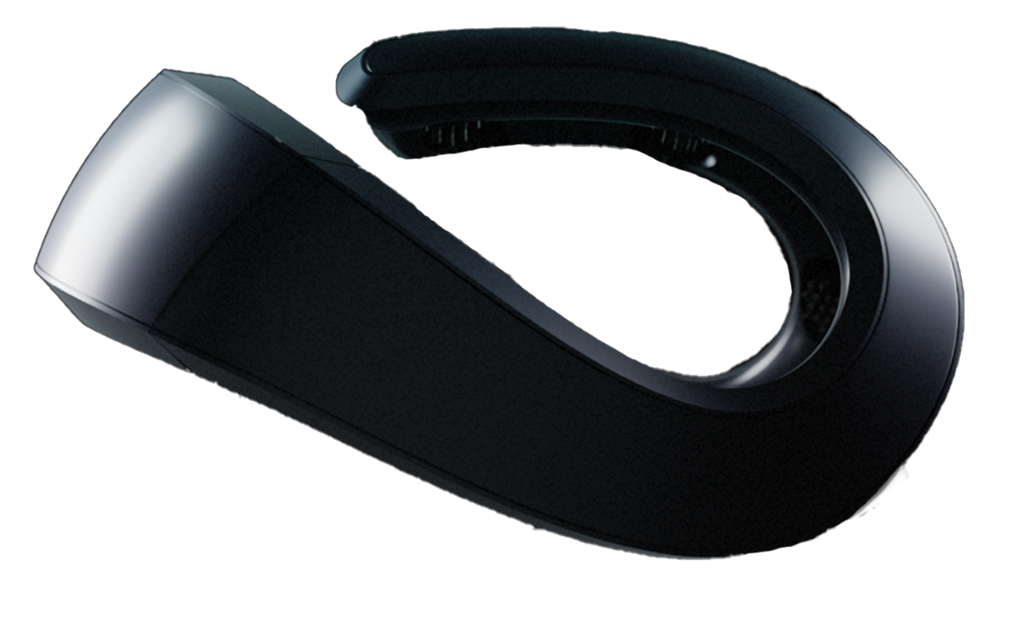
The Neurosity MCP (Model Context Protocol) server connects your Crown's brain data directly to AI tools like Claude and ChatGPT. In practice, this means you can build applications where an AI assistant has real-time awareness of your cognitive state.
Think about what that enables. An AI coding assistant that knows when you're in deep focus and holds its suggestions until you take a break. A writing tool that notices when your engagement drops on a particular section and flags it as needing revision. A personal productivity coach that doesn't rely on your self-report ("how are you feeling?") but on your actual brain data ("your focus has been declining for 20 minutes, your theta-alpha ratio suggests you'd benefit from a 10-minute break").
This isn't theoretical. The MCP integration is live, and developers are building on it right now.
How do meditators use the Crown?
The Problem With "Just Sit and Breathe"
Meditation has a measurement problem. You sit down, close your eyes, try to focus on your breath, and twenty minutes later you open your eyes and wonder: did anything happen? Was that a good session? Am I getting better at this?
Experienced meditators develop an internal sense for session quality. But beginners are essentially flying blind, and that's a big reason why so many people try meditation and quit within a month. There's no feedback loop. No way to know if you're on the right track.
The Crown's calm score changes this. It tracks brainwave signatures associated with meditative states in real time, giving you immediate feedback on session depth. The calm score is computed on-device from the raw 8-channel EEG and exposed through the SDK. When your mind wanders (and it will, that's normal), you can see the score shift. When you bring your attention back, you can watch it recover.
Brain-Responsive Audio: Music That Meditates With You
Brain-responsive audio applications built with the Crown's SDK take this a step further. It plays ambient soundscapes that respond to your brain state in real time. When your mind is calm and settled, the audio deepens and becomes more immersive. When your attention scatters, the audio subtly shifts to guide you back.
This creates a biofeedback loop that traditional meditation apps can't replicate. The music isn't following a preset script. It's following your brain.
| Feature | Traditional Meditation App | Crown brain-responsive audio |
|---|---|---|
| Feedback type | Timer and generic guidance | Real-time brainwave-based adaptation |
| Personalization | Choose a session length | Audio adapts to your unique brain patterns |
| Progress tracking | Streak count and session minutes | Calm scores, session-over-session trends |
| Skill development | Relies on subjective improvement | Objective data on meditation depth over time |
| Engagement | Same audio every session | Each session sounds different based on your state |
Tracking Progress Across Months
One of the most compelling things about having objective meditation data is watching the trend line over weeks and months. Many Crown users report, anecdotally, that their early-session calm scores trend upward over weeks of consistent practice. They're not just feeling like they're getting better at settling in. They can see it in the data. Peer-reviewed work on meditation and EEG (Cahn and Polich, 2006, Psychological Bulletin) has documented consistent brainwave changes associated with ongoing meditation practice, which aligns with what users observe in their own tracking.
This kind of longitudinal self-data transforms meditation from a faith-based practice ("trust the process") into an evidence-based one ("here's my data, and the trend is clear").
For Researchers: Lab-Grade Questions, Real-World Answers
Pilot Studies at a Fraction of the Cost
Running a pilot study with a traditional EEG setup is expensive and slow. Participant recruitment, lab scheduling, electrode application (20 to 45 minutes per participant for a 32-channel wet-electrode system), signal quality checks, and cleanup. A single pilot study with 20 participants can consume weeks of lab time.
The Crown's dry electrodes and wireless design compress that timeline dramatically. Setup takes about 2 minutes. Participants can wear the device comfortably for the full 3-hour battery life. And because the whole system is self-contained, you can run studies in conference rooms, coffee shops, classrooms, or participants' homes.
The Crown integrates with BrainFlow and Lab Streaming Layer (LSL), the two most widely used open-source platforms for physiological data acquisition in research. This means you can use the Crown with existing analysis pipelines in MATLAB (EEGLAB, FieldTrip), Python (MNE-Python), or any other tool that speaks LSL. You don't need to learn a proprietary system. Your existing workflows just work.
Ecological Validity: Studying Brains in the Wild
There's a long-running tension in neuroscience research. The more controlled your experimental environment, the less it resembles real life. And the less it resembles real life, the less confident you can be that your findings generalize beyond the lab.
The Crown opens up a category of research that traditional EEG systems make impractical: studying cognition in naturalistic settings. What does sustained attention look like during an actual 8-hour workday, not a 20-minute lab task? How do brainwave patterns during real classroom lectures differ from lab-based learning paradigms? What happens to neural markers of stress during actual commutes, meetings, and deadlines?
These questions require a device that people can wear comfortably for hours in their normal environment. At 228 grams with no wires and no gel, the Crown fits that requirement.
Event-Related Potential Experiments
The Crown's 256Hz sampling rate and 8-channel coverage make it suitable for certain ERP paradigms. P300 experiments (oddball paradigms), N400 studies (semantic processing), and error-related negativity (ERN) studies are all feasible with proper experimental design. For a primer on these classic components, Polich's 2007 review of the P300 in Clinical Neurophysiology is a widely cited starting point.
The channel count is lower than what you'd use for source localization or high-density topographic mapping. But for paradigms where the signal of interest is strong and the relevant scalp regions are covered by the Crown's electrode positions, the data quality is sufficient for meaningful results.
For Biohackers: N=1 Experiments With Real Data
Supplement Testing That Goes Beyond "I Feel Different"
The biohacking community has a problem: most interventions are evaluated by subjective feeling. You take a nootropic supplement, and an hour later you ask yourself "do I feel more focused?" That's not data. That's a Rorschach test.
The Crown turns supplement testing into something closer to a controlled experiment. Take your baseline focus and calm measurements for a week without the supplement. Then introduce it and track the same metrics. Did your average focus score during work hours change? Did the duration of sustained focus blocks shift? Did your alpha power during evening wind-down increase or decrease?
For valid N=1 supplement testing, track for at least 5 baseline days before introducing any variable. Control for sleep, caffeine, and exercise as much as possible. And cycle on and off the supplement at least twice to see if the effect is reproducible. One data point isn't data. A pattern is.
You still can't isolate every variable. This isn't a double-blind clinical trial. But having objective brain-state data is orders of magnitude better than going by vibes.
Routine Optimization
Beyond supplements, Crown data lets you test every variable in your daily routine against objective cognitive metrics. Does cold exposure in the morning actually sharpen your focus, or does it just wake you up? Does that afternoon nap help or hurt your evening productivity? Is your evening meditation practice improving your next-morning cognitive readiness?
Some Crown users have built elaborate personal dashboards that correlate their brain data with sleep tracking, HRV measurements, exercise logs, and diet journals. The brain data serves as the outcome variable that everything else gets measured against. Instead of asking "does this routine make me feel good?" they ask "does this routine measurably improve my brain's performance?"
Sleep and Recovery Analysis
While the Crown isn't designed as an overnight sleep tracker (3-hour battery life makes that impractical), it's remarkably useful for something adjacent: measuring how well recovered your brain is when you wake up.
A 10-minute morning EEG session can reveal patterns that correlate with sleep quality. Higher frontal theta the morning after poor sleep. Reduced alpha reactivity (the shift that happens when you open and close your eyes) when you're under-recovered. Slower ramp-up to baseline focus scores.
Over time, this morning brain check becomes a powerful complement to sleep tracker data. Your Oura ring tells you how long you slept. Your Crown tells you whether your brain actually recovered.
For Students: Studying Smarter, Not Longer
Finding Your Real Study Window
Every student has been told to "study more." Almost none have been told to study at the right time, in the right conditions, for the right duration. The Crown provides the missing data layer.
Track your focus scores during study sessions for two weeks. You'll discover personal patterns like: your focus might drop sharply after, say, 47 minutes, a personal rhythm the Pomodoro's standard 25-minute assumption doesn't capture. Your comprehension might peak when you study in the library but crater when you study in your dorm room. Background lo-fi music might help for problem sets but hurt for reading-heavy material.
| Study Variable | What the Crown Reveals | How to Use It |
|---|---|---|
| Session duration | Exact minute when focus consistently drops | Set session length to match your actual focus capacity |
| Environment | Focus score differences across locations | Choose study spots based on brain data, not habit |
| Time of day | Peak focus windows for different task types | Schedule hardest material during your brain's prime time |
| Background audio | Impact on focus scores by music type and task type | Match audio to task instead of using one playlist for everything |
| Break timing | How long it takes to regain focus after breaks | Optimize break length to minimize ramp-up time |
Exam Prep That Doesn't Burn You Out
The weeks before exams are when students need their brains performing at their best, and it's exactly when most students run their brains into the ground. Sleep deprivation, caffeine overdose, marathon study sessions that produce diminishing returns after the second hour.
The Crown makes cognitive fatigue visible before it becomes a performance problem. When your focus scores start trending down session over session, that's your brain telling you that you need rest, not more flashcards. Students who learn to read this signal end up studying fewer total hours but retaining more, because every hour they do study is spent in an actual state of focused engagement rather than zombie-mode page staring.
The Use Cases That Don't Exist Yet
Everything above is happening right now. People are doing these things today with the Crown they already own. But here's what makes brain-computer interfaces different from most technology: the most important use cases probably haven't been invented yet.
Think about smartphones in 2008. If you'd asked someone what the iPhone was for, they'd say "making calls, checking email, and browsing the web." Nobody said "coordinating a global network of ride-sharing drivers" or "real-time translation of restaurant menus in foreign countries" or "becoming the primary camera for an entire generation of photographers." The platform enabled things its creators never imagined.
The Crown is a platform. Its SDKs, its MCP integration, its raw data access, these aren't features. They're foundations. And right now, there are developers, researchers, artists, therapists, educators, and people who defy categorization building things on those foundations that nobody has seen before.
Someone is probably building a musical instrument that you play with your brain state. Someone else is building an AI tutor that can detect confusion before the student even articulates it. Someone is testing whether two people wearing Crowns can develop a shared neurofeedback protocol that improves collaborative problem-solving. Someone is exploring whether real-time EEG data can make VR experiences more immersive by adapting the virtual environment to the user's cognitive and emotional state.
The 8 channels of data flowing out of the Crown at 256Hz carry more information about the human mind than any consumer device has ever made accessible. What you do with that information is, quite literally, limited only by what you can think of.
And now, for the first time, you have a device that can watch you think.