


Clinical EEG Caps vs. Consumer Headsets

The Hundred-Thousand-Dollar Question
Somewhere in a hospital right now, a technician is spending 45 minutes squeezing conductive gel through 64 tiny holes in an electrode cap while a patient sits very still and tries not to sneeze. The cap is connected to an amplifier that costs more than most cars. The amplifier feeds into a workstation running proprietary software licensed at $5,000 per year. The whole setup, including the cap, the gel, the amplifier, the software, the shielded room it sits in, represents roughly $100,000 of equipment.
And somewhere in an apartment across town, a software developer is putting a device on their head like a pair of headphones. It takes about 10 seconds. No gel. No technician. No shielded room. The device cost less than $1,000. They open their laptop, run a script, and they're streaming their own brain data in real time.
Both of these people are reading brainwaves. Both are using electroencephalography. Both are measuring the same electrical signals generated by the same cortical neurons firing in synchrony.
So what, exactly, is the $99,000 difference buying?
This is not a trick question, and the answer isn't "nothing." Clinical EEG systems do things that consumer headsets genuinely cannot. But the reverse is also true. And the gap between these two worlds has been shrinking so fast that many of the assumptions people carry about "real" versus "toy" EEG are years out of date.
Let's figure out what actually separates clinical EEG caps from consumer headsets, what no longer does, and which one you should care about.
How EEG Works (The 30-Second Version)
Your brain runs on electricity. Every time a neuron fires, it generates a tiny electrical signal. Get a few thousand cortical neurons firing in rhythm, and those signals add up into waves strong enough to detect through your skull and scalp. EEG, short for electroencephalography, is just the art of listening to that electrical chatter from the outside.
The technology hasn't changed in principle since Hans Berger recorded the first human EEG in 1929. You put conductive sensors on the scalp. Those sensors pick up voltage fluctuations measured in microvolts (millionths of a volt). An amplifier boosts those tiny signals. A computer records and analyzes them.
What has changed, dramatically, is everything around that basic principle. The sensors, the amplifiers, the processing, the software, the form factor. And those changes are exactly where the clinical-vs-consumer split happens.
Inside a Clinical EEG Cap
Clinical EEG is the established standard. It has been refined over nearly a century of hospital use, and it shows. Here's what you're dealing with.
The Hardware
A standard clinical EEG follows the International 10-20 system, placing 19 to 21 electrodes at precisely measured positions across the scalp. The name "10-20" comes from the fact that electrode positions are spaced at 10% and 20% intervals along measured distances between skull landmarks. A technician physically measures your head with a tape measure and marks each position before placing electrodes.
High-density research systems go much further: 64, 128, or even 256 channels. These dense arrays can cost $25,000 to $100,000 for the hardware alone, before you factor in the amplifier, software, consumables, and the salary of the person trained to run it all.
The Electrodes
Clinical systems almost universally use wet electrodes. Each electrode site gets a dab of conductive gel (or paste) that creates a low-impedance electrical bridge between the metal sensor and your scalp. The gel has to make its way through your hair to contact the skin directly, which is why clinical EEG application involves a lot of careful parting, abrading, and squeezing.
The result is excellent electrical contact. Clinical wet electrodes typically achieve impedances below 5 kilohms, which translates to clean, low-noise signals. The tradeoff: it's messy, it's time-consuming, and the gel dries out over long recording sessions, causing signal degradation that requires re-application.
The Environment
Clinical EEG recordings are usually performed in shielded rooms designed to block electromagnetic interference from fluorescent lights, monitors, phones, and other electronic equipment. The amplifiers are medical-grade, with extremely high common-mode rejection ratios that filter out noise shared between electrodes.
All of this is in service of one goal: capturing the cleanest possible signal so that a neurologist can examine the raw waveforms and spot abnormalities. In clinical EEG, the human eye is still the primary analysis tool. A trained electroencephalographer reads the traces, looking for spikes, sharp waves, slowing, and other patterns that indicate pathology.
Clinical EEG is primarily a diagnostic tool. Neurologists use it to detect epilepsy, classify seizure types, diagnose encephalopathies, monitor brain function during surgery, and evaluate sleep disorders. The priority is always diagnostic sensitivity. Missing a seizure focus or an abnormal discharge could directly affect patient care.
Inside a Consumer EEG Headset
Consumer EEG occupies a completely different universe. The priorities aren't diagnostic sensitivity and raw waveform inspection. They're usability, real-time data access, portability, and software integration.
The Hardware
Consumer headsets range from minimal 2-channel devices (like basic meditation bands) to more capable multi-channel systems. The Neurosity Crown sits at the higher end of consumer EEG with 8 channels at positions CP3, C3, F5, PO3, PO4, F6, C4, and CP4. This covers frontal, central, centroparietal, and parieto-occipital regions across both hemispheres. It's not 19 channels, but those 8 positions were chosen specifically to maximize whole-brain coverage with minimum sensor count.
The Electrodes
This is where the biggest practical difference lives. Consumer headsets use dry electrodes. No gel. No skin preparation. No tape measure. You put the device on your head and the electrodes contact your scalp through your hair.
Dry electrode impedances are typically higher than wet electrodes, often in the tens of kilohms rather than single digits. For decades, this was seen as an insurmountable quality gap. But modern dry electrode design and signal processing have closed that gap significantly. The Crown's flexible rubber electrodes, for instance, are engineered to push through hair and maintain consistent contact. Combined with on-device signal processing through the N3 chipset, the usable signal quality for frequency-band analysis is comparable to what you'd get from a gel-based system.
The Environment
Here's the part that changes everything: consumer headsets are designed to work anywhere. Your desk. Your couch. A coffee shop. An airplane. There's no shielded room. There's no technician. The device handles noise rejection through a combination of hardware shielding and computational artifact removal.
This means the raw signal has more environmental noise than a clinical recording made in a shielded room. But for the applications consumer devices target (cognitive state monitoring, neurofeedback, BCI, frequency analysis), the processed output is remarkably clean. You don't need clinical-grade raw waveforms to tell whether someone's frontal beta activity is elevated. You need good enough signal-to-noise ratio in the frequency bands that matter. And modern consumer devices deliver that.
The Side-by-Side Comparison
Let's lay it all out. Because the details matter, and vague claims about "better" or "worse" don't help anyone make a decision.
| Feature | Clinical EEG Caps | Consumer Headsets |
|---|---|---|
| Channel count | 19-256 channels | 2-16 channels |
| Electrode type | Wet (conductive gel) | Dry (no gel required) |
| Setup time | 20-60+ minutes | Under 60 seconds |
| Typical cost | $10,000-$100,000+ | $100-$1,000 |
| Signal impedance | Under 5 kilohms (with gel) | 10-50+ kilohms (dry) |
| Sampling rate | 256-2048 Hz | 128-256 Hz |
| Portability | Stationary (lab/clinic) | Fully portable |
| Comfort duration | 1-2 hours before gel dries | 3+ hours with dry electrodes |
| Required expertise | Trained EEG technician | No training needed |
| Data access | Proprietary software, offline | Open APIs, real-time streaming |
| Primary use | Medical diagnosis | Neurofeedback, BCI, cognitive tracking |
| Annual consumables | $500-$3,000 (gel, caps, paste) | $50-$100 (electrode replacements) |
| Software ecosystem | Closed, licensed ($1K-$10K/yr) | Open SDKs, developer APIs |
| AI integration | Generally none | MCP, real-time data pipelines |
A few things jump out of this table that are worth pulling apart.
The Setup Time Gap Is Not Trivial
Twenty to sixty minutes of setup time sounds like an inconvenience. In practice, it's a fundamental constraint on what you can study and how you can use the technology.
In a clinical setting, setup time limits how many patients a lab can process in a day. A busy EEG lab might run 8 to 12 studies per day, with setup consuming a third of each appointment slot. For research, the math is even more punishing. A 50-participant study with a 64-channel system means 25 to 50 hours of just putting caps on heads. That's a full work week spent squeezing gel through holes before a single data point is collected.
With a consumer device that sets up in under a minute, the same 50-participant study adds less than an hour of total setup time. That's not just a convenience. It's the difference between a study that gets funded and one that doesn't, between a sample size of 50 and a sample size of 500.
The Cost Gap Is Even Larger Than It Looks
The sticker price comparison ($100K vs. $1K) understates the real difference. Clinical EEG has a long tail of hidden costs.
Equipment: $25,000-$100,000 Annual gel and consumables: $500-$3,000/year Software licenses: $1,000-$10,000/year Maintenance and calibration: $1,000-$3,000/year Technician salary (partial allocation): $15,000-$30,000/year Shielded room (if needed): $20,000-$80,000 one-time Training: $2,000-$5,000 initial
5-year total: $115,000-$350,000+
Compare: A consumer 8-channel system like the Neurosity Crown runs roughly $1,000-$1,800 over 5 years, including electrode replacements. No technician. No gel. No shielded room. No software license.
This isn't about one being "better" than the other. A neurosurgeon planning an epilepsy resection needs the clinical system and it's worth every dollar. But a developer building a brain-responsive application, a researcher studying focus in naturalistic environments, or a person who wants to understand their own cognitive patterns? The $100K system isn't just overkill. It's architecturally wrong for the job.
The Signal Quality Question Everyone Gets Wrong
Here's the part where people's assumptions tend to be most wrong, and it's also the "I had no idea" moment of this whole comparison.
The intuition goes like this: clinical EEG is expensive and complicated, so it must produce vastly superior data. Consumer EEG is cheap and easy, so the data must be garbage. It's the same logic that says a $200 bottle of wine must taste 20 times better than a $10 bottle. It feels right, but it collapses under scrutiny.
Signal quality in EEG isn't one thing. It's several things, and they matter differently depending on what you're trying to do.
Raw waveform fidelity. If you need to visually inspect raw EEG traces and identify individual spike-and-wave complexes (the bread and butter of clinical epilepsy diagnosis), then yes, clinical wet-electrode systems in shielded rooms produce cleaner raw waveforms. The lower impedance, the controlled environment, and the high channel density all matter here. Consumer devices are not designed for this use case and shouldn't be used for it.
Frequency-band power. If you're measuring the relative power of theta, alpha, beta, and gamma bands (the foundation of neurofeedback, cognitive monitoring, and most BCI applications), the gap narrows dramatically. A 2019 study published in Sensors comparing dry and wet EEG electrodes found that frequency-band measures were statistically comparable across the two electrode types. The dry electrodes had slightly higher noise floors, but after standard filtering, the spectral information was equivalent for practical purposes.
Real-time cognitive metrics. If you're computing focus scores, calm scores, or other cognitive state estimates from EEG power spectra, the consumer device with on-board processing often produces more usable output than the clinical system. Not because the raw signal is cleaner, but because the entire pipeline from electrode to metric is optimized as an integrated system. The Crown's N3 chipset runs artifact rejection, frequency decomposition, and feature extraction on the device itself. Clinical systems typically give you raw data and leave the processing to you (or your very expensive analysis software).
The bottom line: clinical EEG wins on raw signal fidelity. Consumer EEG wins on processed, actionable brain data. And for the vast majority of non-clinical applications, processed actionable data is what you need.
Who Uses What (And Why the Lines Are Shifting)
The traditional divide is clean. Hospitals and research universities use clinical EEG. Everyone else uses consumer headsets, if they use EEG at all. But that divide is eroding, and the reasons are instructive.
Clinical EEG's Strongholds
Clinical EEG isn't going anywhere in these domains:
- Epilepsy diagnosis and monitoring. Detecting seizure foci requires high spatial resolution and clean raw waveforms. This is medical decision-making with direct patient safety implications. Clinical EEG is the gold standard, full stop.
- Intraoperative monitoring. Surgeons use EEG during brain and spinal surgeries to monitor neural function in real time. This requires medical-grade equipment and trained neurophysiologists.
- Sleep studies (polysomnography). Clinical sleep labs combine EEG with EMG, EOG, and respiratory sensors for comprehensive overnight studies. The multi-modal integration requires clinical infrastructure.
- High-density research. Cognitive neuroscience labs studying source localization, ERP topography, or functional connectivity with dense electrode arrays need 64+ channels and the spatial resolution that comes with them.
Where Consumer Devices Are Winning
Consumer headsets have already surpassed clinical systems for several categories of use, not by matching clinical signal quality but by enabling things clinical systems physically cannot do:
- Neurofeedback outside the clinic. Home-based neurofeedback was essentially impossible with clinical equipment. Consumer headsets make daily training sessions practical. A person with ADHD brain patterns can do SMR training at their desk instead of driving to a clinic twice a week.
- Brain-computer interface development. BCI developers need to iterate quickly, test with many users, and deploy in real-world environments. A device that takes 45 minutes to set up in a shielded room is a non-starter. Consumer headsets with open SDKs let developers build, test, and ship BCI applications at software speed.
- Cognitive state tracking during real tasks. Studying how people focus, lose focus, enter flow states, or respond to cognitive load during actual work requires a device they can wear while working. Clinical EEG measures brain activity in a lab. Consumer EEG measures brain activity in life.
- AI-integrated brain data. Feeding real-time brain signals to AI systems through protocols like MCP requires always-on connectivity, streaming data access, and software-friendly APIs. Clinical EEG systems were designed decades before this use case existed.
- Population-scale brain data. Any application that needs brain data from thousands or millions of users (brain-health screening, cognitive performance baselines, large-sample research) requires a device that costs hundreds, not tens of thousands.
A growing category of "prosumer" EEG sits between clinical and consumer. Research groups are increasingly using consumer-grade devices like the Neurosity Crown for studies that previously required clinical equipment. The key realization: for many research questions, ecological validity (measuring real behavior in real environments) matters more than raw signal perfection in a shielded room.
When to Choose Clinical EEG
Be honest with yourself about what you need. Clinical EEG is the right choice when:
-
You're diagnosing a medical condition. Epilepsy, encephalopathy, coma assessment, sleep disorders. These require clinical-grade equipment operated by trained professionals. There's no consumer shortcut here, and you shouldn't want one.
-
You need source localization. If your research question is "where in the brain is this signal coming from?" you need dense electrode arrays (32-256 channels) to mathematically constrain the inverse problem. Eight channels can tell you frontal-vs-parietal. Sixty-four channels can narrow it to a couple of centimeters.
-
You're studying very low-amplitude ERP components. Some event-related potentials are in the sub-microvolt range and require the best possible signal-to-noise ratio. Wet electrodes in controlled environments still have an edge here.
-
Regulatory or publication requirements demand it. Some clinical trials and journal reviewers still require data from FDA-cleared or CE-marked medical devices. This is changing, but it's a real constraint today.
When to Choose a Consumer Headset
A consumer headset is the right choice (and often the only practical choice) when:
-
You want daily, continuous brain data. You can't wear a clinical cap for 8 hours a day, 5 days a week. You can wear a consumer headset. If your goal is tracking cognitive patterns over time, consumer is the only viable option.
-
You're building software that uses brain data. Open SDKs, real-time APIs, and developer-friendly data formats matter more than channel count when you're writing code. The Crown's JavaScript and Python SDKs, combined with AI integration through MCP, let you build applications in hours that would take weeks with clinical systems (if they were possible at all).
-
You need portability. Studying the brain during commutes, exercise, work, creative sessions, or any real-world activity requires a device designed for those contexts.
-
Your budget is under $10,000. Below this threshold, clinical EEG simply isn't available. Consumer devices aren't a compromise at this price point. They're the only game in town, and the good ones are genuinely excellent.
-
You're doing neurofeedback training. Most neurofeedback protocols use 1-4 channels. Eight channels is more than enough. The daily accessibility of a consumer device matters far more than having extra channels you'll never use.
The Bridge Between Two Worlds
Here's where this comparison gets genuinely exciting.
For most of EEG's history, you had two choices. You could get a clinical system with great signal quality, terrible usability, no software ecosystem, and a price tag that required institutional funding. Or you could get a consumer device with tolerable signal quality, great usability, but only 2-4 channels and limited data access.
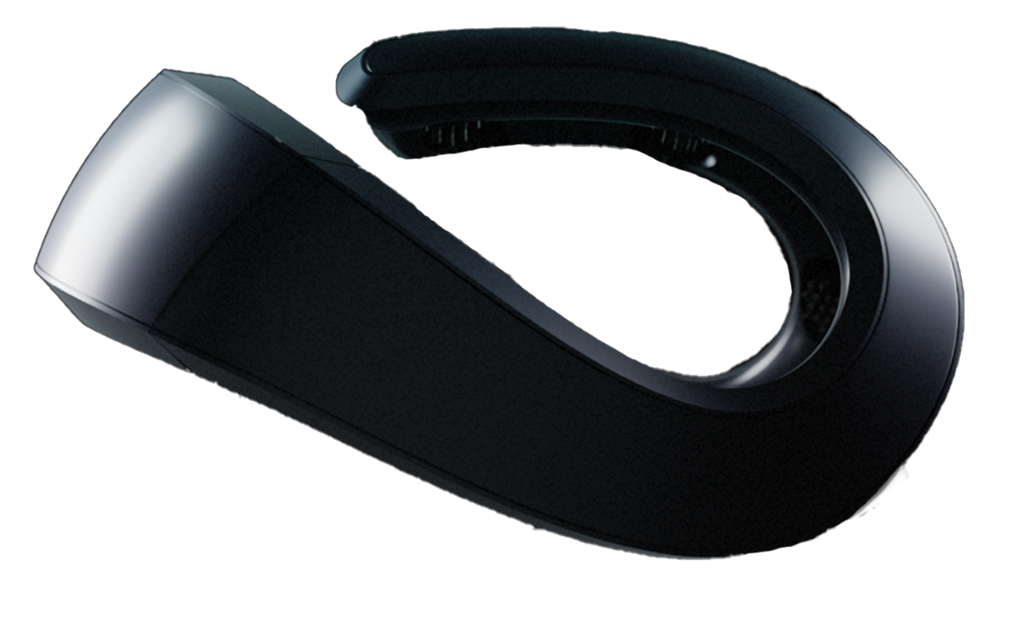
The Neurosity Crown was designed to occupy the space between those two options. Eight channels isn't a random number. It's the result of a specific engineering decision: how many channels do you need to cover all four cortical lobes across both hemispheres, with electrodes at standardized 10-20 positions, while keeping the device comfortable enough to wear for hours?
The answer is 8. Positions CP3, C3, F5, PO3, PO4, F6, C4, and CP4 span frontal executive function, central sensorimotor processing, centroparietal attention networks, and parieto-occipital visual processing. It's the highest channel count in consumer EEG, and it gives you whole-brain coverage that captures the signals relevant to neurofeedback, BCI, cognitive monitoring, and brain-responsive application development.
Combined with 256Hz sampling, on-device processing through the N3 chipset, and open SDKs that give developers direct access to raw EEG, FFT analysis, power spectral density, and computed metrics like focus and calm scores, the Crown delivers clinical-grade brain intelligence in a form factor that works outside the clinic.
You don't have to choose between signal quality and usability anymore. That tradeoff was real in 2015. It's not real in 2026.
The Question That Matters More Than "Which Is Better?"
Asking "is clinical EEG better than consumer EEG?" is like asking "is a hospital MRI better than a home blood pressure cuff?" It's the wrong framing. They're different tools built for different purposes with almost no overlap in their ideal use cases.
The more interesting question is: what becomes possible when high-quality brain data is accessible outside clinical settings?
When EEG was locked behind six-figure price tags and trained technicians, only a tiny fraction of the population ever saw their own brain data. The brain was essentially invisible to its owner. You could measure your heart rate, your blood pressure, your blood oxygen, your steps, your sleep duration, all from devices on your wrist. But the organ that makes you you? The one that generates your thoughts, shapes your focus, and determines your cognitive performance? That one required a hospital visit.
Consumer EEG changes the equation. Not by replacing clinical EEG (it doesn't and shouldn't), but by opening up an entirely new category of brain data applications that clinical systems could never serve. Applications where the brain data needs to be real-time, continuous, personal, and programmable.
Your focus patterns throughout a workday. Your brain's response to different types of music. Your cognitive state before and after meditation. The neural signatures of your best creative sessions. These aren't clinical questions. They're personal computing questions. And they need a personal brain computer, not a diagnostic instrument.
The $100K clinical cap and the $1K consumer headset are both exactly right for what they're designed to do. The only mistake is using one where the other belongs.
The real question isn't which technology reads your brain better. It's what you're going to do with what your brain is telling you.