


EEG Feedback for Anxiety vs. Depression

Same Organ, Opposite Problems
Here's something that should bother you if you think about it long enough: anxiety and depression are regularly treated with the exact same medication.
SSRIs. Selective serotonin reuptake inhibitors. The same pill. For two conditions that, subjectively, feel like polar opposites. Anxiety is too much. Too much worry, too much activation, too much of everything happening all at once. Depression is too little. Too little motivation, too little energy, too little ability to care about things you used to love.
And yet the medical system often reaches for the same chemical hammer for both.
Now, here's what happens when you put EEG electrodes on someone with anxiety and someone with depression and actually look at what their brains are doing. You don't see two versions of the same problem. You see two problems that are almost mirror images of each other. The anxious brain is running hot in specific, measurable ways. The depressed brain is running cold in equally specific, equally measurable ways.
This distinction isn't just interesting. It's the reason neurofeedback can work for both conditions, but only if you use the right protocol for the right brain. Train an anxious brain with a depression protocol and you could make things worse. Train a depressed brain with an anxiety protocol and you're solving a problem that doesn't exist.
The fact that EEG can tell these two conditions apart, and tell you which neurofeedback approach your brain actually needs, is one of the most underappreciated developments in mental health science. Let's get into why.
The Electrical Language of Your Brain (A Quick Primer)
Before we compare anxiety and depression on EEG, we need a shared vocabulary. Your brain runs on electrical oscillations. Billions of neurons firing in rhythmic patterns, creating waves that EEG electrodes can detect right through your skull. These waves fall into frequency bands, and each band tells you something different about what the brain is doing.
| Band | Frequency | What It Reflects |
|---|---|---|
| Delta | 0.5-4 Hz | Deep sleep, unconscious restoration |
| Theta | 4-8 Hz | Drowsiness, memory processing, daydreaming, rumination |
| Alpha | 8-12 Hz | Relaxed wakefulness, calm, neural idling |
| SMR | 12-15 Hz | Sensorimotor rhythm, calm body with alert mind |
| Beta | 15-20 Hz | Active thinking, focused engagement |
| High-beta | 20-30 Hz | Intense focus, but also hyperarousal and anxiety |
| Gamma | 30+ Hz | Cross-region integration, insight, binding of perception |
The key insight here isn't the individual bands. It's the ratios between them. A healthy brain shifts between these frequencies fluidly. It ramps up beta when you need to concentrate and drops into alpha when you relax. It produces theta during creative incubation and gamma during moments of insight.
Mental health conditions show up on EEG not as the presence of "bad" brainwaves, but as a brain stuck in particular patterns, unable to shift gears the way a healthy brain does. And the specific gears that get stuck are very different for anxiety versus depression.
What Anxiety Looks Like on EEG
If anxiety had a bumper sticker, it would say: "Everything is a threat and I can not stop scanning for danger."
That's not just a feeling. It's a measurable electrical state. Decades of research have identified a consistent cluster of EEG markers that show up in anxious brains. Here are the big ones.
The High-Beta Signature: A Brain That Won't Quiet Down
The most striking feature of an anxious EEG is elevated high-beta activity, particularly in the 20-30 Hz range across frontal and central regions. High-beta is the brain's alarm frequency. In a healthy brain, it surges when you encounter a real threat and subsides when the threat passes. In an anxious brain, it stays elevated. Constantly.
Think of it this way. Imagine your car's tachometer stuck at 6,000 RPM while you're parked. The engine is revving for no reason, burning fuel, generating heat, and wearing itself out. That's what elevated high-beta looks like on an EEG. The brain's arousal system is redlining during situations that don't call for it.
A 2015 study published in Clinical Neurophysiology found that individuals with generalized anxiety disorder showed significantly higher absolute beta power (especially in the 20-30 Hz range) at frontal sites compared to healthy controls, even during rest. Their brains were in a state of constant electrical vigilance.
Right-Frontal Alpha Asymmetry: The Withdrawal Circuit
This one is fascinating and it ties directly to the work of psychologist Richard Davidson at the University of Wisconsin-Madison, who spent decades mapping what he calls the approach-withdrawal system.
Here's the framework. Your left prefrontal cortex is associated with approach motivation: engagement, curiosity, positive emotion, moving toward things. Your right prefrontal cortex is associated with withdrawal motivation: avoidance, fear, pulling back from things.
alpha brainwaves (8-12 Hz) indicate neural idling. A region producing lots of alpha is relatively quiet. A region producing little alpha is highly active.
In anxious individuals, researchers consistently find less alpha over the right frontal region compared to the left. This means the right frontal cortex is more active, driving the withdrawal and threat-detection circuitry. The brain is literally tilted toward avoidance.
A meta-analysis by Thibodeau, Jorgensen, and Kim published in Biological Psychology in 2006 confirmed this pattern across dozens of studies. Right-frontal hyperactivation, measured through alpha asymmetry, was a reliable marker of anxiety and negative affect.
Suppressed Alpha Overall: A Brain That Can't Idle
Healthy brains produce strong alpha waves during relaxed wakefulness. Close your eyes, sit quietly, and a healthy brain will show big, smooth alpha oscillations, particularly over posterior regions. This is sometimes called the "alpha idle rhythm" because it represents the brain's resting state.
Anxious brains have trouble producing alpha. The resting alpha power is suppressed, sometimes dramatically. It's as if the brain can't idle. The engine won't drop below a certain RPM.
This alpha suppression has practical consequences. Alpha isn't just "relaxation." It's involved in gating sensory information, inhibiting irrelevant processing, and allowing the brain to rest between tasks. When alpha is chronically suppressed, the brain struggles to filter out noise, to disengage from worry loops, and to recover after stress.
Alpha waves aren't just a sign that you're relaxed. They're the brain's noise-canceling system. Research by Wolfgang Klimesch shows that alpha oscillations actively suppress irrelevant neural activity, preventing sensory overload and helping you focus on what matters. When alpha is suppressed, as it is in anxiety, every stimulus gets through. This is why anxious people often report feeling overwhelmed by environments that don't bother others. Their alpha gating system is offline.
What Depression Looks Like on EEG
If anxiety is a brain that won't stop screaming, depression is a brain where certain neighborhoods have gone dark.
The EEG profile of depression is almost a mirror image of anxiety's. Where anxiety shows hyperactivation, depression shows hypoactivation. Where anxiety cranks up high-beta, depression often lets it drop. And the hemispheric asymmetry flips direction.
Left-Frontal Alpha Asymmetry: The Approach Circuit Goes Quiet
Remember Davidson's approach-withdrawal model? In depression, the pattern flips. Depressed individuals show more alpha over the left frontal region compared to the right. The left prefrontal cortex, the one associated with approach motivation, engagement, and positive emotion, is underactive. The approach circuit has dimmed.
This is one of the most replicated findings in all of psychiatric EEG research. A landmark meta-analysis by Jesper Smith and colleagues in 2017, published in Psychophysiology, confirmed that left-frontal alpha asymmetry (indicating left-frontal hypoactivation) was a strong marker of depression across dozens of studies.
Here's the "I had no idea" part of this story. In 2004, a team led by Davidson published a study in Psychophysiology showing that this asymmetry pattern was detectable in 10-month-old infants of depressed mothers. Babies. Before they could walk or talk, their frontal lobes already showed the electrical signature of withdrawal. This wasn't learned behavior or conditioned sadness. It was an electrical predisposition, etched into the brain's activation patterns before the child's first birthday.
That finding carries a weight that's hard to overstate. It means frontal alpha asymmetry isn't just a consequence of feeling depressed. It's a trait marker, a brain configuration that predisposes someone toward depression. And if it's a brain configuration, it's potentially something neurofeedback can retrain.
Frontal Theta Excess: The Rumination Loop
Depressed brains often show elevated theta activity (4-8 Hz) over frontal regions, particularly at midline sites. Theta in frontal areas is associated with internal focus, rumination, and the kind of repetitive negative thinking that is depression's signature cognitive pattern.
A 2019 study in Journal of Affective Disorders found that frontal theta power was significantly elevated in people with major depressive disorder compared to healthy controls, and that the degree of theta elevation correlated with rumination scores. The more someone reported getting stuck in loops of negative self-referential thinking, the more frontal theta their brain produced.
This makes intuitive sense when you know what theta does. In healthy brains, frontal theta rises during memory encoding and working memory tasks, moments when the brain turns inward. In depressed brains, it stays elevated, because the brain is perpetually turned inward, recycling the same dark material over and over.
Reduced Beta and Cortical Slowing
Where anxious brains show too much fast activity, depressed brains often show too little. Several studies have documented reduced beta power and a general slowing of the dominant EEG frequency in depression, particularly over the left hemisphere.
This cortical slowing corresponds to the subjective experience of depression: cognitive fog, difficulty concentrating, the feeling that your thoughts are moving through mud. The brain's faster processing frequencies have been dialed down, and the slower frequencies have crept in to fill the gap.
The Side-by-Side Comparison: Two Conditions, Two Electrical Profiles
Now let's put anxiety and depression next to each other on EEG. The contrast is striking.
| EEG Feature | Anxiety | Depression |
|---|---|---|
| Frontal alpha asymmetry | Right-frontal hyperactivation (less alpha on right) | Left-frontal hypoactivation (more alpha on left) |
| High-beta (20-30 Hz) | Elevated, especially at frontal sites | Normal or reduced |
| Overall alpha power | Suppressed, brain can't idle | Variable, but often normal posteriorly |
| Frontal theta (4-8 Hz) | May be elevated during worry | Elevated, linked to rumination |
| Beta (15-20 Hz) | Often elevated | Often reduced, especially left hemisphere |
| Dominant experience | Hyperarousal, threat detection, can't relax | Hypoactivation, withdrawal, can't engage |
| Cortical speed | Too fast, stuck in high gear | Too slow, stuck in low gear |
| Hemispheric tilt | Right hemisphere dominant | Left hemisphere underactive |
| Primary brainwave problem | Excess fast-wave activity | Excess slow-wave activity, deficient fast-wave |
Look at that table for a moment. These aren't subtle differences. They're almost point-for-point inversions of each other. And this is exactly why the same neurofeedback protocol can't work for both conditions.
The Neurofeedback Protocols: Different Problems, Different Training
Here's where this gets practical. Because anxiety and depression have distinct EEG signatures, neurofeedback practitioners have developed distinct protocols for each one. The logic is straightforward: identify the electrical pattern that's stuck, then train the brain to shift it.
Neurofeedback Protocols for Anxiety
High-beta downtraining. The most direct approach. Place sensors over frontal or central sites and reward the brain every time high-beta power drops below a threshold. The brain learns, through operant conditioning, to reduce its own hyperarousal. A 2021 review in NeuroImage: Clinical found that beta downtraining reduced both self-reported anxiety and high-beta power in 7 of 9 controlled studies.
Alpha uptraining. Since anxious brains are alpha-deficient, this protocol rewards increases in alpha power (8-12 Hz), typically at posterior or central sites. The goal is to help the brain rediscover its ability to idle, to engage the neural noise-canceling system that anxiety has disabled. Research from the lab of John Gruzelier at Imperial College London demonstrated that alpha uptraining increased alpha coherence and reduced anxiety scores in students.
SMR (sensorimotor rhythm) training. This protocol targets the 12-15 Hz band over the sensorimotor cortex (roughly the top of the head). SMR training has a calming effect on both mind and body because the sensorimotor rhythm is associated with a state of physical stillness paired with mental alertness. Think of it as training the brain to achieve the exact opposite of anxiety's signature: a body that's calm while the mind stays sharp.
Alpha-theta training. This is the protocol that draws from the Peniston Protocol, developed in the late 1980s for PTSD and alcoholism. The goal is to increase theta relative to alpha, inducing a deeply relaxed, hypnagogic state (the twilight zone between waking and sleeping) where the brain can process traumatic material without the usual defensive reactions. It's used for anxiety disorders rooted in trauma. A 2016 study by van der Kolk and colleagues in Psychiatry Research showed significant reductions in PTSD symptoms using EEG neurofeedback incorporating alpha-theta training.
No two anxious brains are identical. Some show primarily elevated high-beta. Others show mainly suppressed alpha. Some show right-frontal asymmetry without much high-beta at all. This is why quantitative EEG (qEEG) assessment matters so much. A qEEG maps the individual's specific brainwave patterns across multiple sites and compares them to normative databases. The protocol that gets chosen should target the specific deviation that the qEEG reveals, not a one-size-fits-all recipe. Consumer EEG devices can provide meaningful data about your own patterns, even outside a clinical setting. Seeing your frontal asymmetry or your beta/alpha ratios in real time is the first step toward understanding what your brain is actually doing.
Neurofeedback Protocols for Depression
Left-hemisphere beta uptraining. The most common depression protocol. Sensors are placed over the left frontal or prefrontal region (typically F3/F5 in the 10-20 system) and the brain is rewarded for increasing beta activity in the 15-18 Hz range. The goal is to reactivate the left-frontal approach circuit that depression has silenced. This targets the core asymmetry finding directly. A series of studies by Deborah Yurgelun-Todd and others have shown that increasing left-frontal beta activity correlates with reduced depression scores and improved motivation.
Frontal alpha asymmetry training. Rather than just boosting beta, this protocol targets the asymmetry itself. The brain is rewarded when the left-frontal alpha drops relative to the right, shifting the asymmetry pattern toward the healthy direction. This is more nuanced than simple beta uptraining because it addresses the relative balance between hemispheres, not just the absolute activity level on one side.
Theta downtraining. For depressed individuals with elevated frontal theta (the rumination signature), reducing theta over frontal midline sites can break the cycle of repetitive negative thinking. By lowering the brain's tendency to turn inward and cycle through negative material, theta downtraining complements the activation-focused protocols above.
Theta/beta ratio training. Some practitioners use the theta/beta ratio as a global indicator of cortical arousal. A high ratio (too much theta relative to beta) indicates an underaroused cortex, common in both depression and ADHD brain patterns. Training to reduce this ratio pushes the brain toward higher cortical activation.
The Protocol Comparison
| Factor | Anxiety Protocols | Depression Protocols |
|---|---|---|
| Primary target | Reduce hyperarousal | Increase activation |
| Key frequency trained | High-beta down (20-30 Hz), alpha up (8-12 Hz) | Beta up (15-18 Hz), theta down (4-8 Hz) |
| Brain region focus | Frontal and central sites, posterior for alpha | Left frontal/prefrontal (F3, F5) |
| Asymmetry goal | Reduce right-frontal hyperactivation | Increase left-frontal activation |
| Core training direction | Slow the brain down | Speed the brain up |
| Typical sessions to improvement | 15-25 sessions | 20-40 sessions |
| Most-studied protocol | Alpha-theta training, SMR training | Left-frontal beta uptraining |
| Mechanism of change | Operant conditioning reduces arousal, restores alpha gating | Operant conditioning reactivates approach circuits, reduces rumination |
| Risk of wrong protocol | Beta uptraining could worsen hyperarousal | Alpha-theta could deepen withdrawal and disengagement |
That last row is worth pausing on. Using the wrong protocol isn't just ineffective. It can actively make things worse. Boosting beta in a brain that's already running too fast could intensify anxiety. Training deep relaxation in a brain that's already underactivated could deepen depression's fog. This is why the EEG assessment comes first. You need to know what you're working with before you start training.
The Evidence: Where Do We Stand?
Let's be honest about what the research shows and what it doesn't.
For anxiety neurofeedback: The evidence is solid and growing. A 2023 systematic review in Frontiers in Human Neuroscience identified 28 controlled studies of neurofeedback for anxiety disorders, with the majority showing significant reductions in both self-reported anxiety and EEG markers. Alpha-theta training and SMR training had the strongest evidence bases. The American Academy of Pediatrics has recognized neurofeedback as a Level 1 evidence-based intervention for ADHD, and the anxiety evidence is approaching similar maturity.
For depression neurofeedback: The evidence is promising but less extensive. A 2020 meta-analysis in Journal of Affective Disorders found that neurofeedback produced significant reductions in depression scores compared to sham conditions, with moderate effect sizes. Left-frontal protocols had the strongest results. But the total number of high-quality RCTs remains smaller than for anxiety, and more research with larger sample sizes is needed.
For both conditions together: This is where things get clinically interesting. Roughly 60% of people with depression also have significant anxiety, and vice versa. The EEG can show both patterns simultaneously, a brain with elevated high-beta (anxiety) and left-frontal hypoactivation (depression) at the same time. Practitioners who work with comorbid cases often alternate between anxiety-focused and depression-focused protocols within the same treatment plan, guided by ongoing qEEG assessment.
The honest bottom line: neurofeedback for anxiety and depression is supported by meaningful evidence, but it is not yet at the level of proof that would make it a first-line treatment recommendation from major psychiatric organizations. It's best understood as a complementary approach, one that works alongside therapy, medication, and lifestyle interventions, not instead of them.
The Comorbidity Problem: When Your Brain Has Both
This is the part that rarely gets discussed in the neurofeedback world, and it matters enormously.
Anxiety and depression are the most common comorbid pair in all of psychiatry. Having one roughly doubles your risk of developing the other. And the EEG profiles can blend together in ways that make protocol selection genuinely tricky.
Imagine a brain that shows left-frontal hypoactivation (classic depression marker) but also elevated high-beta at central sites (classic anxiety marker). Which do you train first? If you boost left-frontal activation to address the depression, will the increased cortical arousal worsen the anxiety? If you train alpha-theta to calm the anxiety, will the deep relaxation deepen the depressive withdrawal?
Experienced neurofeedback practitioners handle this by doing sequential protocol work. They might start with SMR training, which has a stabilizing effect on arousal without specifically targeting either extreme, and then move to asymmetry-specific training once the brain has a more stable baseline. Others alternate session by session, running a depression protocol one day and an anxiety protocol the next.
The point is that comorbid cases require more than a lookup table. They require ongoing assessment and protocol adjustment based on how the brain is responding. This is one of the strongest arguments for accessible EEG monitoring: the more frequently you can see what your brain is doing, the better you can track whether the training is moving things in the right direction.
Your Brain Is Not Your Diagnosis
Here's the thing about EEG that changes the conversation about anxiety and depression in a way that most people haven't considered.
A diagnosis is a label. "Generalized anxiety disorder." "Major depressive disorder." These labels are useful for insurance codes and treatment guidelines, but they flatten an enormous amount of individual variation into a single word. Two people with the same depression diagnosis can have wildly different EEG profiles. One might show classic left-frontal hypoactivation. Another might show elevated frontal theta but normal asymmetry. A third might have a pattern that looks more like anxiety than depression, despite reporting depressed mood.
EEG doesn't care about your diagnosis. It shows you what your brain is actually doing. And that information is more specific, more individual, and more actionable than any diagnostic label.
This is why consumer EEG is so significant for mental health self-awareness. Not because it replaces clinical diagnosis (it doesn't), and not because it's a treatment (it's not). But because it gives you a data stream from your own brain that you've never had access to before. You can see your frontal asymmetry. You can track your beta/alpha ratios. You can notice whether your brain's patterns shift after meditation, exercise, therapy, or a good night's sleep.
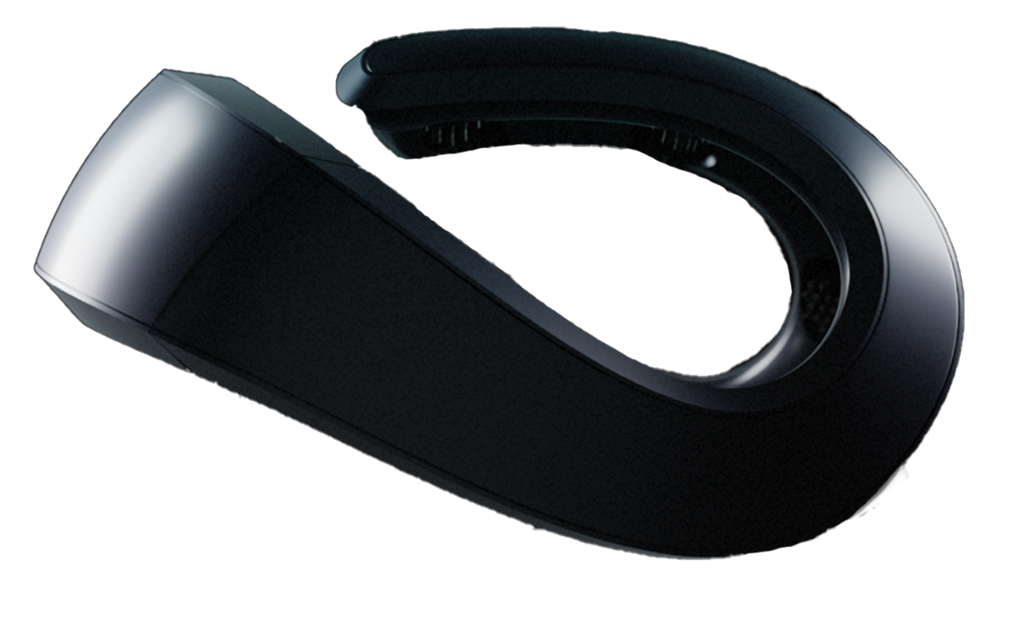
The Neurosity Crown sits at eight positions covering all four lobes of the brain: CP3, C3, F5, PO3, PO4, F6, C4, and CP4. The frontal channels at F5 and F6 are exactly where asymmetry patterns are most informative. The 256Hz sampling rate captures the full spectrum from delta through gamma. And because all processing happens on the N3 chipset on the device itself, your brain data stays private by default.
For developers, the Crown's JavaScript and Python SDKs make it possible to build custom monitoring tools. Want to track your frontal alpha asymmetry over weeks and see if it correlates with your mood journal entries? You can build that. Want to create a simple neurofeedback protocol that rewards left-frontal activation during your morning routine? The data is there, and the SDK gives you access to it.
This isn't a replacement for clinical neurofeedback with a trained practitioner. But it is something that didn't exist five years ago: a way to see, in real time, the electrical patterns that neuroscientists have spent decades linking to anxiety and depression. And there's genuine value in that visibility, even outside a clinical context.
Neurofeedback is a promising complementary approach, but it is not a substitute for professional mental health treatment. If you're experiencing clinical anxiety or depression, please work with a qualified healthcare provider. Consumer EEG devices like the Neurosity Crown are self-awareness and research tools, not medical devices. They do not diagnose, treat, or cure any condition. The protocols described in this guide are based on published research and are presented for educational purposes.
The Future Is Personalized Brain Data
The biggest limitation of current mental health treatment isn't a lack of treatments. It's a lack of information. A psychiatrist prescribing an SSRI for depression is making an educated guess. The drug might work. It might not. It might take six weeks to find out. And if it doesn't work, you try another one. This is not precision medicine. It's trial and error with a stethoscope.
EEG offers something different: an objective, measurable window into the specific electrical patterns that characterize your brain, not the average brain, not a diagnostic category, but yours. The anxious brain and the depressed brain look different on EEG, and now you know exactly how. But your brain might not fit neatly into either category. It might show a unique blend of patterns that no textbook describes perfectly.
That's not a limitation. That's the whole point. Your brain is not a textbook case. It's a one-of-a-kind electrical system that produces patterns as individual as your fingerprints. The more access you have to that data, the better equipped you are to understand yourself, work with your clinician, and track whether the things you're doing for your mental health are actually changing your brain in the direction you want.
We're at the beginning of an era where brain data is becoming personal. Not locked away in research labs. Not gated behind $200-per-session clinical appointments. But available to you, streaming in real time from a device you can wear while you work, meditate, or simply sit and watch what your own mind is doing.
Your anxious brain and your depressed brain tell different stories. The first step toward changing either story is being able to read it.