


The Brain Network That Decides What You Do Next

You Make 35,000 Decisions a Day. One Brain Network Handles Nearly All of Them.
That number gets thrown around a lot, and the exact figure is debatable. But the underlying reality isn't. From the moment you wake up to the moment you fall asleep, your brain is making an almost continuous stream of choices. Some are trivial: snooze or get up, coffee or tea, which shirt to grab. Some are consequential: quit the job, take the risk, say the thing you've been holding back.
And here's what's strange. Whether you're deciding to scratch your nose or restructure your entire life, the same network lights up.
It's called the executive control network (sometimes called the central executive network), and it's the closest thing your brain has to a command center. It sits primarily in the front and top of your brain, it's one of the most metabolically expensive systems you own, and until recently, you needed a million-dollar fMRI scanner to watch it work.
That part has changed. EEG can now track executive control network activity in real time, and the signatures it picks up, frontal theta rhythms and beta oscillations, tell a surprisingly detailed story about how your brain is handling the constant flood of decisions that make up a human life.
The Architecture: What You're Working With
The executive control network is not a single brain region. It's a distributed system, a set of areas that fire together when you need to think deliberately, hold information in mind, or override an impulse.
Two regions anchor the whole operation.
The dorsolateral prefrontal cortex (DLPFC). This is the star of the show. The DLPFC sits on the outer surface of the prefrontal cortex, roughly behind your temples, and it does the heavy cognitive lifting that separates human thought from everything else in the animal kingdom. Working memory? DLPFC. Logical reasoning? DLPFC. Deciding between two options by weighing pros and cons? DLPFC again. If your brain were a company, the DLPFC would be the person who actually reads the entire report before the meeting while everyone else skimmed the executive summary.
The posterior parietal cortex (PPC). Located toward the top and back of the brain, the PPC handles attention allocation and spatial processing. When the DLPFC decides what's important, the PPC makes sure the appropriate sensory information gets prioritized. Think of it as the DLPFC's logistics partner. The DLPFC says "focus on this." The PPC reorganizes the perceptual pipeline to make that focus possible.
These two hubs don't work alone. They recruit the anterior cingulate cortex (ACC), which monitors for conflicts and errors. They coordinate with the ventrolateral prefrontal cortex for selecting among competing responses. And they talk to the hippocampus when a decision requires pulling facts from long-term memory.
| Region | Location | Role in Executive Control |
|---|---|---|
| Dorsolateral prefrontal cortex (DLPFC) | Lateral frontal lobe | Working memory, reasoning, decision-making |
| Posterior parietal cortex (PPC) | Superior parietal lobe | Attention allocation, sensory integration |
| Anterior cingulate cortex (ACC) | Medial frontal, deep | Conflict monitoring, error detection |
| Ventrolateral prefrontal cortex (VLPFC) | Inferior frontal lobe | Response selection, inhibition |
But the defining feature of the executive control network isn't any single region. It's the coordination between them. When you're faced with a genuinely difficult decision, these areas synchronize their activity, locking into a pattern of communication that neuroscientists can see on EEG as rhythmic oscillations in specific frequency bands.
Which brings us to the question of what executive control actually does when it fires up.
The Four Jobs Your Executive Control Network Handles Every Waking Minute
Neuroscientists break executive function into components, and different researchers carve it slightly differently. But four core abilities keep showing up across every framework. They are the cognitive bedrock on which everything from writing an email to navigating a career is built.
Working Memory: The Brain's Scratchpad
Working memory is your ability to hold information active in your mind while you use it. Not storing it away for later. Holding it live, right now, in a buffer you can manipulate.
When you do mental arithmetic, you're using working memory. When someone gives you directions and you repeat them back to yourself while walking, that's working memory. When you read the beginning of this sentence and connect it to the end, your working memory is the bridge.
The DLPFC is working memory's primary neural address. Neurons in the DLPFC show "persistent activity," meaning they keep firing even after the stimulus that triggered them is gone. They're literally holding the thought in place through sustained electrical activity. Remove the DLPFC from the equation, through injury, fatigue, or aging, and working memory collapses.
Here's the "I had no idea" moment. Working memory capacity in humans is shockingly small. The classic estimate is 7 plus or minus 2 items (Miller, 1956), but more recent work by Nelson Cowan suggests the real number is closer to 4. Four chunks of information. That's all your brain can juggle at once. Every complex decision you've ever made, every sophisticated argument you've ever constructed, was assembled from a buffer that can hold roughly as much information as a Post-it note.
This means the DLPFC isn't just holding items. It's ruthlessly prioritizing which items get the precious few working memory slots. That prioritization is itself a form of decision-making, one that happens before the "real" decision you think you're making.
Decision-Making: Weighing Options Under Uncertainty
When neuroscientists talk about decision-making in the context of executive control, they don't mean choosing between chocolate and vanilla. They mean the kind of decisions where the right answer isn't obvious, the information is incomplete, and the stakes are high enough that you can't just go with your gut.
The DLPFC handles this by running something like a neural simulation. It holds the competing options in working memory, assigns approximate values to each based on past experience and current goals, and integrates those values into a choice. Functional imaging studies by Antonio Damasio and others have shown that damage to the prefrontal cortex doesn't eliminate the ability to think logically. It eliminates the ability to incorporate emotional information into decisions. Patients with prefrontal damage can tell you the rational choice but cannot feel which option is right, and they end up paralyzed by indecision or making catastrophically impulsive choices.
This tells us something important. Executive decision-making isn't pure logic. It's logic woven together with emotional valuation. The DLPFC doesn't operate like a calculator. It operates like a judge who reads the law AND considers the human context.
Cognitive Flexibility: Switching Strategies When the World Changes
Cognitive flexibility, sometimes called set-shifting, is your ability to change your approach when circumstances shift. It's what lets you abandon a strategy that isn't working and try something different. It's what lets you see a problem from a new angle when your first attempt at solving it fails.
The Wisconsin Card Sorting Test is the classic measure of this ability. Subjects sort cards according to a rule (say, by color), then the rule changes without warning (now sort by shape), and they have to figure out the new rule from feedback alone. People with DLPFC lesions fail spectacularly at this. They keep sorting by the old rule, unable to suppress the previous strategy and adopt a new one. They know the rule has changed. They just can't make their behavior follow.
Cognitive flexibility is also what lets you toggle between perspectives in a conversation, code-switch between languages, or pivot your business plan when the market shifts. It's the executive control network's ability to let go of one mental set and pick up another.
Inhibition: The Brakes on Everything Else
Inhibition is the ability to suppress a prepotent response, to stop yourself from doing the thing your brain wants to do automatically. The Stroop task captures this perfectly: say the ink color of the word "GREEN" printed in red ink. Your brain screams "green!" and the executive control network has to slam the brakes and say "red."
The anterior cingulate cortex detects the conflict between the automatic response and the correct response. The DLPFC then exerts top-down control to suppress the automatic reading response and prioritize the color-naming response. This entire operation takes roughly 200-300 milliseconds and burns through a measurable amount of prefrontal resources.
Inhibitory control is the unsung hero of decision-making. Every choice you make involves not just selecting an option but suppressing all the alternatives. The ability to say no to the immediate impulse, the distraction, the easier path, is what makes deliberate, goal-directed behavior possible.
The DLPFC is one of the most energy-intensive regions in the brain. It relies heavily on glucose and oxygen, and its performance degrades measurably when those resources run low. This is why decision quality deteriorates over the course of the day, a phenomenon behavioral scientists call decision fatigue. It's also why sleep deprivation hammers executive function harder than almost any other cognitive ability. The DLPFC is the first region to feel the effects of insufficient rest and the slowest to recover.
The EEG Signatures of Executive Control: What Your Scalp Reveals
You can't stick an electrode inside someone's DLPFC outside of a neurosurgery suite. But you don't need to. The electrical activity generated by the executive control network propagates through the skull and produces distinct, measurable patterns at the scalp. Two frequency bands carry most of the information.
Frontal Midline Theta (4-8 Hz): The Sound of Effortful Thinking
Frontal midline theta is arguably the single most reliable EEG marker of executive control engagement. It's a rhythmic oscillation in the 4-8 Hz range, strongest over frontal midline and lateral frontal electrode sites, and it increases whenever the executive control network is working hard.
Working memory load? Frontal theta goes up, scaling with the number of items you're holding in mind. The more items, the more theta. Conflict detection? Theta surges during Stroop tasks, flanker tasks, and any situation where the ACC detects a mismatch between what you intended and what happened. Decision-making under uncertainty? Theta power ramps up as you deliberate and peaks just before you commit to a choice.
The source of this theta is primarily the anterior cingulate cortex and the medial prefrontal cortex, but the DLPFC shows theta-band synchronization during working memory tasks as well. What's happening at the neural level is that theta oscillations act as a timing mechanism that coordinates communication between the different nodes of the executive control network. Think of theta as the rhythmic pulse that synchronizes the DLPFC, ACC, and PPC so they can pass information back and forth efficiently.
A 2010 study by Cavanagh and colleagues demonstrated that frontal midline theta increases during high-conflict decisions and predicts behavioral adjustments on subsequent trials. In other words, the stronger the theta burst after an error, the better the person adapts their behavior next time. Theta isn't just a marker of effort. It's a marker of learning from the effort.
Frontal Beta (13-30 Hz): Holding the Line
If theta is the sound of the executive control network engaging with a new challenge, beta is the sound of it maintaining the current plan.
Beta oscillations over frontal regions reflect top-down attentional control and the active maintenance of task rules. When you're holding a goal in mind ("ignore the distractions, keep writing this report"), frontal beta keeps that goal representation stable. Beta desynchronization, a drop in beta power, signals a release from the current plan, which is necessary when you need to switch tasks but problematic when it happens involuntarily (like when your phone buzzes and your train of thought derails).
The relationship between theta and beta is where the story gets interesting. During effective executive control, theta and beta interact through a mechanism called cross-frequency coupling. Theta oscillations modulate the timing of beta bursts, essentially using the slow theta rhythm as a scaffold to organize faster beta activity. This coupling is stronger in people with better working memory capacity and weaker in people with executive dysfunction.
| EEG Signature | Frequency | What It Reflects | When It Appears |
|---|---|---|---|
| Frontal midline theta | 4-8 Hz | Cognitive effort, conflict monitoring | Working memory tasks, error detection, deliberation |
| Frontal beta | 13-30 Hz | Goal maintenance, top-down control | Sustained attention, rule-holding, focus |
| Theta-beta coupling | Cross-frequency | Coordination within ECN | High-demand decision-making, complex reasoning |
| Beta desynchronization | 13-30 Hz drop | Release from current task set | Task switching, distraction, cognitive flexibility |
What This Looks Like in Practice
Imagine you're sitting at your desk trying to decide whether to accept a job offer. This is a genuine, high-stakes decision that recruits the full executive control network.
Your DLPFC loads the relevant factors into working memory: salary, commute, growth potential, team culture, your current job satisfaction. Frontal theta increases as these factors compete for your limited working memory slots. The ACC detects conflicts between factors (better salary but worse commute) and generates theta bursts that signal the need for more deliberation. Your DLPFC, reflected in sustained frontal beta, holds the decision framework stable while you weigh each factor.
If someone interrupts you, beta desynchronizes. The decision framework collapses. You need to reload the factors from scratch, and theta increases again as the working memory fills back up. This is why interruptions during complex decision-making feel so costly. It's not just the time lost. It's the metabolic expense of rebuilding the entire executive workspace.
An EEG device with frontal electrodes captures this entire process as a dynamic interplay of theta and beta power. Not as static snapshots, but as a flowing, real-time signal of how hard your executive control network is working and whether it's maintaining or losing its grip.
The Three-Network Model: How Executive Control Fits the Bigger Picture
The executive control network doesn't operate in isolation. It's one third of what neuroscientists call the triple network model, a framework that describes how three large-scale brain networks interact to produce your entire conscious experience.
The default mode network (DMN) activates when you turn inward: daydreaming, remembering, imagining the future, thinking about yourself. The salience network, centered on the anterior insula and ACC, acts as the brain's relevance detector, scanning incoming information and deciding what deserves attention. And the executive control network takes over when the salience network flags something that requires deliberate, goal-directed thought.
These three networks form a dynamic system. The salience network is the switch operator. When it detects something relevant, it suppresses the DMN and engages the ECN. When the relevant event passes, it releases the ECN and allows the DMN to resume.
This handoff is one of the most critical operations in your brain, and disruptions to it show up in nearly every major psychiatric condition. In depression, the salience network fails to suppress the DMN, leading to unchecked rumination. In ADHD brain patterns, the salience network fails to properly engage the ECN, leading to difficulty sustaining attention. In schizophrenia, all three networks show abnormal connectivity patterns, producing the fragmented experience of reality that characterizes the condition.
The anticorrelation between the executive control network and the default mode network isn't just a neuroimaging finding. It's visible in EEG. When frontal theta and beta increase (ECN engagement), frontal alpha tends to decrease (DMN suppression). Monitoring the balance between these frequency bands in real time gives you a direct window into which network is currently running the show.
The practical implication is that "focus" isn't a single mental state. It's the result of a specific network configuration: salience network active, executive control network engaged, default mode network suppressed. When any part of this configuration breaks down, your ability to sustain deliberate, goal-directed behavior breaks down with it.
Why This Matters For Your Actual Life
All of this neuroscience paints a clear picture. Your ability to make good decisions, stay on task, adapt to changing circumstances, and control your impulses runs through a single network that has measurable electrical signatures. Those signatures respond to sleep, stress, fatigue, time of day, and individual differences in ways that EEG can detect.
This opens up a genuinely new possibility. Instead of guessing whether you're in a good cognitive state for an important decision, you can measure it.
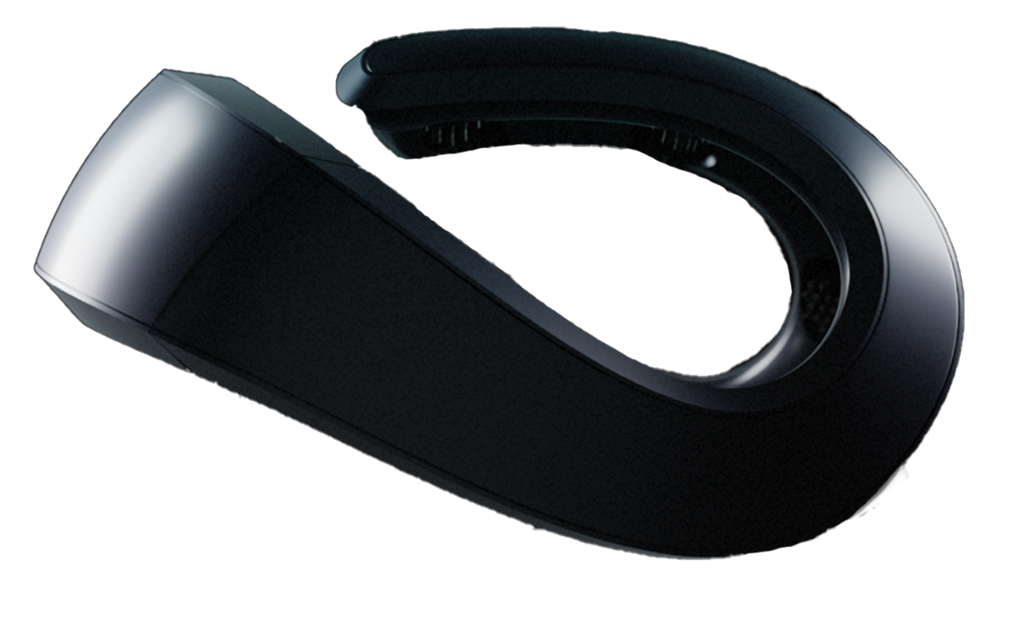
The Neurosity Crown places electrodes at eight positions across the scalp: CP3, C3, F5, PO3, PO4, F6, C4, and CP4. The frontal channels at F5 and F6 sit directly over the lateral prefrontal cortex, the territory of the DLPFC. These channels capture the theta oscillations that index executive effort and the beta activity that reflects goal maintenance. The parietal channels (CP3, CP4) and posterior channels (PO3, PO4) pick up the PPC contributions to attention allocation and the posterior alpha changes that reflect DMN suppression.
The Crown's focus scores aren't arbitrary numbers. They reflect the real-time balance between executive control network engagement and default mode network activity. When focus is high, frontal theta and beta are elevated relative to frontal alpha. The executive control network is running the show. When focus drops, alpha creeps up, theta and beta wane, and the DMN starts to reassert itself.
For developers, the SDK exposes the data needed to go deeper. Power-by-band data from each of the 8 channels lets you compute frontal theta power from F5 and F6, track beta dynamics during sustained tasks, and calculate the theta-beta ratio that clinical researchers use as a marker of executive function. You could build an application that monitors your executive control state throughout the day, identifies the times when your DLPFC is most resourced, and recommends scheduling high-stakes decisions for those windows.
Through the MCP integration, this gets even more interesting. Imagine an AI assistant that knows, from your live EEG, that your frontal theta is low and your alpha is climbing. Instead of presenting you with a complex decision tree, it says, "Your executive control resources are running thin. Let's save this decision for tomorrow morning." That's not science fiction. It's possible with hardware that exists right now.
Executive control performance follows a circadian rhythms. For most people, frontal theta power and working memory capacity peak in the late morning and decline through the afternoon. Using the Crown's real-time EEG data, you can identify your personal executive peak window and protect it for your most cognitively demanding work. The data from F5 and F6 channels, combined with the built-in focus metric, makes this measurable without needing a neuroscience degree.
The Network Behind Every Choice You'll Ever Make
Every decision you make passes through roughly four cubic inches of prefrontal cortex. The neurons there hold your options in working memory, weigh them against your goals, suppress the impulsive choice, and commit to an action. They do this thousands of times a day, powered by glucose and coordinated by rhythmic electrical oscillations that propagate right through your skull.
For most of human history, this process was invisible. You experienced the output, the feeling of deciding, but the machinery was hidden. You couldn't see when your executive control network was running strong or running on fumes. You couldn't tell whether your DLPFC had the resources to handle a complex decision or was already depleted from a morning of minor ones.
That constraint is dissolving. The theta and beta rhythms that index executive control aren't subtle signals buried in noise. They're strong, well-characterized oscillations that show up clearly on frontal EEG electrodes. They change in predictable ways with cognitive load, fatigue, and task demands. And they can be tracked in real time, on your own head, while you go about your day.
The executive control network is the most consequential system in your brain. Not because it's the most complex or the most mysterious, but because it's the one that decides what you do with all the others. It's the network that turns knowledge into action, options into choices, and intentions into behavior.
And now, for the first time, you can watch it think.