


When You Watch Someone Stub Their Toe, Your Brain Stubs Its Toe Too

The Accidental Discovery That Rewrote Social Neuroscience
In the early 1990s, in a lab at the University of Parma, Italy, a macaque monkey reached for a peanut. A electrode implanted in its premotor cortex recorded the firing of a specific neuron, one that had been identified as part of the motor circuit for grasping. Nothing surprising there. That's what motor neurons do.
Then something happened that nobody expected.
A graduate student walked into the lab, picked up a peanut from the table, and ate it. The monkey watched. And the same neuron fired.
Not a similar neuron. The same one. The cell that fired when the monkey grasped a peanut also fired when the monkey simply watched a human grasp a peanut. The monkey wasn't moving. It wasn't planning to move. It was just observing. And yet its motor cortex was responding as if it were performing the action itself.
Giacomo Rizzolatti, the neuroscientist leading the lab, initially thought it was an equipment error. The team spent months verifying the finding, ruling out artifacts, and testing variations. Was the neuron responding to the visual appearance of the peanut? No, it only fired when the peanut was being grasped, not when it just sat there. Was it responding to any hand movement? No, it was specific to grasping actions. Was it anticipatory motor planning? No, it fired even when the monkey had no intention or opportunity to act.
In 1996, Rizzolatti's team published their discovery. They called the cells "mirror neurons" because they seemed to reflect observed actions like a neural mirror. The paper was met with a combination of fascination and skepticism that continues to this day.
But the implications were clear, even then. If the brain has cells that blur the distinction between doing and watching, between self and other, then understanding other people might not be an abstract cognitive feat. It might be something much more visceral. Something rooted in the body.
The Mirror System: Your Brain's Action Simulator
To understand what mirror neurons do, you need to think about a fundamental problem that every social animal faces.
When you see someone reach for a cup of coffee, you instantly understand what they're doing. But how? You don't see their intention. You don't read their muscle commands. You see a hand moving toward a cup. And from that visual input, you extract meaning: they want to drink coffee, they're about to grasp the handle, they'll lift the cup to their mouth.
One possibility is that you understand this through pure logic. You see the hand, you see the cup, you reason about the likely goal. This is the traditional cognitive science view: action understanding is an inferential process, like solving a little puzzle each time you watch someone do something.
Mirror neurons suggest a different, far more elegant solution. Your brain doesn't need to figure out what someone is doing through logical inference. It can just simulate it. When you watch someone grasp a cup, your motor cortex activates the same grasping program that you would use if you were grasping the cup yourself. You understand the action by virtually performing it.
This is called the "direct matching hypothesis," and it's the core theoretical contribution of mirror neuron research. Understanding others isn't cold, detached computation. It's embodied simulation. Your brain uses its own motor system as a template to interpret what other bodies are doing.
The mirror system in monkeys is localized primarily in area F5 of the premotor cortex and in the inferior parietal lobule. In humans, neuroimaging has identified a comparable network that includes the inferior frontal gyrus (Broca's area), the inferior parietal lobule, and the superior temporal sulcus. This human mirror neuron system activates during action observation, action execution, and, intriguingly, during the understanding of action-related sounds (like the crack of a peanut shell being broken).
| Mirror System Component | Location | What It Does |
|---|---|---|
| Inferior frontal gyrus (Broca's area) | Left frontal lobe | Action understanding, imitation, possibly language |
| Inferior parietal lobule | Lateral parietal lobe | Coding action goals, distinguishing intentions |
| Superior temporal sulcus | Upper temporal lobe | Visual processing of biological motion |
| Premotor cortex | Frontal lobe, anterior to motor cortex | Motor simulation of observed actions |
| Anterior insula | Deep within lateral sulcus | Bridges motor simulation to emotional experience |
Three Kinds of Empathy (Your Brain Handles Each One Differently)
The mirror neuron story is exciting, but it's also incomplete. Motor simulation, understanding what someone is doing by virtually doing it yourself, is only one ingredient in empathy. And mirror neurons, for all the attention they've received, are only one piece of the neural machinery.
Modern neuroscience distinguishes at least three distinct types of empathy, each with its own neural circuitry:
Motor Empathy: "I see what you're doing"
This is the mirror neuron domain. When you watch someone kick a ball, your motor cortex simulates the kick. When you see someone reach for a doorknob, your grasping circuits activate. Motor empathy lets you understand actions by mapping them onto your own body's capabilities. It's fast, automatic, and largely unconscious.
Affective Empathy: "I feel what you're feeling"
This is the emotional component. When you see someone in pain, you don't just understand intellectually that they're hurting. You feel something. Your anterior insula activates, generating a visceral, bodily sense of the other person's distress. Your anterior cingulate cortex, a region involved in processing both physical pain and social pain, lights up.
A landmark 2004 study by Tania Singer at UCL demonstrated this with striking clarity. She scanned couples in an fMRI machine while one partner received a mild electric shock to the hand. She then showed the other partner a cue indicating that their loved one was being shocked, without delivering any shock to them.
The results: watching a loved one receive pain activated the same anterior insula and anterior cingulate regions that processed the observer's own pain. Not the sensory cortex (the part that registers where and how intense the pain is) but the affective-motivational component, the part that makes pain feel bad.
Your brain doesn't simulate the exact sensation of another person's pain. It simulates the emotional suffering. And it does this using the same circuits it uses for your own suffering. This is affective empathy at the neural level: a literal sharing of emotional states across two separate nervous systems.
Cognitive Empathy: "I understand what you're thinking"
The third type requires no shared feeling at all. Cognitive empathy, also called mentalizing or theory of mind, is the ability to understand another person's beliefs, knowledge, and perspective through deliberate mental effort. You don't need to feel sad to understand that someone else is sad. You don't need to feel angry to predict that someone is about to become angry.
Cognitive empathy recruits the temporoparietal junction (TPJ), the medial prefrontal cortex (mPFC), and the posterior cingulate cortex. These are the same regions that make up the default mode network, which reinforces the earlier point that the brain's resting state is, at its core, a social processing state.
The three types of empathy can dissociate from each other. People with autism spectrum conditions often have intact or even heightened affective empathy (they feel others' emotions intensely) but reduced cognitive empathy (they struggle to infer others' mental states). People with psychopathic traits show the opposite pattern: their cognitive empathy is intact (they understand what others are thinking) but their affective empathy is blunted (they don't share the emotional experience).
Popular discussions of empathy often treat it as a single trait that you either have more or less of. The neuroscience reveals something more interesting: empathy is a set of independent but interacting neural systems. You can be high in affective empathy and low in cognitive empathy. You can be deeply moved by a friend's sadness while being terrible at predicting what they'll do next. Understanding empathy as a multi-dimensional construct, rather than a single dial, changes how we think about social skill, clinical conditions, and even personal relationships.
The Mirror Neuron Controversy: What the Critics Got Right
It would be dishonest to write about mirror neurons without addressing the controversy, and the controversy matters because it illustrates how science self-corrects.
After Rizzolatti's discovery, the mirror neuron concept went viral in both scientific and popular culture. Some researchers made extraordinary claims: mirror neurons were the basis of language, culture, civilization, and even consciousness. V.S. Ramachandran, a neuroscientist with a gift for colorful quotes, called mirror neurons "the neurons that shaped civilization" and predicted they would "do for psychology what DNA did for biology."
The backlash was inevitable. Critics raised several valid points:
Most human evidence is indirect. The original mirror neurons were found in monkeys using single-cell recording, where you literally measure one neuron's firing. In humans, most evidence comes from fMRI and EEG, which measure populations of neurons. When a brain region that contains motor neurons activates during action observation, we infer that mirror neurons are responsible. But the region contains many types of neurons, and the activation could reflect non-mirror processes.
This changed somewhat in 2010, when Roy Mukamel and colleagues recorded directly from individual neurons in humans undergoing surgery for epilepsy. They found cells in the supplementary motor area and medial temporal lobe that responded to both executing and observing actions, confirming that mirror-like neurons exist in the human brain. But the finding was in different brain areas than expected, and the cells weren't pure mirror neurons; most had more complex response profiles.
Motor mirroring doesn't equal understanding. Critics argued that just because your motor cortex activates when you watch someone act doesn't mean that activation is how you understand the action. It could be a byproduct rather than a mechanism. If you understand the action through other means (visual analysis, contextual inference), the motor activation might be a downstream consequence rather than a causal driver.
The gap between action mirroring and emotion is huge. Understanding that someone is grasping a cup (motor mirroring) is very different from understanding that someone is grieving (emotional empathy). The leap from mirror neurons to full empathy was always speculative, and many researchers felt the popular narrative oversold the connection.
The current scientific consensus sits somewhere in the middle. Mirror neurons are real. The human mirror system is real. Motor simulation contributes to action understanding. But the mirror system is one component of a much larger social brain network, not a single explanation for empathy, language, or civilization. The critics were right that the initial claims were overblown. They were wrong to dismiss the basic phenomenon.
The EEG Signature of Mirroring: Mu Suppression
One of the most accessible ways to measure mirror system activity is through EEG, specifically through a signal called mu suppression.
The mu rhythm is an oscillation in the 8-13 Hz range (the same frequency band as alpha brainwaves) that is generated by the sensorimotor cortex. When you're at rest and not performing or observing any actions, the mu rhythm is present. It's like the idle hum of the motor system.
When you perform an action, the mu rhythm suppresses. This is expected: the motor cortex is working, so its idle rhythm quiets down. But here's where it gets interesting. The mu rhythm also suppresses when you merely observe someone else performing an action. Your motor cortex's idle rhythm decreases as if you were performing the action yourself.
This mu suppression during observation is considered the primary EEG marker of the human mirror neuron system. It's been replicated in hundreds of studies and is measurably stronger when:
- The observed action is performed by a human rather than a robot
- The observer has personal experience performing the action
- The action is goal-directed rather than random
- The observer is emotionally engaged with the person they're watching
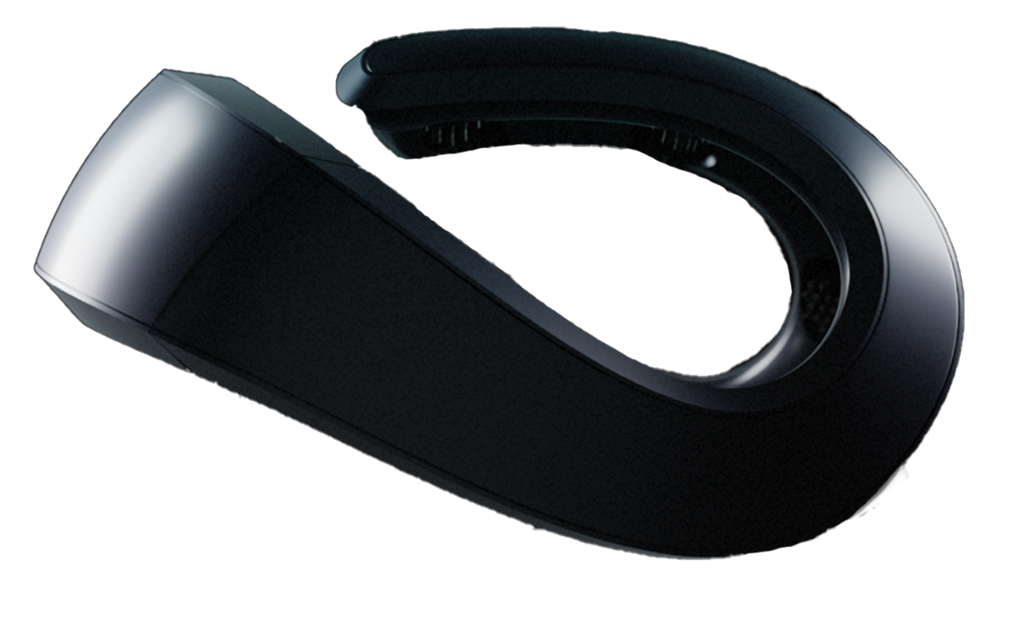
Mu suppression is measured most clearly at central electrode sites over the sensorimotor cortex, particularly at positions C3 and C4. The Neurosity Crown has electrodes at exactly these positions, making it one of the few consumer EEG devices that can capture mirror system activity.
Researchers have found that mu suppression correlates with self-reported empathy scores. People who score higher on empathy questionnaires show stronger mu suppression when observing others' actions and emotions. And reduced mu suppression has been reported in some studies of autism spectrum conditions, though this finding has been debated and the effect appears to be more nuanced than initially claimed.
Empathy Fatigue: When the System Overloads
If your brain automatically simulates other people's pain, what happens when it encounters too much suffering?
This is not a hypothetical question. Healthcare workers, first responders, therapists, and even people who consume too much distressing news media experience a phenomenon called empathy fatigue or compassion fatigue. It's characterized by emotional exhaustion, reduced empathic responsiveness, and sometimes a defensive numbing where the person stops feeling others' distress as a self-protective mechanism.
Neuroscience offers an explanation. Tania Singer's research group found that prolonged exposure to others' suffering produces sustained activation of the anterior insula and anterior cingulate cortex, the affective empathy circuit. Over time, this activation becomes aversive rather than motivating. Instead of feeling moved to help, the empathizer feels overwhelmed and withdraws.
But Singer's team also discovered something hopeful. There's a difference between empathic distress (feeling bad because someone else feels bad) and compassion (feeling warmth and concern for someone who is suffering). These two responses activate different neural circuits. Empathic distress activates the pain-related insula and anterior cingulate. Compassion activates the medial orbitofrontal cortex, ventral striatum, and regions associated with reward and affiliation.
When Singer trained participants in compassion meditation (a practice focused on generating feelings of warmth and caring rather than shared suffering), the neural response to others' pain shifted from the distress circuit to the compassion circuit. Participants reported feeling more motivated to help and less personally overwhelmed. The brain's response to suffering was still engaged, but it was transformed from a painful resonance into an approach-oriented care response.
This has practical implications. The antidote to empathy fatigue isn't less empathy. It's a different kind of empathy. Training the brain to respond to suffering with compassion rather than distress changes the neural signature of the response and prevents the burnout that comes from shared pain without shared purpose.
The neuroscience of empathy reveals that it is more trainable than most people assume. Affective empathy can be modulated through attention regulation and reappraisal. Cognitive empathy improves with deliberate perspective-taking practice. And compassion training can shift the entire neural response to suffering from exhausting personal distress to sustainable, motivated caring. The brain's empathy circuits are plastic. They respond to practice.
The Social Brain Under a Wearable Microscope
For most of the history of empathy research, studying these neural processes required expensive lab equipment and highly controlled conditions. You'd bring someone into a brain imaging facility, show them carefully curated videos or images, and measure their response. The social context was stripped away. The empathy was studied in isolation from the social interactions that produce it.
EEG wearables are changing this. When you can measure brain activity during real social encounters, in offices, classrooms, homes, and conversations, the research moves from artificial to authentic.
The Neurosity Crown's 8-channel EEG captures the key signatures of empathic processing. The central electrodes at C3 and C4 measure mu suppression, the mirror system's response to observed actions and emotions. The frontal electrodes at F5 and F6 capture the alpha asymmetry associated with approach versus withdrawal in social contexts. And the parietal electrodes at CP3 and CP4 contribute to the broader picture of attention and cognitive processing that underlies perspective-taking.
At 256Hz, the Crown resolves the rapid temporal dynamics of empathic responses, the millisecond-scale patterns that distinguish automatic emotional resonance from deliberate perspective-taking. The on-device N3 chipset processes everything locally with hardware-level encryption, which matters enormously for social brain data. Your empathic responses and social processing patterns are among the most intimate neural signatures your brain produces.
For developers, the JavaScript and Python SDKs open new possibilities. Imagine a meditation app that tracks mu suppression during compassion practice, providing real-time feedback on mirror system engagement. Or a communication tool that monitors frontal alpha asymmetry during conversations, flagging moments of social withdrawal. Through MCP integration, an AI assistant could even adapt its communication style based on your real-time social brain state.
The Brain That Feels for Others
Empathy might be the most important thing the human brain does. Not the most computationally difficult. Not the most metabolically expensive. But the most important for everything that makes human society possible: cooperation, caregiving, moral reasoning, love.
The neuroscience reveals that empathy isn't a single ability but a family of neural processes. Mirror neurons simulate others' actions in your motor cortex. The anterior insula and anterior cingulate cortex simulate others' pain and emotions. The temporoparietal junction and medial prefrontal cortex construct explicit models of others' mental states. These systems interact, but they can also dissociate, producing the fascinating clinical variations where some components of empathy are intact and others are impaired.
The mirror neuron story, with all its controversy and hype, taught the field something essential: understanding other people is not a purely abstract, disembodied, computational process. It's rooted in the body. Your brain uses its own physical and emotional systems as a template to interpret what's happening in other bodies and other minds. This is why watching someone in pain makes you wince. Why yawning is contagious. Why watching an expert athlete perform makes your own muscles twitch.
You are, at a neural level, never fully separate from the people around you. Your brain is constantly running background simulations of their states, borrowing your own circuits to model theirs. The boundary between self and other, which feels so absolute in conscious experience, is remarkably permeable at the level of neurons.
That permeability is not a flaw. It's the feature that made human civilization possible. And for the first time, the tools exist to watch it happen in real time, not in a laboratory, but in the living, breathing, connected social world where empathy actually matters.