


The Neuroscience of Laughter

You've Been Laughing Your Whole Life and You Have No Idea Why
Here's something that should bother you more than it does: you don't know why you laugh.
Not in the philosophical sense. In the neurological sense. You experience something, a joke, a situation, a friend's facial expression, and your brain initiates one of the most complex coordinated motor-cognitive-emotional responses in its entire repertoire. Your diaphragm contracts. Your vocal cords vibrate. Your facial muscles contort. Your breathing pattern completely reorganizes. Endorphins flood your system.
And you didn't decide to do any of it.
You can decide to raise your arm. You can decide to speak a sentence. You can decide to walk across a room. But you cannot decide to find something genuinely funny. Laughter, real laughter, bypasses your voluntary control system entirely. It erupts. It happens to you.
This makes laughter one of the most interesting puzzles in neuroscience. It's a behavior that requires your most sophisticated cognitive machinery (understanding context, detecting incongruity, processing social dynamics) but produces an output that looks almost primitive (uncontrolled vocalization, involuntary muscle contraction, tears). The smartest part of your brain generates the setup. The oldest part of your brain delivers the punchline.
So what exactly is happening between your ears when you crack up?
The 200-Millisecond Journey From "I Don't Get It" to "I Can't Breathe"
Let's trace what happens in your brain when you hear a joke. And by "trace," I mean follow a neural cascade that unfolds in roughly 200 to 500 milliseconds, involving at least five distinct brain regions working in precise sequence.
The setup arrives first. If it's a verbal joke, your left hemisphere's language centers, Broca's area and Wernicke's area, parse the words and construct a mental model of the situation. Your prefrontal cortex builds an expectation. This is the "frame" that the punchline is about to violate.
Then comes the punchline. And here's where it gets neurologically wild.
Your temporal-parietal junction detects the incongruity between what you expected and what actually happened. This detection triggers a rapid cascade: the anterior cingulate cortex flags a conflict between your prediction and reality, the prefrontal cortex scrambles to resolve the incongruity (to "get" the joke), and then, in the moment of resolution, something remarkable happens.
A burst of gamma activity sweeps across the cortex.
This gamma burst, typically in the 30-50 Hz range, is the same type of high-frequency neural synchronization that occurs during insight moments, those "aha" experiences when a problem suddenly makes sense. Getting a joke is, neurologically speaking, a form of insight. Your brain has detected a pattern violation, rapidly constructed an alternative interpretation, and experienced the resolution as a tiny cognitive reward.
And that reward is not metaphorical. The ventral striatum and the nucleus accumbens, key structures in the brain's reward circuit, activate during the punchline resolution. Dopamine releases. The same neurotransmitter that fires when you eat chocolate, win a game, or receive an unexpected compliment fires when you get a joke.
Then the motor system kicks in. The supplementary motor area sends signals down to the brainstem's reticular formation, which coordinates the extraordinarily complex physical act of laughing. Your diaphragm, intercostal muscles, larynx, and facial muscles all have to fire in a precise pattern. The vocalization alone requires coordination between the nucleus ambiguus, the periaqueductal gray, and the respiratory centers of the medulla.
All of this, from punchline to belly laugh, in under half a second.
What Is the Two-Brain Theory of Humor?
One of the most fascinating findings in laughter neuroscience is that humor requires both hemispheres of your brain working in tight coordination, and each one contributes something completely different.
Your left hemisphere is the straight man. It processes the logical, linguistic structure of the joke. It builds the expectation. It follows the setup. It's the part of your brain that understands that a priest, a rabbi, and a penguin are walking into a bar and generates a prediction about where this is going.
Your right hemisphere is the comedian. It specializes in detecting the incongruity, the unexpected twist that violates the left hemisphere's prediction. Patients with right hemisphere damage can follow a joke's logical structure perfectly but fail to find it funny. They can explain the joke, analyze its structure, identify the twist. They just don't laugh. The cognitive machinery is intact. The humor response is gone.
Conversely, patients with left hemisphere damage (particularly in language areas) may struggle to follow verbal jokes but can still laugh at physical comedy, slapstick, and visual incongruities. The right hemisphere's incongruity detection system works fine on its own for non-verbal humor.
This tells us something profound about what humor actually is. It's not a single brain function. It's an emergent property that arises from the interaction between two different processing systems. One system builds a model of reality. The other system notices when that model breaks. And when the break is surprising but safe, the result is laughter.
Psychologist Peter McGraw proposed that humor occurs when something is simultaneously a violation (unexpected, wrong, threatening) and benign (safe, acceptable, okay). This maps directly onto the neuroscience: the amygdala briefly registers a violation (threat detection), but the prefrontal cortex rapidly categorizes it as non-threatening. The relief from the false alarm, combined with the cognitive reward of resolving the incongruity, produces the laughter response. This is why tickling works: it's a simulated attack (violation) from someone you trust (benign).
Contagious Laughter and the Opioid Connection
Here's a question that reveals just how strange laughter really is: why is it contagious?
You hear someone laugh across a room, and something happens in your brain before you even know what's funny. Your supplementary motor area activates. Your premotor cortex starts simulating the laughter motor program. Your facial muscles begin to shift. You might find yourself smiling or chuckling before you have any idea what the joke was.
Sophie Scott, a neuroscientist at University College London, has spent years studying this phenomenon. Her fMRI research shows that hearing laughter triggers automatic motor simulation in the listener's brain, essentially priming the neural circuits for joining in. This response is involuntary and appears to be mediated by mirror neuron systems in the premotor cortex.
But the contagion effect goes deeper than motor mimicry.
Robin Dunbar, the evolutionary anthropologist famous for "Dunbar's number" (the idea that humans can maintain about 150 social relationships), made a discovery about laughter that reframes the entire phenomenon. His team at Oxford found that genuine social laughter triggers the release of endogenous opioids, essentially the brain's own morphine. And here's the key: the opioid release happens not just in the person laughing, but in everyone laughing together.
Dunbar's team measured pain tolerance (a reliable proxy for endorphin levels) before and after participants watched comedy together versus alone. Group laughter produced significantly higher pain tolerance than solitary laughter, which produced higher tolerance than watching something neutral. The more people laughed together, the stronger the opioid response.
This is why watching a comedy in a packed theater is funnier than watching it alone on your couch. Your brain isn't just processing the jokes differently. It's releasing different quantities of endogenous opioids based on the social context. Laughter is a group-level neurochemical bonding event.
Dunbar argues that laughter evolved as a "grooming at a distance" mechanism. Physical grooming (picking parasites off each other, like other primates still do) triggers opioid release and bonds pairs together. But grooming is one-to-one and time-intensive. Laughter can bond an entire group simultaneously. It's evolution's solution to the problem of maintaining social cohesion in groups larger than grooming can support.
The "I Had No Idea" Moment: Most Laughter Has Nothing to Do With Humor
Robert Provine, a neuroscientist at the University of Maryland, spent years studying laughter in its natural habitat: actual conversations between actual people. His method was beautifully simple. He and his students lurked in malls, cafeterias, and sidewalks, recording when people laughed and what preceded the laughter.
The finding that startled the field: only about 10-20% of real-world laughter follows anything resembling a joke or humorous remark. The vast majority of laughter follows completely mundane statements.
"Hey, John's here." [laughter] "I'll see you later." [laughter] "I know, right?" [laughter]
This isn't humor-driven laughter. It's social laughter. And it serves a completely different neural function.
Social laughter is primarily processed through subcortical circuits and the brain's reward/bonding systems rather than through the prefrontal cortex's incongruity-detection networks. It's less about cognition and more about connection. It signals affiliation, agreement, comfort. It tells the other person's brain: "We're in the same group. We're safe with each other."
| Type of Laughter | Primary Neural Circuit | Function | Percentage of Real-World Laughter |
|---|---|---|---|
| Humor-driven (Duchenne) | Prefrontal cortex + reward circuit + motor output | Cognitive reward from incongruity resolution | 10-20% |
| Social/affiliative | Subcortical reward + opioid system | Group bonding, signaling affiliation | 50-60% |
| Nervous/anxious | Amygdala + emotional regulation circuits | Stress regulation, tension release | 10-15% |
| Schadenfreude | Ventral striatum + social comparison circuits | Status assessment, in-group bonding | 5-10% |
| Relief laughter | Sympathetic nervous system deactivation | Tension discharge after threat passes | 5-10% |
This discovery forced neuroscientists to rethink laughter from the ground up. Laughter isn't primarily a response to humor. It's primarily a social behavior. The humor response is actually the specialized, derived form. The social bonding function is the evolutionary original.
What Laughter Does to Your Brain Chemistry (And Your Body)
Let's get specific about the neurochemical cocktail that genuine laughter produces.
Endorphins. As Dunbar's research demonstrated, laughter triggers the release of beta-endorphins from the pituitary gland. These bind to opioid receptors throughout the brain, producing analgesia (pain reduction) and euphoria. A genuine laughing fit can increase pain tolerance by approximately 10%, an effect that lasts 15 to 30 minutes after the laughter stops.
Dopamine. The reward circuit activation during humor processing releases dopamine in the nucleus accumbens and the ventral tegmental area. This is what makes funny things feel rewarding and what motivates you to seek out humor. The dopamine response is particularly strong during surprise, which is why unexpected punchlines are funnier than predictable ones. Your dopamine system responds to prediction errors, and a good joke is essentially an engineered prediction error.
Serotonin. Extended laughing sessions increase serotonin availability, contributing to the sustained mood elevation that follows a good laugh. This is partly why people report feeling "lighter" after laughing hard. It's not just a metaphor. Serotonin literally modulates the emotional weight your brain assigns to stressors.
Cortisol and epinephrine reduction. Laughter activates the parasympathetic nervous system, directly counteracting the sympathetic "fight-or-flight" response. Lee Berk's research at Loma Linda University found that watching a humorous video reduced cortisol by 39% and epinephrine by 70% compared to baseline in stressed participants. The stress hormone reduction began during the laughter and persisted for hours afterward.
Nitric oxide. This one surprises people. Laughter increases endothelial production of nitric oxide, which dilates blood vessels and improves cardiovascular function. Michael Miller's research at the University of Maryland found that laughter improved blood vessel function by 22%, comparable to the effect of aerobic exercise. This is why cardiologists sometimes half-joke (no pun intended) that laughter is good for your heart. It literally is.
Named after the 19th-century neurologist Guillaume Duchenne, Duchenne laughter involves the contraction of both the zygomatic major muscle (which pulls the corners of the mouth up) and the orbicularis oculi muscle (which creates crow's feet around the eyes). Non-Duchenne laughter activates only the mouth muscles. The neurochemical benefits described above are primarily associated with Duchenne laughter, which is involuntary and genuine. Your brain can distinguish between the two types. fMRI studies show that hearing Duchenne laughter activates the reward circuit more strongly than hearing non-Duchenne laughter.
Laughter, the Brain, and the Question of Consciousness
Here's where the neuroscience of laughter gets philosophical in a way that connects to something much bigger.
Laughter reveals a fundamental split in the brain between two systems: the system that processes information and the system that generates subjective experience. Your prefrontal cortex can analyze a joke's structure. It can identify why it's theoretically funny. But analysis alone doesn't produce laughter. Something else has to happen, something that neuroscience can describe but not yet fully explain.
That something is the felt sense of humor. The qualia of funniness. And it arises from the interaction between cognitive processing (understanding the incongruity) and emotional/reward processing (experiencing the resolution as pleasurable). Neither system alone produces laughter. Both must fire, and they must fire in the right sequence with the right timing.
This is why AI systems can generate jokes that are structurally sound but frequently fall flat. They can produce incongruity and resolution. They can't (yet) produce the subjective experience of funniness, because that experience depends on having a brain with an emotional reward system that responds to prediction errors in a specific way.
And this connects to something even deeper about what brain data means. When you watch your brainwaves in real-time, you're seeing the electrical correlates of your subjective experience. The gamma burst that accompanies getting a joke. The alpha shift that marks genuine amusement. The reward circuit activation that makes you want to hear the next joke.
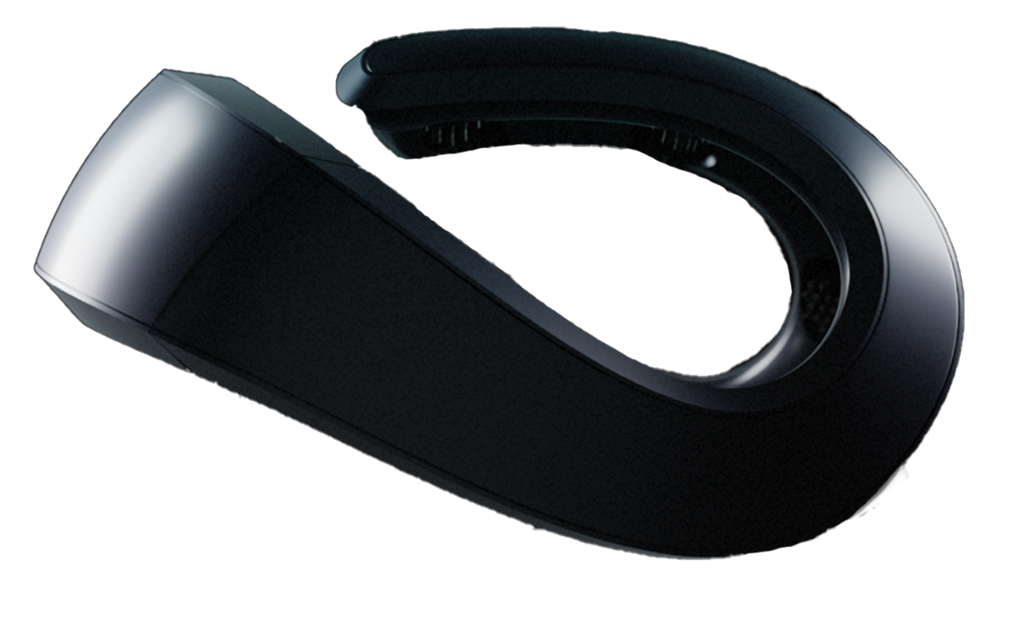
The Neurosity Crown sits at 8 electrode positions across your cortex, sampling at 256Hz. It picks up the frontal activity associated with humor processing, the temporal activity associated with incongruity detection, and the parietal activity associated with integration. When you find something genuinely funny, those patterns change in real-time.
For researchers and developers working with the Crown's JavaScript and Python SDKs, laughter represents one of the most interesting emotional states to study because it produces such a distinctive and reliable neural signature. The gamma spike, the reward-circuit engagement, the bilateral activation pattern. These are all accessible through raw EEG and power-by-band data. Through MCP integration, AI tools could potentially analyze your humor response patterns over time, building a picture of what your brain finds genuinely funny versus merely clever.
Why Laughter Might Be More Important Than You Think
Zoom out for a moment.
Laughter is one of the very few human behaviors that is universal across all cultures, present from infancy, resistant to voluntary control, and deeply tied to both cognitive sophistication and social bonding. It's ancient (great apes laugh during play) and uniquely elaborated in humans (no other species laughs at jokes, because no other species tells them).
It's also one of the brain's most efficient stress regulators. A 30-second genuine laughing fit reduces cortisol, releases endorphins, boosts immune function, improves cardiovascular health, and strengthens social bonds. No pharmaceutical does all of that simultaneously with zero side effects.
The neuroscience of laughter tells us that the brain's deepest reward circuits, the ones that evolved to keep us fed and bonded and alive, respond to cognitive surprise. Your brain rewards you for noticing when reality doesn't match your predictions. It rewards you for reframing a violation as benign. It rewards you for connecting with other humans through shared amusement.
And it does all of this through mechanisms we can now measure. The gamma bursts, the opioid release, the frontal alpha shifts, the bilateral activation patterns. These aren't abstractions. They're real-time signals from a brain that is doing something simultaneously ancient and extraordinary.
You've been laughing your whole life. Now you know what's actually happening when you do.
The funniest part? Even knowing all of this, you still can't make yourself laugh on command. Your brain has been keeping this secret for 300,000 years, and it's not giving up control anytime soon.