


Neurosity Crown for Mental Wellness: Focus, Flow, and Calm

You've Been Guessing About Your Mental State. Your Brain Hasn't.
Right now, if someone asked you how focused you are on a scale of 1 to 10, you'd probably give an answer. And that answer would be, at best, a rough approximation. Maybe you feel focused. But are you actually focused, in the sense that your dorsal attention network is engaged, your frontal theta is elevated, and your alpha power is suppressed in task-relevant regions?
You don't know. Nobody does, through introspection alone.
This is the strange situation we find ourselves in regarding mental wellness. We have sophisticated language for describing how we feel: stressed, focused, calm, scattered, in the zone, burned out. But we're relying on the same organ we're trying to evaluate to do the evaluation. It's like asking a tired person to assess how tired they are. The instrument doing the measuring is the thing being measured.
Your brain, however, isn't guessing. Every millisecond, your 86 billion neurons are firing in patterns that precisely reflect your cognitive and emotional state. Focused attention produces specific electrical signatures. Deep calm produces different ones. flow state, that elusive zone of effortless peak performance, produces yet another pattern that is so distinctive neuroscientists can identify it on an EEG readout without being told what the person was doing.
The gap between what you think you feel and what your brain is actually doing is larger than most people realize. And closing that gap, making invisible mental states visible, is where the Neurosity Crown comes in.
The Three Pillars of Mental Wellness (And Their Brainwave Signatures)
Mental wellness is a broad term that means different things to different people. But when you look at it through the lens of neuroscience, three specific brain states emerge as the foundation of day-to-day psychological well-being. Each one has a distinct electrical signature. And each one is something you can track, cultivate, and improve.
Focus: Your Brain's Concentration Fingerprint
Focus isn't a single thing. It's a coordinated effort involving multiple brain regions that must synchronize their activity while suppressing interference from everything else.
When you're genuinely focused, your EEG shows a characteristic pattern: increased frontal midline theta (4-8 Hz) generated by the anterior cingulate cortex, reduced alpha power in task-relevant sensory regions (your brain is actively processing rather than idling), and elevated low-beta activity (13-20 Hz) in the prefrontal cortex reflecting active cognitive engagement.
The frontal midline theta is particularly interesting. It's generated by the brain's conflict-monitoring system, the anterior cingulate cortex. This region detects when your attention has wandered and initiates the cognitive effort to bring it back. Stronger frontal theta means a more active conflict-monitoring system, which means better sustained attention.
Here's what most people don't realize about focus: it fluctuates far more than you think. Research by Esterman and colleagues at Boston University used EEG to track attention during sustained tasks and found that focus naturally oscillates in cycles of roughly 20-40 seconds between "in the zone" and "out of the zone" states. Even when you feel consistently focused, your brain is cycling.
Seeing these cycles in real time changes your relationship with focus. Instead of getting frustrated when concentration breaks, you start to understand the rhythm. You can identify what conditions (time of day, sleep quality, environment) produce your longest in-the-zone cycles. You stop treating focus as a character trait and start treating it as a measurable brain state with specific, manipulable conditions.
Flow: When Your Brain Stops Trying
Flow state, the concept Mihaly Csikszentmihalyi made famous in 1990, has been one of the most studied peak performance states in psychology. But for decades, it was studied primarily through self-report. People described their flow experiences, and researchers categorized the features: loss of self-consciousness, time distortion, effortless action, intrinsic reward.
Then neuroscientists started putting flow in the scanner. And the brain in flow state looked nothing like what most people expected.
The prevailing assumption was that flow would be a state of hyperactivation. Peak performance must mean the brain is working at maximum capacity, right? Wrong. Flow turns out to involve a selective suppression of brain activity, a phenomenon neuroscientist Arne Dietrich calls "transient hypofrontality."
During flow, activity in the prefrontal cortex actually decreases. The inner critic quiets. The self-monitoring circuits power down. The brain's executive function, which normally takes deliberate effort to maintain, shifts into an automatic mode where skill execution happens without conscious control.
On EEG, flow shows up as a distinctive pattern: increased alpha power (the brain is relaxed and not over-efforting), increased theta in frontal regions (deep engagement), and a particular ratio of alpha to theta that researchers have begun to use as a flow biomarker. There's also typically a suppression of high-beta, the frequency band associated with anxiety, self-doubt, and overthinking.
The practical implication is profound. You can't force flow. Trying harder actually pushes you away from it, because trying harder increases prefrontal activation and high-beta, the exact opposite of the flow signature. But you can create the conditions that make flow more likely. And you can recognize when you're in it, so you protect those periods from interruption.
Calm: Not the Absence of Activity, but a Specific Kind of It
Calm is the most misunderstood of the three states. Most people think calm means the brain quiets down. It doesn't. A calm brain is a highly active brain. It's just active in a specific way.
When you're genuinely calm, your EEG shows strong alpha power, particularly in posterior regions (parieto-occipital cortex). alpha brainwaves (8-13 Hz) represent a state of relaxed alertness: you're awake, aware, and present, but not straining. Your sensory processing regions are in an idling state, ready to engage but not currently responding to threats or demands.
Calm also involves reduced high-beta power and reduced gamma in anxiety-related networks. The amygdala, your brain's threat detector, is relatively quiet. The default mode network may be gently active, reflecting the kind of peaceful mind-wandering that feels restful rather than ruminating.
This is critically different from the "calm" of numbness or disengagement. A dissociated brain, one that's shut down in response to overwhelm, shows a very different EEG pattern: reduced alpha (not increased), elevated slow-wave activity, and disrupted connectivity between frontal and posterior regions. True neurological calm isn't shutdown. It's a state of active, relaxed readiness.
The distinction matters because genuine calm is a skill the brain can develop. Research on meditation, which is essentially calm-training, shows that regular practice increases baseline alpha power over time. Your resting state literally shifts toward calmer electrical activity. But you can only train what you can measure.
How the Crown Reads These States
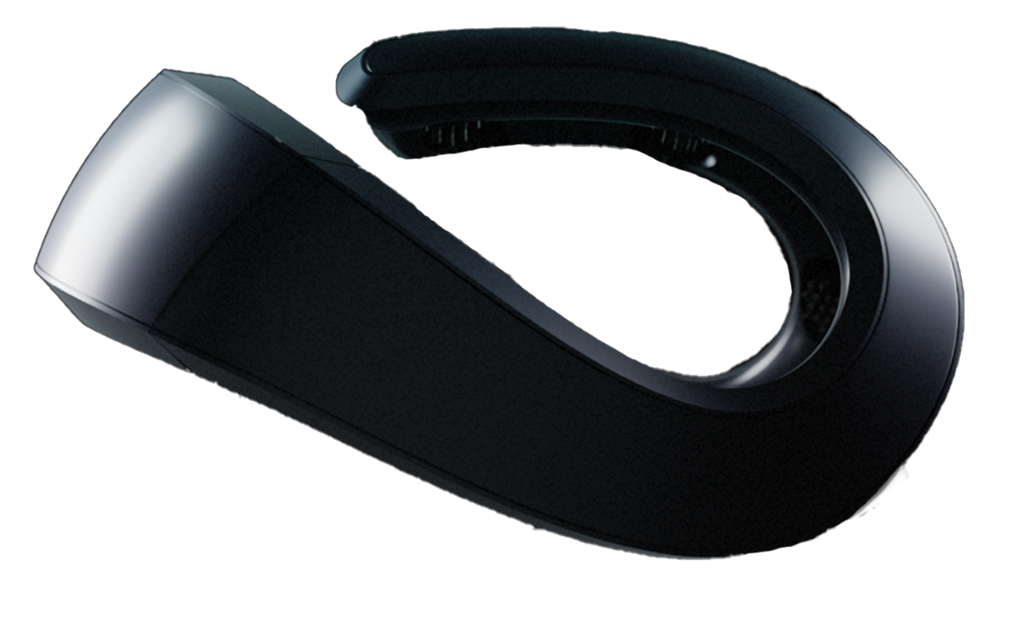
The Neurosity Crown isn't a meditation gadget. It's an 8-channel EEG brain-computer interface with the same kind of sensors and signal processing used in neuroscience research, scaled down to fit on your head like a pair of headphones.
| Feature | Specification | Why It Matters for Wellness |
|---|---|---|
| Channels | 8 EEG channels | Captures activity across frontal, central, and parietal regions, covering the networks involved in focus, flow, and calm |
| Positions | CP3, C3, F5, PO3, PO4, F6, C4, CP4 | Bilateral coverage of attention networks (frontal), sensorimotor areas (central), and alpha generators (parieto-occipital) |
| Sample Rate | 256Hz | Captures the full range of cognitive brainwave frequencies from delta through gamma |
| Processing | On-device N3 chipset | Real-time signal processing without sending raw brain data to the cloud |
| Security | Hardware encryption | Your brain data stays private by architecture, not by policy |
| Weight | 228 grams | Light enough for extended wear during work sessions, meditation, or daily monitoring |
The channel positions are worth understanding, because they're not random. F5 and F6 sit over the lateral prefrontal cortex, where executive attention and emotional regulation are orchestrated. C3 and C4 cover the central sulcus region, important for sensorimotor processing and body awareness. CP3 and CP4 sit at the centro-parietal junction, where attentional and awareness processes converge. PO3 and PO4 cover the parieto-occipital region, the primary generator of alpha rhythms and a key area for visual processing states.
This distribution means the Crown can simultaneously track frontal theta (focus and cognitive control), central mu rhythms (sensorimotor states), parietal alpha (relaxation and awareness), and the cross-regional coherence patterns that distinguish flow from ordinary concentration.
Focus Tracking: Turning Invisible Effort Into Visible Data
The Crown computes a focus score in real time based on the frontal and central EEG patterns associated with sustained attention. But the real power isn't in any single score. It's in the patterns that emerge over time.
Your Focus Profile
After a few days of wearing the Crown during work sessions, a picture starts to emerge. You might discover that your focus peaks between 9 and 11am, which aligns with what chronobiology research predicts for most people. Or you might find that your focus is actually highest at midnight, which means you're a genuine night owl and should stop trying to be a morning person.
You might notice that your focus drops sharply after lunch (post-prandial dip, driven by blood glucose shifts affecting prefrontal function) or that certain types of music measurably improve your concentration while others, despite feeling pleasant, actually fragment your attention.
These aren't feelings. They're data points. And the difference between managing your focus based on feelings versus data is the difference between navigating by intuition and navigating by GPS.
Neurofeedback Loops
The Crown's JavaScript and Python SDKs let you build applications that respond to your brain state in real time. This is where it gets genuinely interesting for mental wellness.
Imagine a focus timer that doesn't just track time but tracks your actual brain state. When your focus score drops below a threshold, it suggests a break, not based on an arbitrary 25-minute Pomodoro interval but based on your brain's real-time signal. When your focus is in its peak cycle, it suppresses notifications to protect the zone.
This is closed-loop neurofeedback, the same principle used in clinical neurofeedback therapy, running on a personal device you own and control. Decades of research support the efficacy of neurofeedback for attention training. A 2019 meta-analysis in Clinical EEG and Neuroscience found that neurofeedback produced significant improvements in sustained attention across multiple studies.
Flow Facilitation: Creating Conditions for Peak Experience
You can't command flow. But you can build an environment that makes it significantly more likely. The Crown's contribution to flow practice is twofold: pre-flow state detection and flow state protection.
Recognizing the On-Ramp
Flow doesn't appear instantly. It builds through a predictable sequence that Steven Kotler and the Flow Research Collective have documented: struggle (the hard work phase), release (letting go of conscious control), flow (the zone), and recovery.
Each phase has EEG correlates. The struggle phase shows high beta and elevated frontal theta as your brain grapples with the challenge. Release shows a shift toward alpha dominance as the prefrontal cortex begins to quiet. Flow itself shows the characteristic alpha-theta pattern with reduced high-beta.
By watching these phases in real-time EEG data, you can learn to recognize when you're in the release phase, the critical transition where most people accidentally abort the process by checking their phone or getting frustrated with the difficulty of the struggle phase. Knowing you're on the on-ramp to flow changes how you respond to the discomfort of the struggle phase. Instead of interpreting difficulty as failure, you see it as the prerequisite.
Protecting the State
The Crown's integration with other tools through its SDK means you can build automated protections for flow states. When your brainwave pattern matches your personal flow signature, you could trigger do-not-disturb modes, suppress notifications, dim non-essential screen elements, or log the time for later analysis.
Most flow states last 45-90 minutes once achieved but can be broken in seconds by an interruption. Given that the struggle phase to re-enter flow can take 15-30 minutes, a single notification can cost you over an hour of peak performance. Automated protection isn't a luxury. It's basic cognitive hygiene.
Calm Training: Building a Calmer Baseline
The Crown's calm score reflects the EEG patterns associated with relaxed, non-anxious brain states. And like focus, the long-term trends tell a richer story than any single session.
Meditation Verification
If you meditate, the Crown answers a question you've probably asked yourself: "Am I actually meditating, or am I just sitting here thinking with my eyes closed?"
The brainwave difference between genuine meditation and "sitting with eyes closed" is clear on EEG. Meditation produces elevated alpha with frontal midline theta and reduced beta. Sitting and thinking shows beta dominance with irregular alpha.
Real-time feedback on this distinction accelerates the learning curve for meditation. Instead of practicing for months hoping you're doing it right, you can see within seconds whether your brain has entered a meditative state. Multiple studies have shown that EEG neurofeedback during meditation improves the acquisition of meditative skills and increases the depth of practice.
Stress Pattern Recognition
Your calm scores across days and weeks reveal your stress patterns with a precision that self-report can't match. You might discover that your Monday calm scores are consistently lower than other days, even on Mondays when nothing particularly stressful happens. That's your brain's anticipatory stress response, a conditioned pattern that fires before the stressor arrives.
Seeing these patterns makes them addressable. Once you know that your brain starts the week in a stress-elevated state, you can build a Monday morning routine that specifically targets parasympathetic activation: breathing exercises, a short meditation, a walk without your phone. And you can verify, in real data, whether those interventions actually work for your brain.
The Data-Driven Wellness Loop
The Crown enables a fundamentally different approach to mental wellness. Instead of following generic advice and hoping for the best, you can run experiments on yourself with objective measurements.
The loop works like this:
-
Measure your baseline. Wear the Crown during your normal routine for a week. Capture your focus curves, flow frequency, and calm patterns.
-
Identify one target. Maybe your afternoon focus drops are severe. Maybe you never reach flow. Maybe your calm scores suggest chronic low-level stress.
-
Implement one change. A 15-minute midday meditation. A phone-free morning. A different work environment.
-
Measure the effect. Compare your brainwave patterns before and after the intervention, using the same metrics.
-
Iterate. Keep what works. Discard what doesn't. Let the data, not your assumptions, guide the process.
Through the MCP integration, your brain data can flow into AI tools like Claude for pattern analysis that would be tedious to do manually. Over weeks and months, an AI-assisted analysis of your brainwave trends can identify correlations between your habits, environments, sleep patterns, and mental states that would be invisible to introspection alone.
This is what personal neuroscience looks like. Not a clinical diagnosis. Not a medical treatment. A continuous, data-informed conversation with your own brain about what it needs to perform and feel its best.
The Gap Between Feeling and Knowing
Mental wellness has always been personal. It will always be personal. No device replaces the human experience of knowing how you feel and what matters to you.
But there's a gap between feeling and knowing. Between "I think I'm focused" and measuring the frontal theta that proves it. Between "meditation seems to help" and tracking the alpha power increase that confirms it. Between "I feel stressed" and seeing the high-beta pattern that your brain produces two hours before you consciously register the stress.
The Crown doesn't replace your subjective experience. It annotates it. It gives you a second layer of information, objective and precise, that helps you understand what's happening in the three pounds of tissue where all of your experience originates.
Focus, flow, and calm aren't abstract concepts. They're specific brain states with specific electrical signatures. And for the first time, you can watch those signatures unfold in real time, on your own head, during your actual life.
That changes what's possible. Not because the technology is magic, but because measurement changes behavior. When you can see what your brain is doing, you stop guessing about what it needs. And that might be the most important thing anyone can do for their mental wellness: close the gap between feeling and knowing, and start making decisions based on both.