


How to Stop Procrastinating, According to Your Brain

You Already Know Why You Procrastinate. Here's How to Actually Stop.
If you've read about the neuroscience of procrastination, you know the uncomfortable truth: procrastination isn't laziness. It's your amygdala hijacking your prefrontal cortex to avoid emotional discomfort. You know about temporal discounting, limbic friction, and the dopamine trap. You understand the mechanism.
And yet. You're probably still procrastinating.
Understanding why your brain does something and changing what your brain does are two entirely different challenges. Knowing that your amygdala fires before your prefrontal cortex can respond is interesting. But it doesn't, by itself, help you overcome procrastination using neuroscience. What you need are strategies that work with your brain's architecture instead of fighting against it.
That's what this guide is about. Six techniques, each grounded in neuroscience research, that target the specific neural circuits responsible for procrastination. Not productivity tips. Not motivational slogans. Actual interventions that change the way your brain handles aversive tasks.
Let's start with one that sounds almost too simple to work.
The 2-Minute Rule: Why Shrinking the Task Rewires the Threat Response
Here's an experiment. Think about a task you've been putting off. Something big, something that makes your stomach tighten when you think about it. Got it?
Now ask yourself: could you work on it for just two minutes?
Not finish it. Not make a dent. Just two minutes. Open the document. Write one sentence. Read the first page of that paper. Two minutes, and you have full permission to stop.
This is the 2-minute rule, popularized by productivity writer David Allen and later refined by James Clear. And it works far better than it has any right to, for a reason that only makes sense when you understand the neuroscience of task initiation.
Your amygdala calibrates its threat response based on the perceived size of the challenge ahead. A task framed as "write the entire quarterly report" generates a large amygdala signal. The anticipated effort, the possibility of failure, the hours of sustained concentration required, all of it compresses into a single blast of aversive emotion. Your prefrontal cortex would need to marshal significant resources to override that signal. On a bad day, it can't.
But "work on this for two minutes"? The amygdala barely blinks. Two minutes of effort is so small, so low-stakes, that it falls below the threshold that triggers the avoidance cascade. Your prefrontal cortex doesn't need to fight the amygdala. There's no fight to have.
Here's where it gets interesting. Once you've started, your brain's dynamics change completely.
The hardest part of any task isn't the middle or the end. It's the beginning. That's because the beginning is where you pay the full cost of what Andrew Huberman calls "limbic friction," the metabolic energy required to shift your brain from its current state (relaxed, distracted, scrolling) to a focused, task-engaged state. That state transition requires norepinephrine, dopamine, and sustained prefrontal activation. It's expensive. And your brain resists paying the toll.
But once the toll is paid, once you're two minutes into the work, continuing costs almost nothing by comparison. The neurochemical state shift has already happened. Your task-positive network is online. Your prefrontal cortex is engaged. Stopping and restarting later would mean paying the full transition cost again. So your brain, the same brain that desperately wanted to avoid starting, now prefers to continue.
Psychologists call this phenomenon "behavioral activation." Neuroscientists see it in the data: frontal theta power, the EEG signature of cognitive engagement, rises sharply during the first 60 to 90 seconds of a task and then stabilizes. The hardest neural work happens at the very beginning. The 2-minute rule gets you past that peak by making the beginning feel trivially small.
The number is somewhat arbitrary, but the principle is precise. The task commitment must be small enough that your amygdala does not classify it as a threat. For some people and some tasks, 5 minutes works. For particularly aversive tasks, even 30 seconds is a valid starting point. The key is that the commitment must feel genuinely trivial. If you feel resistance to the shortened version, it's still too big.
Implementation Intentions: Programming Your Prefrontal Cortex in Advance
In 1999, psychologist Peter Gollwitzer published a paper that would become one of the most replicated findings in behavioral science. He showed that people who made a specific plan about when, where, and how they would perform a behavior were dramatically more likely to follow through than people who simply intended to do it.
The difference wasn't small. Across a meta-analysis of 94 studies, implementation intentions produced a medium-to-large effect on goal achievement. They worked for exercise, studying, healthy eating, quitting smoking, and, crucially, overcoming procrastination.
An implementation intention looks like this: "When it is 9am on Monday, I will sit at my desk, open my laptop, and write the introduction to my report."
Compare that to a regular intention: "I'm going to work on my report this week."
Both describe the same goal. But only one of them gives your brain a specific trigger and a specific response. And that difference changes the neural mechanism of task initiation entirely.
Here's why. Regular intentions require what neuroscientists call deliberative processing. When Monday arrives, your brain has to actively decide: Is now the right time? Should I do this or something else first? Where should I work? What part should I start with? Each decision requires prefrontal cortex resources. And while your prefrontal cortex is busy deliberating, your amygdala is whispering: this is going to be unpleasant, let's check email instead.
Implementation intentions bypass this entirely. By specifying the situational cue in advance ("when it is 9am, at my desk"), you create what Gollwitzer calls a "strategic automaticity." The cue triggers the behavior without requiring a new decision. Your brain recognizes the situation and executes the plan the way it executes any well-rehearsed response: quickly, efficiently, and with minimal prefrontal overhead.
In neuroimaging studies, people using implementation intentions show reduced activity in the deliberative regions of the prefrontal cortex during task initiation. They don't need to think about whether to start. They've already decided. The neural cost of initiation drops to nearly zero.
This is genuinely one of the most powerful procrastination interventions in the scientific literature. And the mechanism makes elegant sense. You're not trying to make your prefrontal cortex stronger in the moment. You're doing the prefrontal work in advance, during a calm, unemotional planning session, and then deploying the result automatically when the moment arrives.
The format is always: "When [specific situation], I will [specific action]." Be concrete about all three elements: time, place, and behavior. "When I sit down at my desk after lunch, I will open the project file and write for 20 minutes." Vague plans ("I'll work on it sometime this afternoon") don't trigger the automatic execution pathway. Your brain needs a clear situational cue to match against. The more specific, the stronger the automaticity.
Temptation Bundling: Hacking the Dopamine Imbalance
Remember the dopamine problem from the neuroscience of procrastination? Your brain releases dopamine in anticipation of rewarding activities. Social media, snacking, watching videos: all of these generate a dopamine pulse that creates motivational pull. The task you're avoiding generates no anticipatory dopamine, and in fact, generates an aversive signal that pushes you away.
You're caught between a pull toward pleasure and a push away from discomfort. The standard advice is to resist the pull through willpower. But willpower is a prefrontal cortex function, and the prefrontal cortex has limited metabolic resources. Relying on willpower alone is like trying to bail out a flooding boat with a teacup.
Behavioral economist Katherine Milkman at the Wharton School proposed a different approach. Instead of fighting the dopamine imbalance, use it. Pair the aversive task with something your brain finds rewarding. She calls this "temptation bundling."
The concept is simple. You take something you want to do (the temptation) and make it conditional on doing something you need to do (the aversive task). Listen to your favorite podcast, but only while doing data entry. Watch your guilty-pleasure show, but only while on the exercise bike. Drink your favorite coffee, but only while working on the project you've been avoiding.
Here's what happens neurologically. The anticipated reward of the bundled temptation generates a dopamine signal. That dopamine signal now becomes associated with starting the aversive task, because the task is the gateway to the reward. Over time, your brain begins to generate anticipatory dopamine for the combined activity. The thing you were avoiding starts to feel, if not pleasant, at least neutral. The dopamine push-pull dynamic shifts in your favor.
Milkman tested this rigorously. In a study of exercise behavior, participants assigned to temptation bundling (they could only listen to addictive audiobooks at the gym) exercised 51% more than the control group. The effect persisted even after the study ended, suggesting real neural reconditioning rather than temporary compliance.
For procrastination, temptation bundling is particularly effective because it addresses the dopamine component directly. You're not trying to make the aversive task less aversive. You're adding a reward signal on top of it that changes the brain's overall cost-benefit calculation.
Self-Compassion: The Most Counterintuitive Anti-Procrastination Tool
Now for the strategy that surprises most people. And this is the "I had no idea" moment of this guide.
You might assume that the best response to procrastination is to get tougher on yourself. Push harder. Criticize the laziness. Hold yourself to higher standards. Most procrastination advice implicitly endorses this: set strict deadlines, impose consequences, use accountability partners who won't let you slack off.
The research says the opposite.
Fuschia Sirois, a psychologist at Durham University, has spent over a decade studying the relationship between self-compassion and procrastination. Her findings are consistent and striking: self-compassion is one of the strongest predictors of low procrastination. People who treat themselves with kindness when they fail procrastinate significantly less than people who criticize themselves.
This seems backward. Shouldn't self-compassion make you more likely to let yourself off the hook?
No. And the neuroscience explains why perfectly.
When you criticize yourself for procrastinating, you generate shame. Shame is one of the most potent activators of the amygdala. It floods your system with cortisol, narrows your attention, and shifts your brain into threat-avoidance mode. The exact mode that caused the procrastination in the first place.
Self-criticism creates a procrastination loop:
- You avoid a task (amygdala-driven avoidance)
- You criticize yourself for avoiding it (shame triggers more amygdala activation)
- The increased negative emotion makes the task feel even more aversive
- You avoid it again, now with added shame
- Repeat
Each cycle makes the next one worse. The shame compounds. The task becomes psychologically enormous, not because of the work itself, but because of the accumulated negative emotion surrounding it.
Self-compassion breaks this loop at step 2. Instead of adding shame to the avoidance, you acknowledge the difficulty without judgment. "This is hard. Lots of people struggle with this. I can try again." This response does not activate the amygdala. It actually activates the mammalian caregiving system, which releases oxytocin and endogenous opioids that reduce cortisol and dampen amygdala reactivity.
| Response to Procrastination | Neural Effect | Impact on Future Behavior |
|---|---|---|
| Self-criticism / shame | Amygdala activation, cortisol surge, prefrontal cortex suppression | Increases avoidance, creates procrastination-shame loop |
| Self-compassion / kindness | Mammalian caregiving system activation, oxytocin release, reduced cortisol | Lowers amygdala reactivity, frees prefrontal cortex to re-engage |
| Ignoring the procrastination | Default mode network activation, rumination | Task remains aversive, anxiety builds passively |
Sirois found in a 2014 study published in PLOS ONE that self-compassion predicted lower procrastination even after controlling for self-esteem, conscientiousness, and depression. It wasn't that compassionate people procrastinated less because they felt better about themselves in general. Self-compassion specifically disrupted the emotional mechanism that sustains chronic avoidance.
A 2020 study by Sirois and colleagues went further, showing that a brief self-compassion intervention (just writing a compassionate letter to yourself about a recent procrastination episode) reduced procrastination behavior on subsequent tasks. The intervention took about 10 minutes. The effect was measurable immediately.
You read that right. Being kind to yourself for 10 minutes can make you more productive than an hour of self-flagellation. It's not intuitive. But the neuroscience is clear.
Environment Design: Winning the Battle Before It Starts
Every strategy we've covered so far involves intervening once the amygdala has already fired. Implementation intentions pre-program your response. The 2-minute rule shrinks the threat signal. Temptation bundling adds a dopamine counterweight. Self-compassion breaks the shame loop.
But what if you could reduce the number of times the amygdala fires in the first place?
This is the principle behind environment design, and it's arguably the most underrated approach to overcoming procrastination. The idea is simple: your environment determines how much prefrontal cortex energy every action requires. And prefrontal energy is finite.
Consider two scenarios.
Scenario A: Your phone is on your desk, notifications on. Your browser has 23 tabs open, including social media. Your workspace is cluttered with unrelated materials. Your project file is buried three folders deep in your file system. To start working, you need to find the file, close the distracting tabs, resist checking each notification as it buzzes, and maintain focus while every element of your environment is generating competing dopamine signals.
Scenario B: Your phone is in another room. Your browser has one tab open: the project. Your workspace has only what you need. The file is already open from the last session. To start working, you sit down and begin.
The task is identical. The neural cost of starting is wildly different.
In Scenario A, your prefrontal cortex is fighting on multiple fronts. Each visible distraction generates an anticipatory dopamine signal that must be actively suppressed. Each notification is a potential amygdala trigger (what if it's something important?). By the time you've navigated to the right file and closed the irrelevant tabs, you've already depleted a meaningful chunk of the prefrontal resources you need for the actual work.
In Scenario B, the environment has done the prefrontal work for you. There are no competing signals to suppress. No decisions to make. The path from sitting down to working is a straight line.
Behavioral scientist BJ Fogg at Stanford calls this "design for laziness." Make the desired behavior the path of least resistance, and make the undesired behavior require effort. This works because your brain's default is always to conserve energy. If focused work is the easiest thing to do in your environment, your brain will drift toward it the same way it currently drifts toward distraction.
- Remove your phone from the room entirely, not just face-down on the desk. Out of sight reduces the amygdala's threat-monitoring load.
- Set up your workspace the night before so the transition cost the next morning is near zero.
- Use website blockers during work sessions. The knowledge that distraction is unavailable eliminates the dopamine anticipation signal entirely.
- Keep only task-relevant materials visible. Visual clutter generates low-level cognitive noise that drains prefrontal resources.
- Create a dedicated physical space for focused work. Your brain forms context-dependent associations. Over time, the space itself becomes a cue for the task-engaged neural state.
The key insight is that willpower and environment design are not separate strategies. They're two sides of the same coin. Every ounce of prefrontal energy you save through environment design is energy available for task initiation and sustained focus. You're not removing temptation because you're weak. You're removing temptation because your prefrontal cortex has a limited energy budget, and you want to spend it on the work that matters.
Neurofeedback: Training Your Prefrontal Cortex Like a Muscle
Everything we've discussed so far works around the fundamental imbalance at the heart of procrastination: the amygdala is fast and powerful, and the prefrontal cortex is slow and easily depleted. Implementation intentions outsmart the amygdala. Environment design removes its triggers. Self-compassion dampens its output.
But what if you could make the prefrontal cortex itself stronger?
This is the promise of neurofeedback, and it's where the science of overcoming procrastination connects to something genuinely new.
Neurofeedback works on a simple principle: show your brain its own activity, and it learns to regulate itself. You wear an EEG device that measures your brainwaves. A display translates that activity into something you can see or hear. When your brain produces the target pattern (say, increased frontal theta associated with focused engagement), you get positive feedback. When it drifts toward the avoidance pattern (decreased frontal theta, disrupted alpha asymmetry), the feedback changes.
Over time, your brain learns to reproduce the desired pattern more easily and more consistently. It's operant conditioning applied to neural oscillations. And the evidence that it works is stronger than most people realize.
A 2020 meta-analysis in Neuroscience and Biobehavioral Reviews found that neurofeedback training produced significant improvements in emotional regulation and attention, with effect sizes comparable to cognitive behavioral therapy. For the specific neural signatures relevant to procrastination, frontal theta enhancement and alpha asymmetry training, multiple studies have shown lasting changes in both brain activity and behavior.
Here's why this matters for procrastination specifically. Every other strategy in this guide requires you to deploy a technique in the moment of avoidance. Implementation intentions need to be written in advance. Environment design needs to be set up beforehand. Self-compassion needs to be practiced when shame arises. These are all powerful tools, but they're all compensatory. They work around the imbalance rather than fixing it.
Neurofeedback targets the imbalance itself. By repeatedly training your prefrontal cortex to engage more strongly and more quickly, you're changing the baseline dynamics of the amygdala-prefrontal circuit. The amygdala still fires. But the prefrontal response gets faster and stronger. The gap between the alarm and the override shrinks. Over weeks and months of training, initiating tasks becomes less effortful because the neural infrastructure supporting initiation has physically strengthened.
What Neurofeedback for Procrastination Actually Looks Like
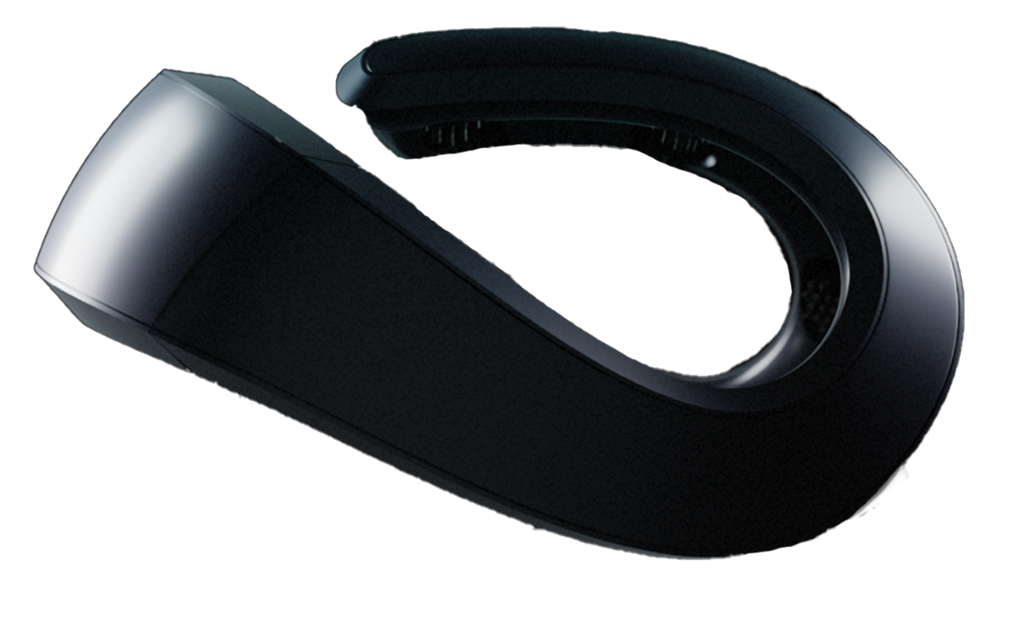
The Neurosity Crown, with 8 EEG channels positioned at CP3, C3, F5, PO3, PO4, F6, C4, and CP4, captures brain activity at 256Hz across both frontal and parietal regions. This is exactly the coverage needed to track the procrastination-relevant biomarkers: frontal theta power, frontal alpha asymmetry, and left-prefrontal beta engagement.
The Crown's real-time focus scores translate these complex EEG patterns into an accessible metric. When you're in a task-engaged, approach-motivated neural state, the focus score reflects it. When you drift into avoidance, it shifts. This gives you something procrastination has never had before: a real-time, objective measure of whether your brain is in work mode or escape mode.
For developers, the Crown's JavaScript and Python SDKs open up possibilities that go beyond passive monitoring. You can build custom neurofeedback applications tuned specifically to your procrastination patterns. The raw EEG data at 256Hz gives you the temporal resolution to detect moment-by-moment shifts in frontal engagement. The power-by-band data lets you track theta, alpha, and beta dynamics in real-time. And with the Crown's MCP integration for AI tools, you can create systems that learn your individual procrastination signature and adapt their interventions accordingly.
Imagine an application that detects the early neural signature of task disengagement, the drop in frontal theta and shift in alpha asymmetry that precedes conscious awareness of avoidance, and provides a subtle cue before you reach for your phone. Not a punishment. Not a harsh alarm. A gentle signal that your brain is starting to drift, delivered early enough that your prefrontal cortex can catch it.
That's not science fiction. That's a weekend project with the Crown's SDK and an understanding of EEG frequency bands.
Putting It All Together: A Neuroscience-Based Anti-Procrastination Protocol
These six strategies aren't competing approaches. They're complementary layers that address different components of the procrastination circuit. Here's how they fit together.
| Strategy | What It Targets | When to Use It |
|---|---|---|
| Implementation intentions | Reduces decision cost at task initiation | Planning phase (the night or morning before) |
| 2-minute rule | Shrinks amygdala threat response | Moment of resistance, when a task feels overwhelming |
| Temptation bundling | Rebalances dopamine dynamics | Ongoing, for regularly recurring aversive tasks |
| Self-compassion | Breaks the shame-avoidance loop | After procrastination has already happened |
| Environment design | Eliminates competing dopamine signals | Setup phase, before work begins |
| Neurofeedback | Strengthens prefrontal cortex baseline capacity | Regular training sessions, 15-20 minutes daily |
The most effective anti-procrastination approach uses all of these in concert. Design your environment the night before. Write an implementation intention for the morning. When resistance hits, apply the 2-minute rule. If you procrastinate anyway, respond with self-compassion instead of shame. Bundle temptations with recurring aversive tasks to reshape the dopamine landscape. And train your prefrontal cortex through neurofeedback to raise the baseline strength of your cognitive control circuits.
Each strategy reduces the load on the others. Better environment design means fewer moments where you need the 2-minute rule. Stronger prefrontal capacity from neurofeedback means implementation intentions trigger even more reliably. Less shame from self-compassion means less accumulated aversion around tasks. The system becomes more than the sum of its parts.
The Brain That Avoids Is the Same Brain That Overcomes
Here's what the neuroscience of procrastination ultimately teaches us. The same brain that creates the problem contains everything needed to solve it.
Your amygdala will keep firing. It has been sounding alarms since before your ancestors had language, and it's not going to stop because you read a guide on the internet. The emotional discomfort of hard tasks is a permanent feature of having a human brain.
But the prefrontal cortex is trainable. The circuits that connect it to the amygdala are plastic. The balance of power between avoidance and engagement is not fixed. Every time you start a task despite the resistance, you strengthen the neural pathway that made it possible. Every time you respond to procrastination with compassion instead of shame, you weaken the feedback loop that made it worse.
You've spent your whole life with this brain, and until very recently, you've been fighting it blind. You couldn't see the frontal theta dropping. You couldn't watch the alpha asymmetry shifting. You couldn't observe the exact moment your task-positive network went offline and your default mode network took over.
Now you can. With 8 channels of EEG, 256 snapshots of your brain activity per second, and on-device processing through the N3 chipset, the Neurosity Crown turns the invisible battle inside your skull into something you can see, measure, and train.
The task your brain has been avoiding is still sitting there. But now you have something your amygdala never expected you to have: a map of the battlefield, a set of tools designed for the specific terrain, and for the first time, a real-time view of the fight itself.
Your prefrontal cortex has been outgunned for your entire life. Maybe it's time to even the odds.