


What Is Pathological Demand Avoidance?

When "Can You Set the Table?" Feels Like a Threat to Your Existence
Picture a seven-year-old sitting on the couch after school. Mom walks in and says, casually, "Hey, can you set the table for dinner?"
It's a simple request. The kind of thing kids do every day. The child knows how to set a table. They've done it before. There's nothing objectively threatening about forks and plates.
But something happens in this child's body that is not happening in most other children's bodies. The request lands like a physical impact. Their chest tightens. Their breathing quickens. A surge of what can only be described as panic floods through them, the same kind of whole-body alarm you'd feel if someone had just told you the building was on fire.
They don't set the table. Instead, they might suddenly become absorbed in an imaginary game and seem unable to hear you. They might negotiate ("I'll do it in five minutes" becomes "after this show" becomes "I forgot"). They might distract you with charm or humor. They might explain, with astonishing creativity, why setting the table is impossible right now. Or, if the demand is pressed, they might explode into a meltdown that seems wildly disproportionate to the request.
This is pathological demand avoidance. And the most important thing to understand about it is that the child is not being defiant. They are, in the most literal neurological sense, afraid.
A Profile Without a Home
PDA was first described in 1983 by Elizabeth Newson, a developmental psychologist at the University of Nottingham who noticed a subset of children referred to her clinic who didn't fit neatly into any existing diagnostic category. They shared features with autism, certainly, but they were socially motivated in ways that typical autism presentations were not. They were often highly attuned to other people's expectations, precisely because those expectations felt threatening. They used social strategies, charm, distraction, negotiation, to avoid demands, rather than the more direct refusal or withdrawal seen in other presentations.
Newson called the pattern "pathological demand avoidance" and spent the next two decades arguing that it represented a distinct profile. The term "pathological" was chosen not as a moral judgment but in the clinical sense: the avoidance was pervasive, involuntary, and significantly impairing.
Four decades later, PDA remains one of the most debated concepts in neurodevelopmental science. It's widely recognized by clinicians in the UK (the PDA Society estimates that PDA affects roughly 1-2% of the population, though formal epidemiological data is scarce). It's less well-known in the US, where it hasn't been included as a formal diagnostic category in the DSM-5. Some researchers embrace it as a crucial addition to our understanding of neurodevelopment. Others argue it's a behavioral pattern better explained by existing diagnoses like autism, ADHD brain patterns, or anxiety disorders.
What's not debated is that the people who match this profile exist, that their experience is real, and that conventional approaches to managing "non-compliant" behavior make them dramatically worse.
The Nervous System Hypothesis: Why Demands Feel Dangerous
The most promising framework for understanding PDA comes from polyvagal theory and the neuroscience of autonomic nervous system regulation. And this is where things get genuinely interesting.
Your Nervous System's Security Team
Your autonomic nervous system operates below conscious awareness, constantly monitoring the environment for signs of safety or danger. Stephen Porges, who developed polyvagal theory, calls this process neuroception: the nervous system's unconscious evaluation of whether a situation is safe, dangerous, or life-threatening.
In most people, routine social demands register as safe. "Can you set the table?" is processed through a neural pathway that recognizes the request as a familiar, non-threatening social interaction. The ventral vagal complex (the branch of the autonomic nervous system associated with social engagement and calm) stays online. The person hears the request, processes it, and responds.
In PDA, this neuroceptive system appears to be calibrated differently. Routine demands, even pleasant ones ("Do you want to go to the park?"), can trigger a neuroceptive response that categorizes the demand as threatening. The nervous system shifts from ventral vagal (safe, social, engaged) to sympathetic (fight-or-flight) or even dorsal vagal (freeze, shutdown, collapse).
Here's the crucial insight: this is not a conscious decision. The person with PDA does not think "I refuse to comply." Their nervous system, operating below the level of conscious choice, registers the demand as a threat and initiates a protective response. By the time conscious awareness catches up, the body is already in fight-or-flight, and the behavioral response (avoidance, distraction, negotiation, meltdown) is the expression of a nervous system that is genuinely protecting against perceived danger.
The Intolerance of Uncertainty and Loss of Control
What makes demands specifically threatening to the PDA nervous system? The most compelling explanation centers on autonomy and predictability.
A demand, by definition, introduces an external expectation. It narrows the space of possible actions. When someone says "set the table," the universe of things you could be doing in the next five minutes collapses to one specific task that someone else chose for you. For most people, this constraint is trivial. For the PDA nervous system, it appears to trigger a response similar to what other people feel when physically trapped or restrained.
Research on intolerance of uncertainty (IU) in autism spectrum conditions has found that elevated IU is strongly associated with anxiety and avoidance behaviors. The PDA profile may represent an extreme form of this sensitivity, one where even the mild uncertainty introduced by an external expectation (Will I do it right? What happens if I fail? Am I losing control of my situation?) is enough to trigger the threat-detection system.
This explains several distinctive features of PDA that differentiate it from other avoidance behaviors:
Self-imposed demands are just as triggering as external ones. A person with PDA might desperately want to do something, plan to do it, look forward to it, and then find themselves unable to follow through when the moment arrives. The demand became real, and the nervous system intervened. This rules out defiance as the mechanism, because you can't be defiant against yourself.
Demands framed as choices are easier to tolerate. "Would you like to set the table or fill the water glasses?" is often easier than "Set the table." The framing preserves a sense of autonomy that keeps the nervous system from categorizing the situation as threatening.
Novel or unexpected demands are worse than familiar ones. Novelty increases uncertainty, and uncertainty increases threat. A routine demand that the person has successfully navigated many times before may be tolerable. A new demand, even an easier one, may trigger a full threat response.
The single most important distinction for parents, teachers, and clinicians: PDA avoidance is driven by anxiety, not anger or defiance. This matters because the interventions that work for oppositional behavior (firm boundaries, consistent consequences, reward systems) depend on the assumption that the person can comply and is choosing not to. In PDA, the nervous system is actively preventing compliance. Applying pressure increases the threat signal, makes the avoidance worse, and often tips the person from anxiety-driven avoidance into a full sympathetic nervous system crisis (meltdown). Effective PDA strategies work in the opposite direction: they reduce threat, increase safety, and slowly expand the person's window of tolerance.
The Brain Behind the Behavior
While PDA-specific neuroimaging research is still in its early stages, we can map the PDA experience onto well-established brain systems to understand what's likely happening at the neural level.
The Amygdala: Threat Detection in Overdrive
The amygdala, the brain's alarm system, appears to play a central role in PDA. In conditions characterized by anxiety and threat hypersensitivity, the amygdala shows increased reactivity to stimuli that healthy controls process as neutral or mildly arousing.
In PDA, the amygdala may be treating demands as social threats. Research on the social brain network has shown that the amygdala responds not just to physical danger but to social signals of evaluation, expectation, and potential rejection. A demand implicitly carries all three: someone expects something, you're being evaluated on your response, and failure to comply risks disapproval.
If the amygdala's threshold for categorizing these signals as threatening is set too low, ordinary demands trigger the same neural cascade that a genuine threat would produce: cortisol release, sympathetic nervous system activation, and the behavioral urgency to escape or avoid the source of the threat.
The Insula: The Body's Internal Alarm
The insula, a deep cortical structure involved in interoception (sensing your body's internal states), is likely involved in the visceral, physical quality of PDA distress. People with PDA don't just cognitively dislike demands. They feel them in their bodies: the tightness in the chest, the nausea, the overwhelming physical urgency to escape.
Research on anxiety disorders has consistently linked heightened insula activity with amplified interoceptive awareness, essentially, the body's alarm signals being turned up. If the PDA brain's insula is hyperresponsive to the autonomic arousal triggered by demands, it would explain why PDA avoidance feels so physical and so urgent.
The Prefrontal Cortex: The Regulator Under Siege
The prefrontal cortex should, in theory, evaluate the amygdala's alarm signal and determine that "set the table" is not actually dangerous. But there's a catch: when the amygdala's alarm is intense enough, it can effectively overwhelm the prefrontal cortex's regulatory capacity.
This is true in everyone, not just people with PDA. Under extreme threat, the prefrontal cortex goes offline and the amygdala takes over. This is why you can't reason yourself out of a panic attack. The prefrontal cortex has been sidelined by the limbic system.
In PDA, the threshold for this prefrontal "offline" state appears to be much lower. Demands that wouldn't trigger limbic dominance in most people are sufficient to overwhelm prefrontal regulation in the PDA brain. The result is that the person loses access to the very cognitive resources (flexibility, perspective-taking, rational evaluation) that they would need to comply with the demand. They're not choosing not to comply. The part of their brain that handles compliance has been temporarily shut down by the part that handles threat.
| PDA Feature | Likely Neural Mechanism | Why Traditional Approaches Fail |
|---|---|---|
| Avoidance of routine demands | Amygdala categorizes demands as threats, triggering fight-or-flight | Punishment and consequences increase threat, intensifying avoidance |
| Social masking and charm | Preserved social cognition used as an avoidance strategy | Mistaken for manipulation, leading to punitive responses that escalate distress |
| Meltdowns when demands are pressed | Sympathetic nervous system overwhelms prefrontal regulation | Firm boundaries increase sympathetic activation, making meltdowns more frequent and intense |
| Self-imposed demands are also avoided | Nervous system doesn't distinguish self vs. external demands | Reward systems fail because the person can't complete the action to earn the reward |
| Variable tolerance (good days and bad days) | Autonomic nervous system capacity fluctuates with stress, sleep, and regulation | Inconsistency is mistaken for willful non-compliance |
What Are the EEG Signatures of Demand Sensitivity?
While PDA-specific EEG research is limited, the broader literature on anxiety, autonomic dysregulation, and threat processing provides a clear picture of what demand sensitivity likely looks like in brainwave data.
Frontal Beta: The Anxiety Signature
High-frequency beta activity (20-30 Hz) over frontal regions is consistently associated with anxiety, hypervigilance, and rumination. In conditions where the brain is constantly monitoring for potential threats, frontal beta power tends to be elevated, reflecting a cortex that can't downshift into relaxed processing.
For someone with PDA, this elevated beta may be the resting state. The brain is perpetually scanning the social environment for demands, expectations, and obligations. This constant vigilance is exhausting, which partially explains the fatigue and burnout that people with PDA frequently report.
Reduced Alpha: The Inability to Relax
alpha brainwaves (8-13 Hz) dominate when the brain is in a calm, relaxed, idling state. In anxiety conditions, alpha power is often suppressed, because the brain isn't idling. It's on alert.
Reduced resting-state alpha is one of the most replicated EEG findings in anxiety research. For PDA, this may manifest as difficulty achieving genuine relaxation, even in ostensibly safe environments. If the nervous system is treating potential demands as threats, and demands are everywhere (implicit in every social interaction, in every to-do list, in every expectation), then the brain never truly gets to idle.
Frontal Asymmetry: The Withdrawal Motivation
One of the most intriguing EEG findings relevant to PDA is frontal alpha asymmetry. Research by Davidson and colleagues has shown that greater relative activation of the right frontal cortex (indicated by lower right-frontal alpha power) is associated with withdrawal motivation, negative affect, and avoidance behavior. Greater left-frontal activation is associated with approach motivation and positive affect.
People with anxiety and avoidance tendencies consistently show rightward frontal asymmetry. This pattern may represent the neural signature of the PDA brain's default motivational orientation: away from demands, away from expectation, away from the situations that trigger threat responses.
Living With PDA: What Actually Helps
The most important shift in PDA management is philosophical: moving from compliance-based approaches to regulation-based approaches. Instead of asking "How do I get this person to do what I want?", the question becomes "How do I help this person's nervous system feel safe enough that they can engage?"
The Three S's: Safety, Scaffolding, Self-Regulation
Safety first. Reduce the demand load. Not permanently, but strategically. When the nervous system is in a heightened threat state, adding more demands is like pouring gas on a fire. The first priority is bringing the autonomic nervous system back to a ventral vagal (safe, social) state. This might mean dropping the demand entirely in the moment, offering a calm presence, or giving the person space to self-regulate.
Scaffolding, not forcing. Instead of direct demands, use indirect language, choices, and collaborative problem-solving. "We need to get dinner ready. What part do you want to handle?" is different from "Set the table." The former preserves autonomy. The latter removes it.
Self-regulation skills. This is the long game. The goal is to expand the person's window of tolerance, the range of arousal they can manage without shifting into fight-or-flight. Interoceptive awareness practices (learning to notice body signals before they become overwhelming), co-regulation with trusted people, sensory strategies, and gradually building positive experiences of meeting demands in low-threat contexts all contribute to expanding this window.
What Doesn't Work (and Why)
Standard behavioral approaches fail with PDA because they're built on assumptions that don't hold:
Reward charts assume the person can access the action. In PDA, the nervous system is blocking the action. Offering a reward for something your nervous system won't let you do adds frustration and shame to an already overwhelming situation.
Consequences assume the person is making a choice. Punishment for avoidance driven by anxiety increases the threat signal associated with the demand. The next time the demand appears, the threat is now: original anxiety PLUS anticipated punishment. The avoidance gets worse.
Exposure therapy (traditional format) assumes anxiety will naturally extinguish with repeated exposure. In PDA, repeated forced exposure without adequate nervous system support can sensitize rather than desensitize, making the threat response stronger rather than weaker.
One of the most challenging aspects of PDA is its invisibility. A person in demand-avoidance mode might look calm, distracted, or even cheerful (masking is a common strategy). The internal autonomic state can be radically different from the external presentation.
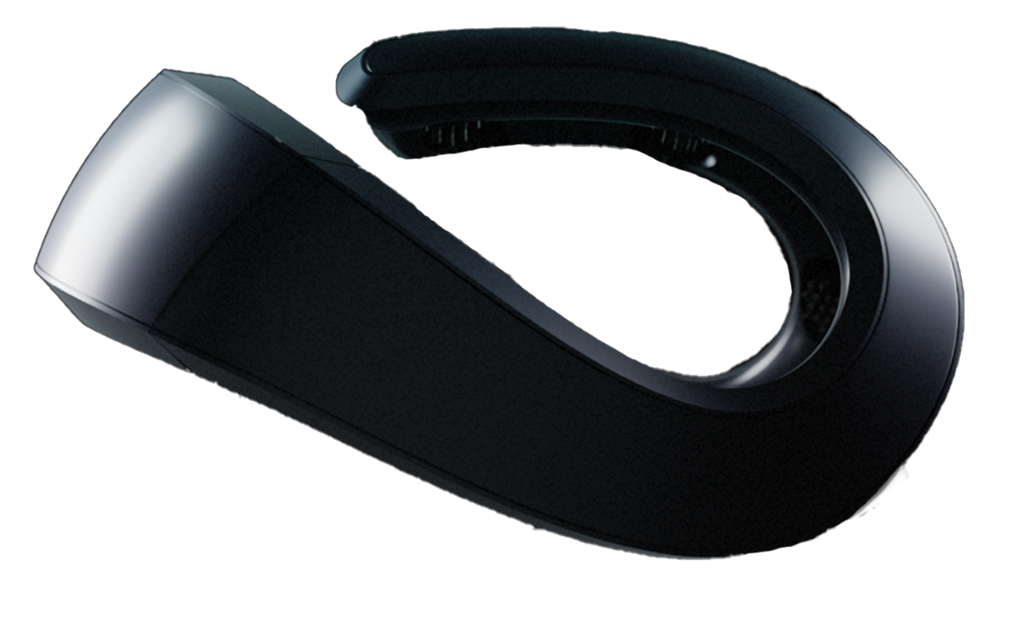
EEG provides a window into this internal state. The Neurosity Crown captures brainwave activity across 8 channels at 256Hz, including frontal positions that reflect anxiety-related beta activation, alpha suppression patterns associated with inability to relax, and the frontal asymmetry patterns linked to avoidance motivation.
For clinicians, researchers, and individuals exploring PDA, this kind of objective data about arousal states could be genuinely useful. It can identify when the nervous system is shifting toward a threat state before behavioral avoidance becomes visible. It can track whether specific environments, times of day, or interventions are associated with lower arousal and greater regulatory capacity. It can provide biofeedback that helps a person learn to notice their own autonomic state, building the interoceptive awareness that is foundational to self-regulation.
The Crown SDK makes this data accessible for building custom regulation tools. Through the Neurosity MCP (Model Context Protocol), brainwave data can integrate with AI systems, opening the door to adaptive environments that respond to the person's nervous system state rather than their behavior alone.
The Demand Is Not the Problem. The Nervous System's Response Is.
Here's what makes PDA so confounding for people who don't have it: the demands that trigger PDA avoidance are genuinely trivial. Setting a table. Brushing teeth. Going to a place you actually want to go. From the outside, the avoidance looks baffling, even infuriating. How can you refuse to do something so simple?
But that question misses the point entirely. The demand isn't the problem. The nervous system's classification of the demand is the problem. The PDA brain is not evaluating "set the table" as a simple motor task. It's evaluating it as a loss of autonomy, an external imposition, a situation where the outcomes are uncertain and the possibility of failure or judgment is present. And those evaluations, whether they're happening in the amygdala, the insula, or the broader autonomic nervous system, produce a genuine threat response.
You can't reason your way out of a threat response. You can't punish it away. You can't reward it away. You can only address it by changing the conditions that produce it, by making the nervous system feel safe enough that the demand no longer registers as danger.
This is hard. It requires patience, creativity, flexibility, and a fundamental willingness to believe that the person avoiding the demand would comply if they could. That belief is not naive. It's neurologically accurate.
The PDA brain didn't choose to treat demands as threats. It was built that way, or shaped that way, or some combination of both. Understanding this doesn't make the avoidance less frustrating for the people who live with it and around it. But it does change the question from "Why won't they just do it?" to "What does their nervous system need in order to feel safe enough to try?"
That second question leads somewhere. The first one never does.