


Your Brain's Addiction to Right Now

The Problem With Right Now
You have a deadline in two weeks. The project matters to you. You've been thinking about it for days. You have a clear plan. You know exactly what to do next.
And yet, right now, you're reading this article instead of doing that thing.
Don't worry. You'll get to it. Just not right now. Right now, this is more interesting. Or the couch is too comfortable. Or you just need to check one more thing on your phone. You'll start tomorrow. First thing. Definitely.
If this pattern sounds familiar, congratulations: you're a human being with a normally functioning brain. Because the tendency to prioritize the immediate over the future isn't a failure of discipline. It's the default operating mode of the most complex organ in the known universe.
Behavioral economists call it present bias. Neuroscientists call it temporal discounting. Your grandmother probably called it "putting off until tomorrow what you should do today." Whatever you call it, it's the single most consistent bias in human decision-making, and understanding its neural machinery is the first step toward designing a life that accounts for it.
Your Brain Runs on Two Clocks
The core insight of present bias research is that your brain doesn't evaluate time the way a calendar does. For a calendar, $100 next week and $100 next month are both $100. The value doesn't change. Only the timing does.
For your brain, they're completely different amounts.
This is because the brain doesn't process future rewards using the same circuitry it uses for immediate rewards. Instead, two competing systems evaluate the same choice using fundamentally different logic.
The limbic reward system (centered on the ventral striatum and amygdala) evaluates rewards in the present tense. It responds to concrete, sensory, available-right-now rewards with full intensity. When the reward is right here, the limbic system fires with a signal that says "take it." This system is fast, automatic, and ancient. It evolved hundreds of millions of years ago in organisms that had no concept of "next week."
The prefrontal valuation system (centered on the dorsolateral PFC and the lateral intraparietal cortex) can represent abstract, temporally distant rewards. It's the part of your brain that can think "if I save this $100 now, it'll be worth $250 in five years." But this representation is inherently weaker than the limbic system's response to immediate rewards. It's like comparing a photograph of a meal to the smell of one cooking. Both represent the same thing. One is vastly more compelling.
A landmark 2004 fMRI study by Samuel McClure, David Laibson, George Loewenstein, and Jonathan Cohen confirmed this dual-system architecture. They gave participants choices between smaller-sooner and larger-later rewards. When the immediate option was available right now, both systems activated, and the limbic system's signal strength predicted whether people chose the immediate reward. When both options were in the future (one week vs. two weeks), only the prefrontal system activated, and people made more patient, economically rational choices.
This is the fundamental insight: present bias isn't about all time preferences. It's specifically about the present. Your brain adds a massive bonus to rewards that are available right now, and this bonus distorts all temporal comparisons that include the present moment.
Hyperbolic Discounting: The Math of Impatience
Economists long assumed that people discount future rewards at a constant rate. If you discount 10% per month, then $100 next month is worth $90 to you now, $100 in two months is worth $81, and so on. This is called exponential discounting, and it's the kind of discounting that makes mathematical sense. It's consistent over time. You never change your mind about a choice just because time has passed.
But humans don't discount exponentially. They discount hyperbolically.
Hyperbolic discounting means the discount rate is highest for rewards that are temporally close and decreases for rewards that are further away. In plain language: your brain is enormously sensitive to the difference between "now" and "later," but much less sensitive to the difference between "later" and "even later."
Here's a concrete example. Offer someone $50 today or $100 in a year, and many people take the $50. The one-year delay feels enormous. Now offer the same person $50 in five years or $100 in six years. Almost everyone takes the $100. It's the same one-year delay, but because neither option is available now, the brain evaluates them using the cooler, more rational prefrontal system.
This is the mathematical fingerprint of present bias. The discount curve is steep near the present and flattens out into the future. And it creates a specific, predictable irrationality called preference reversal.
Today you genuinely prefer to start your diet on Monday rather than have pizza tonight. The future diet (health, energy, self-respect) feels more valuable than the pizza. But when Monday arrives, the preference reverses. Now the pizza is the immediate option, and the diet's benefits are in the future. The choice hasn't changed. The relative timing has. And the hyperbolic discount function gives "right now" a bonus large enough to flip the decision.
This is why you can make a plan on Sunday night and abandon it by Monday afternoon without any change in your values, your goals, or your intelligence. Your values are constant. Your brain's temporal weighting function is not.
What Are the Neural Economics of Now?
Let's go deeper into the circuitry, because the details reveal something surprising.
The ventral striatum (particularly the nucleus accumbens) shows activation proportional to the subjective value of rewards, discounted by delay. In other words, this region doesn't represent the objective value of $100. It represents the "felt value," which is $100 multiplied by the hyperbolic discount function. For an immediate reward, the felt value is close to the full amount. For a reward delayed by months, the felt value might be a fraction.
The ventromedial prefrontal cortex (vmPFC) computes the relative value of competing options, integrating inputs from both the limbic system (immediate felt value) and the dorsolateral PFC (abstract future value). The vmPFC is the neural decision point. Whichever option has the stronger signal in the vmPFC wins the choice.
And here's the surprise: the vmPFC isn't inherently biased toward the present. It's just reporting which input is stronger. The limbic signal for immediate rewards is typically stronger because the limbic system evolved to process immediate rewards and has had hundreds of millions of years of optimization. The prefrontal signal for future rewards is a relatively recent evolutionary addition and runs on newer, less strong neural hardware.
Present bias, then, isn't a bug in the decision-making system. It's an asymmetry in the inputs. The competition between now and later is being judged fairly by the vmPFC, but one contestant (the immediate reward) has a built-in amplifier.
| Brain Region | Role in Present Bias | Favors Immediate or Delayed |
|---|---|---|
| Ventral striatum / nucleus accumbens | Generates 'wanting' signal proportional to discounted value | Immediate (responds most strongly to available rewards) |
| Amygdala | Tags rewards with emotional urgency | Immediate (emotional responses are present-focused) |
| Dorsolateral PFC | Represents abstract future rewards and plans | Delayed (can maintain future goals against present temptation) |
| Ventromedial PFC | Computes relative value and makes the choice | Neutral (integrates both signals, stronger input wins) |
| Anterior cingulate cortex | Detects conflict between present desire and future goal | Neither (signals conflict, recruits control) |
| Hippocampus / MTL | Supports episodic future thinking | Delayed (enables vivid simulation of future scenarios) |
Why Present Bias Was Once Your Best Feature
Here's the part that changes how you feel about your own impatience: present bias isn't a design flaw. It's a feature that was perfectly optimized for the environment it evolved in.
Consider the world your ancestors lived in for the vast majority of human evolutionary history. Food spoiled within hours or days. There was no refrigeration, no storage, no way to reliably bank resources for the future. A competing tribe member or predator could take your food at any moment. The weather was unpredictable. Disease could strike without warning. In that world, the future was genuinely uncertain.
A brain that heavily weighted immediate rewards was a brain that survived. Eat the food now, because it might be gone tomorrow. Take the certain small gain over the uncertain large gain, because certainty has survival value when the environment is volatile. Don't invest in elaborate future plans, because the future is unknowable.
The core problem of modern life, from a present bias perspective, is that we've changed the environment far faster than the brain can evolve. We now live in a world where:
- The most valuable rewards (education, retirement savings, health, career development) are delayed by years or decades
- Immediate temptations (processed food, social media, streaming entertainment) are engineered to be maximally compelling
- The future is much more predictable and reliable than the ancestral environment
- The costs of present-biased behavior (debt, obesity, skill stagnation) accumulate slowly and invisibly
The brain that was perfectly calibrated for the savanna is catastrophically miscalibrated for the modern world. Present bias isn't irrational in the environment it evolved for. It's only irrational in the environment we've built.
The "I Had No Idea" Moment: Your Future Self Is Literally a Stranger
Here's something that might fundamentally change how you think about your own procrastination.
When neuroscientist Hal Hershfield put people in an fMRI scanner and asked them to think about themselves in the present, the medial prefrontal cortex (mPFC) activated strongly. This is expected. The mPFC is the brain's self-referential processing hub. It lights up when you think about yourself.
Then he asked them to think about themselves 10 years in the future. The mPFC activation dropped. In its place, a different pattern emerged, one that looked remarkably similar to the pattern produced when thinking about a stranger.
The degree of mPFC overlap between "present self" and "future self" predicted financial behavior. People whose brains treated their future selves as less "self-like" saved less money, showed steeper temporal discounting, and made more present-biased choices. People whose brains treated their future selves as genuine extensions of themselves were more patient and more willing to sacrifice for the future.
In other words, present bias is partly an empathy problem. You struggle to sacrifice for your future self for the same reason you struggle to sacrifice for a stranger: your brain doesn't fully recognize that person as you.
Hershfield tested this further by showing people digitally aged photographs of themselves. After seeing their own face aged 30 years, people allocated significantly more money to retirement savings. Simply making the future self more vivid and more visually "real" reduced present bias.
This finding has a profound practical implication. Present bias isn't just about the discount rate on rewards. It's about the neural connection between your current self-model and your future self-model. Strengthen that connection, and the math of temporal discounting changes.
What Are the EEG Signatures of Present vs. Future Thinking?
Present bias plays out in measurable neural dynamics that EEG can capture.
Frontal theta (4-8 Hz) increases during conflict between immediate and delayed options. This signal, generated by the ACC and medial frontal cortex, reflects the detection of a mismatch between what you want now and what you want in the long run. Stronger frontal theta during temporal choice tasks predicts more patient decisions, suggesting that people who experience the conflict more intensely are more likely to engage prefrontal control to resolve it.
Frontal beta (13-30 Hz) is associated with the active maintenance of future goals against present temptation. When beta power over frontal electrodes is high, the cool system is engaged and future rewards are being represented with enough strength to compete with immediate ones. When frontal beta drops, the limbic system's immediate-reward signal tends to dominate.
Alpha suppression over frontal regions (reduction of 8-12 Hz power) indicates increased frontal cortex activation. Greater frontal alpha suppression during temporal choice tasks is associated with more patient choices, reflecting stronger engagement of the prefrontal valuation system.
event-related potentials offer additional insight. The feedback-related negativity (FRN), a negative voltage deflection occurring about 250ms after receiving an outcome, is larger when outcomes are worse than expected. This signal tracks reward prediction errors and is sensitive to temporal framing: the FRN is more pronounced when delayed rewards feel "unfair" compared to immediate alternatives, reflecting the brain's present-biased valuation.
Building Systems That Protect Your Future Self
If present bias is a neural default that can't be eliminated, the practical question becomes: how do you design your life to account for it?
The answer isn't willpower. If it were, nobody would have credit card debt. The answer is systems.
Precommitment: Tying Yourself to the Mast
The oldest strategy in the book, quite literally. In Homer's Odyssey, Odysseus wanted to hear the Sirens' song but knew their music would drive him to steer toward the rocks. So he had his crew tie him to the mast and plug their own ears with wax. He bound his future self's options before present bias could take over.
Modern precommitment devices work the same way. Automatic retirement contributions. Website blockers that activate during work hours. Placing your alarm clock across the room so future-you can't snooze without getting up. Paying for a year of gym membership upfront. Each of these restricts your future self's ability to make the present-biased choice by removing the option before the moment of temptation arrives.
The neuroscience is clear on why precommitment works: it removes the decision from the limbic system entirely. When there's no immediate option to choose, the ventral striatum doesn't generate a competing signal, and the prefrontal system can calmly compute the best course of action.
Make the Future Concrete
Hershfield's research shows that vividness reduces temporal discounting. The more concrete and sensory your representation of a future reward, the stronger the signal it generates in the vmPFC, and the better it competes with immediate temptations.
Abstract goals ("I want to be healthy") generate weak prefrontal signals. Concrete, sensory-rich goals ("I want to hike to the summit of Mt. Rainier next summer, feel the wind at the top, and take a photo with the glacier behind me") generate stronger ones. The hippocampus, which supports episodic future thinking, can simulate future scenarios with enough detail to trigger genuine emotional and motivational responses in the present.
Practice vivid future simulation regularly. Spend time imagining your future self in specific, sensory detail. What do they look like? Where do they live? What does their typical day feel like? The goal isn't fantasizing. It's building a stronger neural connection between your present self-model and your future self-model so that your brain's temporal discount function becomes less steep.
Strategic Environment Design
Since present bias amplifies the signal of whatever reward is most immediately available, you can reduce its impact by controlling what's available.
Remove immediate temptations from your physical environment. Don't keep junk food in the house. Charge your phone in another room. Close unnecessary browser tabs. Each removal eliminates one competition between a present-biased option and a future-optimal one.
Simultaneously, make the future-optimal behavior the path of least resistance. Lay out your gym clothes the night before. Keep your work documents open and ready. Prepare healthy meals in advance. The less friction between you and the beneficial behavior, the less present bias matters.
Strengthen the Prefrontal Counter-Signal
The weaker input in the present-bias competition is the prefrontal representation of future rewards. You can strengthen this input through targeted training.
mindfulness-based stress reduction meditation improves prefrontal-limbic connectivity, allowing the cool system to more effectively modulate the hot system's immediate-reward signals. A 2016 study in Consciousness and Cognition found that mindfulness practitioners showed reduced temporal discounting compared to non-practitioners, suggesting flatter discount curves and weaker present bias.
Neurofeedback training that targets frontal theta/beta ratios can directly strengthen the executive control circuits that compete with limbic present-bias signals. By providing real-time feedback on prefrontal engagement, neurofeedback helps the brain learn to generate stronger future-oriented signals.
- Precommitment: Remove future choices before they happen (automatic savings, website blockers, public commitments)
- Future vividness: Practice concrete, sensory simulation of future rewards and future self
- Environment design: Remove immediate temptations, reduce friction for beneficial behaviors
- Prefrontal training: Meditation, neurofeedback, and deliberate practice of delayed gratification
- Neural monitoring: Track frontal brainwave patterns to identify when present bias is strongest and intervene
Measuring the Bias in Real-Time
The brainwave correlates of present bias, frontal theta conflict signals, frontal beta goal maintenance, and alpha dynamics of prefrontal engagement, are all accessible with properly positioned EEG.
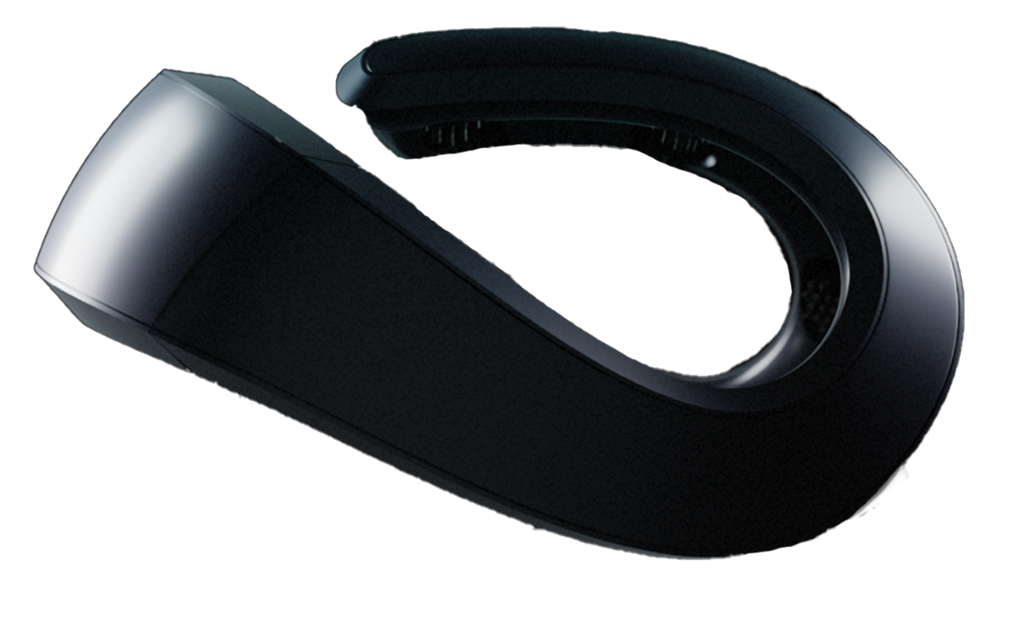
The Neurosity Crown's electrode positions at CP3, C3, F5, PO3, PO4, F6, C4, and CP4 cover the frontal regions where temporal decision-making plays out. F5 and F6 capture lateral prefrontal activity involved in abstract future-reward representation. C3 and C4 pick up sensorimotor signals relevant to approach and avoidance. The Crown samples at 256Hz, capturing the rapid dynamics of conflict detection and resolution that occur during temporal choices.
The real-time focus score provides a window into prefrontal engagement. When the focus score is high, your cool system is active and your future-reward representations are at their strongest. This is when temporal choices are least likely to be hijacked by present bias. When the focus score drops, the limbic system gains relative influence, and present-biased choices become more likely.
For developers, the Crown's JavaScript and Python SDKs expose raw power spectral density data across all frequency bands, making it possible to build applications that detect the neural signature of present-biased states and trigger interventions. Imagine a productivity tool that notices your frontal beta dropping during an important work session and suggests a brief break before the present-bias spiral kicks in. Or a financial planning app that adjusts its recommendations based on real-time neural indicators of temporal discount rate.
Through the Neurosity MCP integration, this data can feed into AI-powered coaching systems that learn your personal present-bias patterns over time, identifying which times of day, which environments, and which emotional states produce the steepest temporal discounting, then helping you structure your life accordingly.
The Future Self You're Building Right Now
Here's the thought to sit with.
Every choice between now and later is a vote for the kind of life you're building. Not in the abstract, motivational-poster sense. In the literal, neural sense. Every time you choose the immediate reward, you strengthen the limbic pathways that prefer immediate rewards. Every time you choose the delayed reward, you strengthen the prefrontal pathways that can represent and pursue future goals.
Your temporal discount function isn't fixed. It's a neural parameter that updates with experience. And the direction it updates depends on which circuits get the most practice.
Present bias is real. It's powerful. It's the default mode of a brain that evolved for a world that no longer exists. You cannot eliminate it any more than you can eliminate hunger or fear.
But you can understand it. You can see it operating. You can build systems that account for it. And you can train the neural circuits that counterbalance it.
Your future self can't advocate for themselves. They don't exist yet. The only advocate they have is you, right now, making choices in a brain that's systematically biased against them. The question is whether you're going to let the bias run unchecked, or whether you're going to use what you know about the machinery to give your future self a fighting chance.
Every system you build, every temptation you remove, every moment of prefrontal training, is an act of loyalty to someone who can't yet thank you for it. That's not willpower. That's architecture.