


Your Brain Judges People Before You Know It's Happening

You're Not as Fair as You Think You Are
In 2003, a pair of researchers at the University of Chicago decided to study something that most people would rather not think about.
Marianne Bertrand and Sendhil Mullainathan created 5,000 fictitious resumes. They were carefully matched in quality. Same education levels, same experience, same qualifications. The only thing that differed was the name at the top. Half got names that sounded stereotypically White (Emily Walsh, Greg Baker). Half got names that sounded stereotypically Black (Lakisha Washington, Jamal Jones).
They sent them out to real job postings in Boston and Chicago.
The results were blunt. Resumes with White-sounding names received 50% more callbacks than identical resumes with Black-sounding names. The hiring managers reviewing these resumes weren't rubbing their hands together and thinking "I'll discriminate today." Most of them would probably describe themselves as fair-minded. Many would be genuinely shocked by the results.
This is unconscious bias in action. Not a conscious decision to discriminate, but an automatic neural process that shifts perception and behavior without the person knowing it happened.
The brain that did this isn't broken. It isn't evil. It's running a pattern-matching system that evolved to make rapid social categorizations in an ancestral environment where identifying friend from foe in milliseconds could mean the difference between life and death. The problem is that this ancient system now operates in a modern world where its automatic outputs can perpetuate inequality, one resume callback at a time.
Understanding unconscious bias requires understanding the brain. Not the psychology of prejudice as a moral category, but the actual neural machinery that generates rapid, automatic social judgments. Because you can't fix a system you don't understand.
170 Milliseconds: The Speed of Social Categorization
Your brain is a categorization machine. It has to be. The world presents an overwhelming flood of sensory information every second, and the only way to make sense of it is to sort things into categories. Is this object food or not food? Is this sound a threat or background noise? Is this person part of my group or not?
That last question, the social one, happens faster than you'd believe.
When you see a face, a specialized brain region called the fusiform face area (FFA), located in the temporal lobe, begins processing it within about 100 milliseconds. By 170 milliseconds, the brain has already extracted enough information to categorize the face by race, gender, and approximate age. This is measured by an EEG component called the N170, a negative voltage deflection that peaks about 170 milliseconds after a face appears.
Here's the remarkable finding: the N170 already shows sensitivity to racial features. Multiple EEG studies have demonstrated that the N170 has a slightly different amplitude and topography for in-group versus out-group faces. Your brain is categorizing by race before you've even finished consciously perceiving the face.
At roughly the same speed, the amygdala is generating an emotional evaluation. fMRI studies by Elizabeth Phelps at NYU (now at Harvard) showed that the amygdala responds more strongly to out-group faces than in-group faces, even in participants who explicitly report no racial prejudice. And the amygdala doesn't wait for instructions from the prefrontal cortex. It receives visual information through a fast, subcortical pathway that bypasses conscious processing entirely.
So within 200 milliseconds of seeing a stranger, your brain has already categorized them by social group and generated an emotional response. You haven't had a conscious thought yet. You haven't made any deliberate judgment. The categorization has already happened.
The question of unconscious bias isn't whether this automatic processing occurs. The science is clear that it does. The question is what happens next.
What Is the Architecture of Implicit Association?
Once the brain categorizes a person, that category activates a web of associated concepts stored in memory. These associations are implicit: they operate outside conscious awareness and can influence behavior without the person's knowledge or intention.
The theoretical framework here comes from cognitive psychology's associative network models. Your brain stores concepts in interconnected networks. When one concept is activated, it automatically spreads activation to related concepts. Activating the concept "doctor" primes associated concepts like "hospital," "stethoscope," and "health." This spreading activation is fast, automatic, and occurs without conscious effort.
Now apply this to social categories. If a person's brain has been repeatedly exposed to cultural associations linking a racial group with certain traits (through media, personal experience, cultural narratives, and statistical observations), those associations get encoded in the same associative networks. Seeing a face that the fusiform face area categorizes as belonging to a particular group automatically activates the associated traits. This happens before conscious thought can evaluate, endorse, or reject those associations.
Mahzarin Banaji and Anthony Greenwald, the psychologists who developed the Implicit Association Test (IAT), demonstrated this process through reaction time measurements. When associated concepts are paired together (a concept and a stereotypically linked attribute), people respond faster than when they're paired with counter-stereotypic attributes. The speed difference, typically measured in tens of milliseconds, reflects the underlying associative structure in the brain.
| Neural Component | Timing | Function in Bias |
|---|---|---|
| N100 visual response | 100 ms | Initial visual processing of face features |
| N170 face processing | 170 ms | Categorization by race, gender, and age |
| P200 evaluation | 200 ms | Differential processing of in-group vs. out-group |
| Amygdala response | 100-200 ms | Emotional evaluation of social category |
| N400 expectation violation | 400 ms | Response when stereotypic expectations are violated |
| Prefrontal regulation | 500+ ms | Conscious control and bias suppression begins |
The timing tells the whole story. By the time the prefrontal cortex comes online to evaluate and potentially override the automatic response (500+ milliseconds), the categorization, emotional evaluation, and implicit association have already occurred. Conscious thought doesn't prevent implicit bias. It can only respond to it after the fact.
The EEG Evidence: Watching Bias Happen in Real Time
EEG has become one of the most powerful tools for studying unconscious bias because it captures neural responses at the millisecond timescale where implicit processing occurs.
One of the most revealing EEG findings involves the N400 component. The N400 is a negative voltage deflection that peaks around 400 milliseconds after a stimulus, and it's associated with semantic expectation violation. When you read the sentence "I like my coffee with cream and socks," the word "socks" produces a large N400 because it violates your expectation. Your brain expected something that fits the pattern, and the mismatch generates a measurable electrical response.
Researchers have used the N400 to study stereotypic expectations. When participants view a face from a particular social group followed by a stereotypically inconsistent trait (for example, a female face followed by the word "mechanic"), the N400 is larger than when the face is followed by a stereotypically consistent trait. This means the brain is treating stereotypic associations as expected and counter-stereotypic associations as surprising, even in participants who consciously reject the stereotypes.
Another telling EEG finding involves the error-related negativity (ERN), a signal generated by the anterior cingulate cortex when the brain detects a conflict between an intended response and an automatic one. In studies using the IAT, participants who try to respond without bias show enhanced ERN signals when their automatic associations conflict with their egalitarian intentions. The brain literally detects the clash between what you want to do and what your implicit associations are pushing you to do.
This is perhaps the most compelling neural evidence that unconscious bias is genuinely unconscious. The brain generates a conflict signal, meaning it recognizes that the automatic response isn't aligned with conscious goals. But the conflict is detected after the automatic response has already been generated. Consciousness catches the bias, but it doesn't prevent it.
Where Does Bias Come From? Statistical Learning and Cultural Absorption
If unconscious bias isn't a moral choice, where does it come from?
The answer involves one of the brain's most fundamental capabilities: statistical learning. From birth, your brain is a pattern-detection machine. It observes regularities in the environment and encodes them as predictions. When certain features reliably co-occur, the brain links them in associative networks. This is how you learn language, how you develop expectations about physical objects, and how you build models of the social world.
The problem is that the brain doesn't distinguish between patterns that reflect reality and patterns that reflect biased input. If a child's media environment disproportionately shows certain racial groups in certain roles, the brain encodes those co-occurrences just as efficiently as it encodes the co-occurrence of dark clouds and rain. The associations form automatically, without conscious endorsement, simply because the patterns exist in the input data.
Research on children's implicit bias development supports this. Studies by Andrew Baron and Mahzarin Banaji found that children as young as 6 show implicit racial bias on age-appropriate versions of the IAT, even in families that actively promote egalitarian values. The children aren't learning prejudice from their parents' explicit statements. They're absorbing patterns from the broader cultural environment, and their pattern-detecting brains are doing exactly what pattern-detecting brains do.
This is why unconscious bias is so resistant to simple interventions. You can change a person's conscious beliefs with information and argument. Changing the associative patterns that their brain has been encoding for decades through millions of environmental exposures is a fundamentally different challenge.
The Amygdala Question: Fear or Category?
One of the most debated findings in the neuroscience of bias involves the amygdala's response to out-group faces.
The early studies were straightforward. Show White participants Black faces and White faces while scanning their brains. The amygdala responds more strongly to Black faces. This was initially interpreted as evidence that the brain generates a fear response to racial out-group members.
But the story turned out to be more nuanced.
First, the amygdala doesn't just process fear. It's an all-purpose relevance detector. It responds to anything that the brain deems important, including positive stimuli like pictures of attractive faces or images of delicious food. An enhanced amygdala response to out-group faces might reflect heightened attention and vigilance rather than fear specifically.
Second, the response is modulated by experience. William Cunningham at the University of Toronto showed that amygdala responses to out-group faces are reduced in individuals with more diverse social networks. The brain adapts to familiarity. The more experience you have with people from a particular group, the less your amygdala treats them as novel or noteworthy.
Third, and this is the finding that genuinely surprised researchers, the amygdala response is influenced by individuating information. When participants were given personal details about the individuals in the photos (their occupation, a hobby, a personality trait), the differential amygdala response between in-group and out-group faces disappeared. The brain stopped categorizing by race and started categorizing by individual characteristics.
This suggests something important about the neural basis of bias: it's not fixed. The amygdala's automatic response is a default that engages when the brain has limited information and falls back on categorical processing. Give the brain more data, more individual details, more personal context, and it shifts from "categorize by group" to "evaluate as individual."
What Actually Works to Reduce Unconscious Bias
Given what we know about the neural mechanisms, which interventions actually change implicit associations?
Diversity training workshops: mostly ineffective. A meta-analysis by Patricia Devine and colleagues found that standard corporate diversity training has minimal long-term impact on implicit bias. Brief educational sessions don't rewire associative networks that took decades to build. Some studies even found backlash effects where mandatory training increased resentment.
Exposure to counter-stereotypic exemplars: moderately effective. Repeatedly encountering individuals who violate stereotypic expectations (a female CEO, a Black scientist, a male nurse) gradually updates the brain's associative networks. This works because it's fighting statistics with statistics, providing the brain with new co-occurrence data that weakens old associations.
Individuation training: effective. Teaching people to focus on individual characteristics rather than group membership reduces implicit bias. This aligns with the amygdala research showing that personal information overrides categorical processing. When you train the brain to process people as individuals rather than category members, the automatic associations become less influential.
mindfulness-based stress reduction and metacognitive awareness: promising. Research by Adam Lueke and Bryan Gibson found that a brief mindfulness exercise reduced implicit racial and age bias on the IAT. The proposed mechanism is that mindfulness strengthens the prefrontal cortex's ability to notice automatic associations as they arise, creating a gap between the implicit response and overt behavior. You can't stop the N170 from categorizing faces. But you can get better at catching what happens next.
EEG research reveals that the brain's automatic social categorization occurs within 200 milliseconds, but conscious regulatory processes don't engage until 500 milliseconds or later. This 300-millisecond gap is where unconscious bias lives. Interventions that work, like individuation and mindfulness, don't eliminate the automatic categorization. They strengthen the conscious processes that respond to it. The bias still fires. But the behavioral response can change.
Environmental design: highly effective. If you can't easily change the brain's automatic associations, you can change the structures that allow those associations to influence decisions. Blind resume screening (removing names and demographic information) eliminates the cue that triggers categorical processing in the first place. Structured interview protocols reduce the opportunity for implicit biases to influence evaluations. Algorithmic decision-support tools can flag patterns that suggest bias in hiring or lending data.
This environmental approach is powerful because it works with the neuroscience rather than against it. Instead of trying to prevent the N170 from categorizing faces (which is impossible) or trying to prevent implicit associations from activating (which is extremely difficult), you remove the connection between the automatic neural response and the consequential decision.
The Uncomfortable Truth About Universality
Here's the finding that makes unconscious bias research particularly uncomfortable: implicit social biases are not limited to dominant or majority groups.
Studies using the IAT have found that members of marginalized groups often show implicit bias against their own group, albeit usually weaker than the bias shown by majority group members. Black Americans, on average, show less pro-White implicit bias than White Americans do, but a significant proportion still show some implicit preference for White faces on the IAT. The same pattern appears for gender, age, and other categories.
This makes sense from the statistical learning perspective. If the cultural environment disproportionately associates certain groups with certain traits, everyone exposed to that environment absorbs those associations. The brain doesn't have a "this is my group, ignore negative associations" filter. It encodes the patterns it encounters, regardless of the observer's own identity.
This finding also makes it clear that unconscious bias is fundamentally a cognitive phenomenon, not a moral one. It's what brains do when they process imperfect information from a biased environment. The moral question isn't whether you have implicit biases (you do, everyone does). The moral question is what you do about them.
The Brain That Sorts Can Also Learn to See
Unconscious bias is one of those topics where the neuroscience is both humbling and hopeful.
The humbling part: your brain categorizes people by social group in under 200 milliseconds. This categorization activates implicit associations that influence your behavior without your knowledge. No amount of good intentions prevents the automatic response from firing. You cannot will your N170 to stop differentiating faces by race, any more than you can will your pupils to stop contracting in bright light.
The hopeful part: the brain is extraordinarily plastic. The same statistical learning system that encoded the biased associations in the first place can encode new ones. Exposure, individuation, mindfulness, and environmental design all show measurable effects on both behavior and neural responses. The amygdala response that distinguishes in-group from out-group faces genuinely weakens with diverse experience.
EEG offers a unique window into this process. Because it captures neural responses at the millisecond timescale, it can reveal changes in implicit processing that behavioral measures might miss. A person's N170 response to faces, their N400 response to counter-stereotypic associations, their ERN signal when implicit biases conflict with conscious goals, these are all measurable, trackable, and changeable.
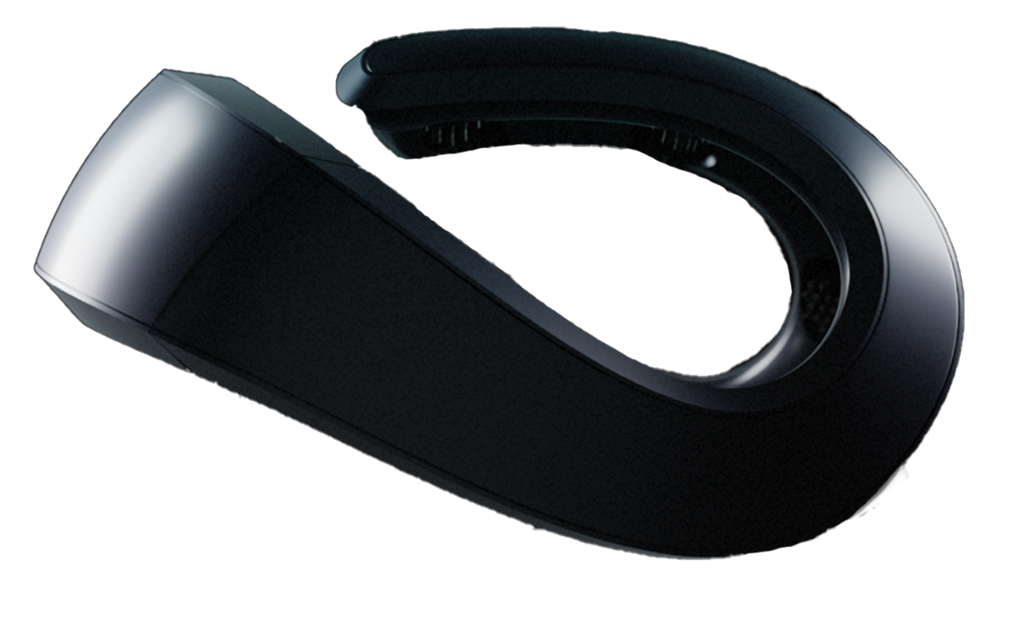
The Neurosity Crown, with its 8 channels positioned at CP3, C3, F5, PO3, PO4, F6, C4, and CP4, captures the frontal and centroparietal activity most relevant to social cognition research. Its 256Hz sampling rate is more than sufficient to resolve the event-related potentials that mark implicit processing. On-device computation through the N3 chipset processes these signals in real time, and hardware-level encryption ensures that neural data stays private, a particularly important feature when the data might reveal information about a person's automatic social responses.
The point isn't to build a bias detector. The point is that understanding your brain, really understanding how it processes social information, is the foundation for changing it. You can't override a system you're not aware of. And for the first time, the tools to become aware of that system exist outside of a university laboratory.
The Bias You Know About Is the Bias You Can Change
Here's the thought that should stay with you.
Unconscious bias is called "unconscious" for a reason. It operates outside awareness, in the neural machinery that processes the world faster than conscious thought can keep up. The 170-millisecond categorization. The amygdala's automatic evaluation. The implicit associations that spread through networks you didn't build and can't directly inspect.
You didn't choose these patterns. You can't eliminate them through force of will. And you shouldn't feel guilty about having them, because having them is what it means to have a human brain that learned from a human culture.
But the moment you understand the mechanism, something shifts. You move from "I don't have biases" (which is neurologically impossible) to "I know how my biases work, and I can build systems to catch them." That shift, from denial to understanding to design, is where real change happens.
Your brain will keep sorting. That's what brains do. The question is whether you'll let the sorting happen in the dark, or whether you'll turn on the lights.