


Your Brain at Work vs. Your Brain at Home

The Same Brain, Two Different Stories
Put on an EEG headset at your office desk on a Monday morning. Record thirty minutes of brainwave data while you work through emails, sit in a meeting, and try to focus on a report. Save the file.
Now do the exact same thing on your couch at home on a Saturday afternoon. Same headset. Same thirty minutes. Same kinds of tasks on the same laptop.
Compare the two recordings, and you'll find something that might bother you: they don't match. Not even close.
The beta activity that should look similar during focused work is elevated at the office and calmer at home. alpha brainwaves, the ones associated with relaxed alertness, are suppressed during your workday but flowing freely on Saturday. There are strange spikes in the office recording that don't appear at home. And your overall signal quality score is different in ways that seem random.
If you didn't know any better, you might think wearable EEG is unreliable. That the data is noise. That you wasted your money.
But here's the thing: almost all of those differences are real. They're telling you something important. Your brain genuinely operates differently depending on where you are, who's around you, and what's humming in the walls. And the stuff that isn't real brain activity, the electromagnetic artifacts and environmental noise, that's telling you something too. Just about your building's wiring instead of your neurons.
The trick is learning which is which. Because once you can separate the environmental signal from the environmental noise, a wearable EEG becomes something extraordinary: a tool that reveals how your brain adapts to the world around it, in real time, across every setting you actually live and work in.
Your Office Is an Electromagnetic Thunderstorm
Let's start with the most obvious problem, and the one most people think about first: electrical noise.
Your brain's electrical signals are tiny. We're talking microvolts. A single AA battery produces about 1.5 volts. The signals EEG picks up from your scalp are roughly a million times weaker than that. To detect them at all, EEG sensors have to be extraordinarily sensitive.
That sensitivity is a gift when you're in a shielded neuroscience lab with copper mesh in the walls and zero electronics within ten feet. It becomes a challenge when you're sitting in an open-plan office surrounded by dozens of monitors, a Wi-Fi router above your head, fluorescent lights buzzing overhead, and a colleague's phone charging six inches from your elbow.
Every one of those devices produces electromagnetic fields. And those fields don't just vanish at the edge of the device. They radiate outward, overlapping and interfering with each other, creating an invisible electromagnetic environment that your EEG sensors pick up right alongside your brain signals.
The biggest offender is something you'd never suspect: the electrical wiring in the walls. Power lines carry alternating current at either 50Hz (in most of the world) or 60Hz (in North America). This frequency radiates from every wire, every outlet, every power strip. And it happens to land right in the middle of the gamma brainwave band, which sits at 30-100Hz. So every time you're trying to measure gamma activity at the office, you're competing with the hum of the building itself.
Typical office sources of electromagnetic interference:
- Fluorescent or LED panel lighting (high-frequency ballasts)
- Multiple computer monitors within arm's reach
- Wi-Fi access points (often ceiling-mounted, directly overhead)
- Ethernet switches and network infrastructure
- HVAC system motors and compressors
- Elevator motors (if near an elevator shaft)
- Dozens of charging cables and power adapters
- Colleagues' phones and smartwatches
Typical home sources of electromagnetic interference:
- Household appliances (refrigerator, microwave, washer)
- Home Wi-Fi router
- One or two personal monitors
- LED or incandescent lighting (generally less EMI than office fluorescents)
- HVAC system (usually simpler than commercial systems)
- Fewer simultaneous devices in close proximity
The sheer density of electrical devices in an office means the electromagnetic noise floor is almost always higher than at home. A 2019 study in the journal Sensors measured electromagnetic field strength in various indoor environments and found that open-plan offices produced 2-5x higher ambient EMI levels compared to residential living rooms. That difference shows up directly in your EEG recording quality.
But here's what makes this interesting rather than just annoying: modern wearable EEG devices are built to handle it.
How Wearable EEG Fights Back Against Noise
Traditional laboratory EEG deals with electromagnetic interference the old-fashioned way: Faraday cages. These are rooms lined with conductive material that blocks external electromagnetic fields. You walk in, the door closes, and the outside world's electrical noise disappears. Problem solved. Also, completely impractical for everyday use.
Wearable EEG takes a different approach. Instead of eliminating the noise at the source, it fights noise at the signal processing level.
The first line of defense is notch filtering. This is a digital filter that specifically targets the 50Hz or 60Hz power line frequency and removes it from the recording. It's like noise-canceling headphones, but for your brainwave data. The Neurosity Crown's N3 chipset applies this filtering on-device, in real time, before the data ever leaves your head.
The second line is common mode rejection. When an electromagnetic field hits your head, it tends to affect all the EEG sensors roughly equally, because the interference source is far away relative to the distance between sensors. But real brain signals are localized. When your left motor cortex fires, the signal is strongest at the sensors over that region and weaker elsewhere. By looking at what's common across all 8 channels versus what's unique to specific channels, the system can separate environmental noise from genuine neural activity.
The third line is something most people don't think about: the advantage of dry electrodes and wireless transmission. Traditional lab EEG uses gel-based electrodes connected by long cables to an external amplifier. Those cables act as antennas, picking up interference along their entire length. Every time a cable moves, it generates additional artifacts. The Crown's wireless, cable-free design eliminates this entire category of noise.
None of this makes wearable EEG immune to electromagnetic interference. In a particularly noisy office, you'll still see some impact on signal quality, especially in the higher frequency bands where power line harmonics live. But it means the gap between "lab quality" and "real world quality" is far narrower than it was even five years ago.
The Differences That Aren't Noise at All
Here's where things get genuinely fascinating. Strip away the electromagnetic artifacts, clean up the signal, and you'll still find that your brain data at work looks different from your brain data at home. Because your brain actually behaves differently in these two environments.
And the reasons why reveal something profound about how sensitive your neural activity is to context.
Social Vigilance and the Beta Bump
Your brain has a surveillance system. It runs in the background, constantly monitoring the social environment for threats, status signals, and demands on your attention. Neuroscientists call this social vigilance, and it's one of the most metabolically expensive things your brain does.
At the office, this system is running at high capacity. There are colleagues who might approach your desk. A manager who might ask for a status update. Social dynamics to track. Your name might be called across the room. Even in a quiet office, even if nobody bothers you for an hour, your brain maintains this heightened monitoring state. You can't turn it off consciously. It's baked into millions of years of primate social evolution.
This shows up in EEG as elevated beta activity, particularly in the 15-30Hz range over frontal and temporal regions. beta brainwaves are associated with active thinking and alertness, but they're also the signature of a brain that's on guard. Studies on EEG in social versus solitary conditions consistently show higher beta power when other people are present, even if there's no direct interaction happening.
At home, especially when you're alone or with only family present, this social monitoring system dials down. Your frontal beta drops. Not because you're less focused, but because your brain isn't spending resources on social surveillance. That cognitive budget gets freed up for other things.
This is one of the reasons many people report feeling like they can think more clearly at home, and it's one of the things that wearable EEG can actually quantify.
Alpha Waves and the Comfort Gradient
Alpha waves (8-13Hz) are sometimes called the brain's "idle" rhythm, but that's misleading. Alpha isn't about doing nothing. It's about being in a state of relaxed readiness. Your brain produces strong alpha when you're calm, alert, and not actively threatened or stressed. Think of it as the neural signature of feeling safe enough to lower your guard.
Home environments, for most people, produce stronger alpha than work environments. The reasons are partly psychological (familiarity, control over the space, absence of authority figures) and partly physical (comfortable furniture, preferred temperature, personal lighting choices). Your brain's alpha generators, primarily in the thalamus and occipital cortex, are sensitive to all of these factors.
| Brainwave Band | Typical Office Pattern | Typical Home Pattern | Why It Differs |
|---|---|---|---|
| Delta (0.5-4Hz) | Low during work hours, occasional spikes from drowsiness | Slightly higher during relaxed tasks, elevated if fatigued | Home relaxation can edge toward drowsiness; office arousal suppresses delta |
| Theta (4-8Hz) | Moderate, increases during creative tasks | Often higher, especially during unstructured time | Less external structure at home allows more mind-wandering (theta-rich) |
| Alpha (8-13Hz) | Suppressed during active work and social interaction | Generally higher, especially during solo relaxation | Comfort and familiarity promote alpha; social vigilance suppresses it |
| Beta (15-30Hz) | Elevated, especially frontal beta from social monitoring | Lower baseline, spikes during focused tasks | Office social vigilance drives sustained beta; home lets it fluctuate naturally |
| Gamma (30-100Hz) | Harder to measure cleanly due to EMI overlap | Cleaner signal, easier to detect genuine gamma bursts | 60Hz power line noise overlaps with gamma band in office environments |
Movement Patterns and Muscle Artifacts
There's a type of EEG artifact that has nothing to do with electronics and everything to do with your body: muscle artifacts. Every time you clench your jaw, furrow your brow, or tense your neck, the electrical activity from those muscles bleeds into the EEG signal. Muscle signals are much stronger than brain signals (millivolts versus microvolts), so even small amounts of facial or neck tension can dominate a recording.
Here's the "I had no idea" moment: people move differently at work than at home, and it's not just about big movements. A 2021 study using wearable motion sensors found that office workers make 3-4x more micro-movements per hour than the same individuals at home. Head turns to look at colleagues. Subtle postural shifts in ergonomic chairs that never quite feel right. Jaw clenching during stressful emails. The controlled, slightly rigid posture of someone who knows they're being observed.
At home, people slouch. They shift positions freely. They put their feet up. Paradoxically, this more relaxed body state produces fewer muscle artifacts in EEG, despite the more varied postures. Tension, not movement, is the enemy of clean EEG data. And people are more tense at work than they realize.
Before starting an EEG recording session, spend 30 seconds doing a deliberate body scan. Unclench your jaw. Drop your shoulders away from your ears. Relax your forehead. These three areas are responsible for the majority of muscle artifacts in scalp EEG recordings. This simple habit improves data quality more than any software filter, and it works whether you're at your desk or on your couch.
What Your Data Is Really Telling You
So your work EEG and your home EEG look different. Some of that difference is environmental noise. Some of it is genuine neural activity shifting with context. The question is: what can you actually learn from this?
More than you might expect.
Baseline Mapping Across Environments
One of the most valuable things you can do with a wearable EEG is establish your personal baselines in different environments. Not a single "resting state" measurement taken once in a quiet room, but an ongoing map of how your brain operates across the settings where you actually spend your time.
This matters because brain data without context is just squiggly lines. A beta power reading of 12 microvolts squared means nothing in isolation. But if you know that your typical office beta is 14 and your typical home beta is 10, then a reading of 18 at the office tells you something specific: you're significantly more activated than your usual work state. Maybe you're stressed. Maybe you're in flow. The context of environment-specific baselines lets you interpret the data.
Identifying Your Optimal Work Environment
Once you have brainwave data from multiple settings, you can start asking a question that would have been pure speculation before wearable EEG existed: where does my brain actually work best?
The answer isn't always what you'd expect. Some people show their highest sustained focus scores (strong beta with moderate alpha, low theta) in a bustling coffee shop. The ambient noise acts as a kind of white noise that suppresses the mind-wandering circuits. Others show their best focus in complete silence at home. Still others find that the social accountability of the office keeps their brain in a productive state that they can't replicate alone.
Without objective data, you're relying on subjective feelings about productivity, and those feelings are notoriously unreliable. People consistently overestimate their focus in environments they prefer and underestimate it in environments they dislike. EEG doesn't have that bias.
Tracking Stress Signatures Across Your Day
Your brain's stress response leaves a specific EEG signature: elevated right-frontal beta, suppressed alpha, increased high-beta (20-30Hz) activity, and reduced alpha asymmetry (where the left frontal region normally shows more alpha suppression than the right during positive emotional states).
By wearing an EEG device across both work and home environments, you can map when and where your stress responses activate. Maybe your brain shows a stress spike every day at 2pm when you have a recurring meeting. Maybe your evening home data shows that the stress signature persists for two hours after you leave the office. Maybe it clears within twenty minutes.
This is the kind of insight that no amount of self-reflection can match. Your conscious mind might tell you "I'm fine" while your frontal cortex is still running a stress pattern from six hours ago.
The Variables Most People Miss
Beyond the obvious factors like electromagnetic interference and social context, several subtler environmental variables affect EEG data in ways that are easy to overlook.
Lighting
Light exposure affects brainwave patterns through pathways that have nothing to do with vision. Specialized cells in your retina (called intrinsically photosensitive retinal ganglion cells) detect ambient light levels and send signals to the suprachiasmatic nucleus, your brain's master clock. This pathway modulates alertness, cortisol release, and the entire spectrum of brainwave activity.
Office fluorescent lighting tends to be bright and blue-shifted, which suppresses melatonin and pushes the brain toward a more alert (beta-dominant) state. Home lighting, especially in the evening, tends to be warmer and dimmer, allowing more alpha and theta activity. If you're comparing EEG recordings from a brightly lit office and a dim living room, some of the brainwave difference you're seeing is literally caused by the light hitting your eyes.
Temperature
Thermal comfort affects cognitive performance and EEG patterns. Research published in Building and Environment showed that temperatures above 25 degrees Celsius (77 Fahrenheit) increased theta activity and decreased beta activity, consistent with reduced alertness and increased drowsiness. Most offices maintain temperatures between 20-23 degrees Celsius, while home temperatures vary more widely based on personal preference and season.
Acoustic Environment
Sound affects EEG even when you're not consciously aware of it. Low-frequency noise from HVAC systems, traffic, and building vibrations increases theta activity and can impair sustained attention. Intermittent sounds (a door closing, a notification chime, a colleague's laugh) trigger event-related potentials in your EEG, brief neural responses that divert processing resources even if you don't feel distracted.
The acoustic profile of an office is fundamentally different from a home. Offices have more intermittent sounds and more human speech (which the brain processes preferentially and can't easily ignore). Homes tend to have more consistent background noise (appliances, outdoor ambient) and fewer speech interruptions.
Before recording, check these five factors in your environment:
- Electronics proximity - Move phones, chargers, and tablets at least an arm's length away. Position yourself as far from Wi-Fi routers as practical.
- Lighting consistency - Avoid sitting directly under flickering fluorescent lights. If possible, use consistent, non-flickering light sources.
- Body position - Choose a comfortable posture you can maintain without tension. Muscle artifacts from discomfort will compromise your data.
- Sound baseline - Note the ambient noise level. Consistent background noise is far less notable to EEG than intermittent interruptions.
- Time of day - Compare recordings made at similar times. Your circadian rhythm affects brainwave patterns more than most environmental factors.
Why Versatility Matters More Than Perfection
Here's the fundamental insight that changes how you think about wearable EEG and environment: the goal isn't to find the perfect recording location. The goal is to collect meaningful data from every location.
Traditional neuroscience is built on controlled environments. You bring a participant into the lab, eliminate every possible variable, and record data under conditions that bear almost no resemblance to the person's actual life. The data is clean. It's also ecologically useless. Knowing how someone's brain responds to a cognitive task in a soundproof room tells you surprisingly little about how their brain handles a Tuesday afternoon at work.
Wearable EEG flips this model. Instead of bringing the person to the lab, you bring the lab to the person. Yes, the data is noisier. Yes, you have to account for environmental variables. But you're measuring something that lab EEG can never capture: how the brain actually operates in the environments that matter.
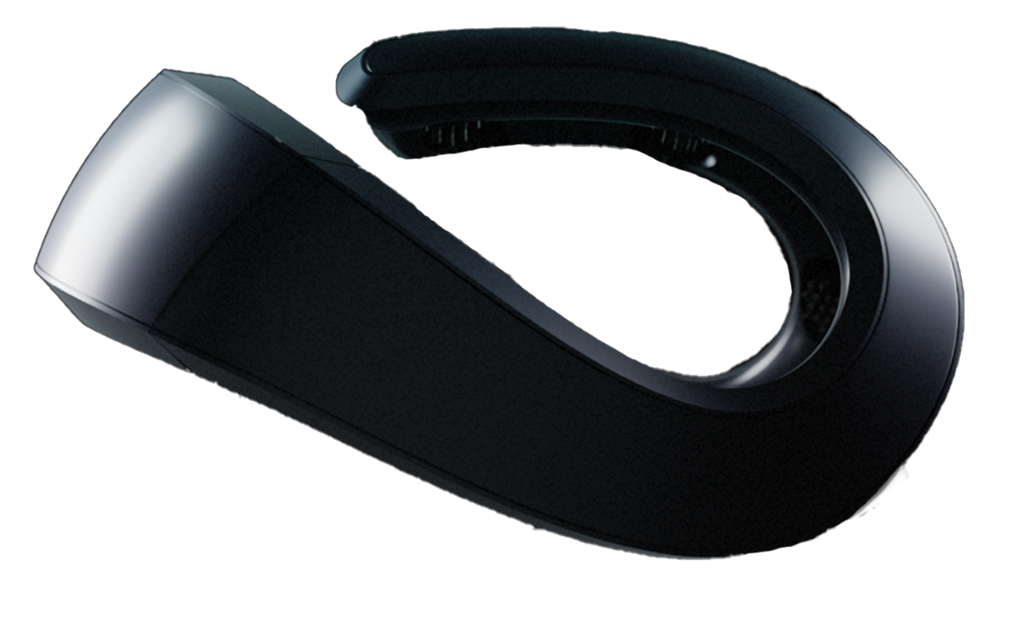
The Neurosity Crown was designed around this philosophy. Its 8 EEG channels sample at 256Hz, capturing the full spectrum of brainwave activity from delta through gamma. The N3 chipset handles signal processing on-device, applying noise filtering and artifact rejection in real time so the data you see has already been cleaned. And because it's wireless, self-contained, and weighs just 228 grams, you can wear it at your office desk, on your commute, at your kitchen table, or anywhere else your brain goes.
That versatility is the point. A brain-computer interface that only works in a quiet room isn't a tool for real life. It's a toy for controlled conditions.
Building Your Own Work vs Home Brain Profile: Which Is Better?
If you want to see how your brain actually differs across environments, here's a practical approach.
Record five 20-minute sessions at work and five at home, all during similar activities (focused work, reading, or a cognitive task you can standardize). Try to record at the same time of day for each pair. Keep notes on the environmental conditions: how many people were nearby, noise level, lighting, and your subjective stress level on a 1-10 scale.
After ten sessions, compare your averages. Look at overall alpha power, frontal beta, the theta/beta ratio (a common measure of attention), and your focus scores. You'll almost certainly see systematic differences. Some of those differences will reflect your brain's genuine adaptation to each environment. Others will point you toward environmental factors you can optimize.
Maybe you'll discover that your focus scores are 15% higher at home, and you'll negotiate more remote work days. Maybe you'll find that your morning office data is clean and productive, but afternoon sessions show a stress pattern you hadn't consciously noticed. Maybe you'll realize that sitting near the window instead of under the fluorescent panel changes your alpha baseline by a meaningful amount.
This is neuroscience with a sample size of one. And that one is the only person whose brain data actually matters to you.
The Future Is Everywhere
We're still in the early days of understanding how environment shapes brain activity in the real world. For decades, neuroscience has studied the brain in isolation, sealed away from the messy, noisy, complicated environments where brains actually do their work. Wearable EEG is changing that, one recording at a time.
Every time you put on a wearable EEG and go about your day, you're collecting data that no laboratory could generate. You're building a picture of your brain that includes context, environment, and the thousand small variables that make Tuesday at the office feel different from Sunday on the couch. Not just subjectively different. Measurably different. Neurologically different.
The question isn't whether your brain acts differently at work versus home. It does. The science is clear on that. The question is what you'll do once you can see the difference for yourself. Once you have actual data showing you when and where your brain does its best thinking, its deepest focus, its most creative wandering.
That's not just neuroscience. That's self-knowledge of a kind that didn't exist five years ago. And the only equipment you need is a device that rides along with you, from your desk to your couch and everywhere in between, listening to the electrical conversation inside your skull and translating it into something you can finally understand.