


The Part of Your Brain That Knows Where You Are

Close Your Eyes and Touch Your Nose. How Did You Do That?
Seriously. Try it. Close your eyes, extend your arm, and bring your index finger to the tip of your nose.
You nailed it, didn't you? Maybe you were off by a few millimeters. But you didn't poke yourself in the eye. You didn't miss your face entirely and jab your ear. Without any visual information, your brain knew exactly where your nose was and exactly where your finger was, and it plotted a trajectory through three-dimensional space to connect them.
Now think about how insane that is.
Your finger and your nose are not connected by any wire or beam. There's no GPS satellite telling your brain the coordinates. Your eyes were closed, so vision couldn't help. And yet, somewhere in your skull, a region of cortex was performing a real-time calculation that would make a robotics engineer jealous: integrating the angles of every joint in your arm, factoring in the position of your head, constructing a three-dimensional model of your body's arrangement in space, and guiding a motor command with sub-centimeter accuracy.
The region responsible for this casual miracle sits right on top of your head, just behind the crown. It's called the parietal lobe. And the more you learn about what it does, the more you realize that it might be the most underrated piece of neural real estate in your entire brain.
The Brain's Cartographer: Where the Parietal Lobe Lives
If you place your hand flat on the top of your head and slide it backward until you're touching the area just behind the midpoint, you're roughly over your parietal cortex. It occupies the upper-rear quadrant of each hemisphere, bordered by the frontal lobe in front (separated by the central sulcus), the temporal lobe below (separated by the lateral sulcus), and the occipital lobe behind.
That central sulcus, the deep groove separating the frontal and parietal lobes, is one of the most important landmarks in the entire brain. Just in front of it is the primary motor cortex, which sends commands to your muscles. And just behind it, forming the front wall of the parietal lobe, is the primary somatosensory cortex, which receives information about touch, pressure, temperature, and pain from every square inch of your body.
This positioning is not accidental. The parietal lobe sits at a crossroads. It receives raw sensory data from the somatosensory cortex in front. It gets visual information from the occipital lobe behind. It pulls auditory data from the temporal lobe below. And it sends integrated output forward to the frontal lobe for decision-making and motor planning.
It's a convergence zone. The place where the brain takes multiple streams of incomplete sensory information and weaves them into a single, coherent representation of reality.
The Somatosensory Cortex: Your Body Has a Map of Itself
The front strip of the parietal lobe, the primary somatosensory cortex (also called S1), contains one of the most bizarre structures in neuroscience: the somatosensory homunculus.
Discovered by neurosurgeon Wilder Penfield in the 1930s through direct electrical stimulation of the exposed cortex during brain surgery (patients were awake, which is its own wild story), the homunculus is a topographic map of the entire body surface, laid out across the cortical strip. Every point on the somatosensory cortex corresponds to a specific body part. Stimulate one spot and the patient reports tingling in their left thumb. Move a few millimeters over and it's the index finger. A bit further, the palm.
But here's the weird part. The map is wildly distorted.
The area of cortex devoted to your lips is enormous. Your fingertips get a huge territory. Your tongue is disproportionately large. Meanwhile, your entire back, which has vastly more surface area than your lips, gets a tiny sliver of cortical real estate.
If you drew a human body with each part sized proportionally to its representation in the somatosensory cortex, you'd get a grotesque little creature with enormous hands, lips, and tongue, a massive face, and a tiny torso and legs. That creature is the homunculus, and it reveals something fundamental: the brain doesn't represent the body as it physically is. It represents the body as it needs to. Your fingertips need more processing power because they perform more delicate discrimination. Your back needs less because "something is touching my back" doesn't require millimeter precision.
This is already the parietal lobe being the parietal lobe. It's not passively receiving sensory data. It's organizing it according to what matters.
The somatosensory cortex in the parietal lobe contains a distorted map of the entire body surface. Body regions requiring fine tactile discrimination (fingertips, lips, tongue) occupy disproportionately large cortical areas. This organization, called somatotopy, is not fixed at birth. It can reorganize in response to experience, training, or injury, a phenomenon known as cortical plasticity. Blind individuals who learn Braille, for example, show expanded somatosensory representation of their reading fingertips.
Beyond Touch: The Parietal Lobe as Spatial Computer
If the somatosensory cortex is the parietal lobe's front desk, the real action happens deeper inside, in the posterior parietal cortex (PPC). This is where the brain stops merely sensing the world and starts understanding where things are in it.
The posterior parietal cortex is divided into two main areas, and the division reveals something important about how the brain handles space.
The superior parietal lobule (roughly the upper portion) specializes in proprioception and body-in-space awareness. It keeps track of where your limbs are, how your body is oriented relative to gravity, and what movements are needed to interact with objects. When you reach for a coffee cup without looking at your hand, the superior parietal lobule is running the show.
The inferior parietal lobule (the lower portion) does something even more remarkable. It integrates information across multiple senses, vision, hearing, touch, to construct a unified spatial map of the environment. It's involved in spatial reasoning, mental rotation of objects, understanding spatial relationships between things, and directing your attention to specific locations.
This is the area that lights up when you mentally rotate a Tetris piece, plan a route through a city, or judge whether your car will fit into a parking spot.
And here's where the parietal lobe's role in attention comes into focus.
The Attention Spotlight Runs Through Parietal Cortex
You probably think of attention as something that happens "in your head" in a general, diffuse way. But attention has a geography, and the parietal lobe is its central hub.
In the early 1980s, neuroscientist Michael Posner proposed that attention works like a spotlight. You can direct it to specific locations in space, and whatever falls inside the spotlight gets preferential processing. Things outside the spotlight are suppressed. This wasn't just a metaphor. Posner showed through careful reaction-time experiments that attention physically shifts across spatial locations, even when your eyes don't move.
The neural machinery for this spotlight? Heavily concentrated in the parietal lobe.
When you shift attention to the left side of space, the right parietal cortex increases its activity. When you attend to the right, the left parietal cortex ramps up. This contralateral organization means each hemisphere's parietal lobe manages attention for the opposite side of space.
The most dramatic evidence for this comes from patients with parietal damage. When the right parietal lobe is damaged (usually by a stroke), something astonishing happens. The patient develops hemispatial neglect. They don't just fail to see the left side of space. They stop knowing it exists.
A patient with left hemispatial neglect will eat only the food on the right half of their plate. They'll shave only the right side of their face. If you ask them to draw a clock, they'll squeeze all twelve numbers into the right half of the circle. And they don't experience any of this as wrong. They're not aware that they're missing anything. The left side of their spatial world has simply vanished.
This is not blindness. Their eyes work fine. Their visual cortex is intact. The problem is that the parietal lobe's spatial map has a hole in it, and without that map, the left side of space doesn't make it into conscious awareness.
Hemispatial neglect tells us something profound: you don't perceive reality directly. You perceive the model your parietal lobe constructs. If the model is incomplete, so is your experience.
What Parietal EEG Signals Actually Look Like
So the parietal lobe builds your spatial world, manages your attention, and integrates your senses. The question for anyone interested in brain measurement is: can you see this activity from the outside?
Yes. And EEG is remarkably good at catching parietal cortex in the act.
Parietal Alpha: The Idling Rhythm
The most prominent EEG signal over parietal cortex is the alpha rhythm, oscillations in the 8-13 Hz range. These rhythms are strongest when the parietal cortex is not actively processing, which sounds counterintuitive until you understand what they represent.
alpha brainwaves over the parietal lobe act like an idling signal. When parietal cortex is resting, not engaged in spatial processing or active attention, alpha power is high. The neurons are oscillating in a synchronized, rhythmic pattern, essentially on standby.
The moment you engage the parietal lobe, alpha power drops. Open your eyes, and parietal alpha suppresses. Start a spatial reasoning task, and it drops further. Shift your attention to a specific location, and alpha suppresses specifically over the parietal cortex contralateral to where you're attending.
This phenomenon is called event-related desynchronization, or ERD. It's one of the most reliable and well-studied EEG phenomena in neuroscience, and it's particularly strong over parietal sites.
Here's the "I had no idea" part: the pattern of alpha suppression over parietal cortex is so spatially specific that researchers can determine which side of space someone is attending to just by comparing alpha power between the left and right parietal electrodes. If alpha drops more over the right parietal cortex, the person is attending to the left. If it drops more over the left parietal cortex, they're attending to the right.
Your attention has a measurable electrical signature. And it's broadcast from your parietal lobe.
The P300: Parietal Cortex Saying "I Noticed That"
If alpha rhythms reveal the ongoing state of parietal processing, the P300 event-related potential reveals its moment-to-moment responses.
The P300 is a positive voltage deflection that peaks approximately 300 milliseconds after a stimulus that is rare, unexpected, or task-relevant. And while it's a distributed response involving multiple brain regions, it reaches its maximum amplitude over parietal cortex, typically at electrode sites Pz, P3, and P4.
Why parietal? Because the P300 reflects context updating, the brain's process of revising its model of what's happening. When something unexpected occurs, your brain needs to update its representation of the environment. That's a parietal job. The parietal lobe maintains the spatial and contextual model, and when that model needs revision, the P300 is the electrical signature of the revision in progress.
The P300 has been one of the most productive signals in all of EEG research. Its amplitude tells you how much attention the person allocated to the stimulus. Its latency tells you how long the evaluation took. Reduced P300 amplitude is a marker for ADHD brain patterns, early cognitive decline, and certain psychiatric conditions. Increased P300 latency shows up in aging and neurodegenerative disease.
And because it's strongest at parietal sites, it's capturable by any EEG system with decent parietal coverage.
| Parietal EEG Signal | Frequency/Timing | What It Reflects | When It Appears |
|---|---|---|---|
| Parietal alpha (8-13 Hz) | Ongoing oscillation | Idling state of parietal cortex | Strong at rest, suppresses during spatial tasks |
| Alpha ERD | Event-locked suppression | Active parietal engagement | During attention shifts, spatial reasoning, sensory integration |
| Lateralized alpha | Hemispheric asymmetry | Direction of spatial attention | Alpha drops contralateral to attended location |
| P300 | Positive peak, ~300ms | Context updating, attention allocation | After rare or task-relevant stimuli, maximal at parietal sites |
| P3b subcomponent | Positive peak, ~300-600ms | Working memory updating, stimulus categorization | During oddball tasks, largest at Pz |
| Late positive potential | Positive, ~400-800ms | Sustained attention, emotional processing | During emotionally salient or motivationally relevant stimuli |
Lateralized Attention and the N2pc
There's an even more specific parietal EEG signal that tracks spatial attention with remarkable precision. It's called the N2pc (N2 posterior contralateral), and it appears about 200-300 milliseconds after a visual display when the observer shifts attention to a particular item.
The "pc" stands for "posterior contralateral," because it shows up at posterior electrodes (parietal and occipital) contralateral to the attended stimulus. If a target appears on the left side of a visual display, the N2pc is larger over the right parietal cortex. If the target appears on the right, it's larger over the left.
The N2pc has become the workhorse measure for studying visual attention. It reveals the exact moment your brain selects a target from among distractors, how efficiently that selection occurs, and whether certain items automatically capture attention.
Three features make parietal cortex uniquely accessible to EEG measurement:
-
Surface location. The parietal lobe sits near the top of the brain, close to the scalp. Signals don't have to travel far through tissue, so they arrive at parietal electrodes with relatively less attenuation than signals from deeper structures.
-
Large-scale synchrony. Parietal alpha rhythms involve vast populations of neurons oscillating in phase. This synchronized activity generates strong electrical fields detectable at the scalp, making parietal alpha one of the largest and most reliable EEG signals.
-
Contralateral organization. The left-right mapping of spatial attention creates a natural contrast. By comparing signals between left and right parietal electrodes, researchers can extract attention-related activity while canceling out bilateral noise. This built-in control makes lateralized parietal EEG signals particularly clean.
The Parietal Lobe, Meditation, and the Dissolving Self
Here's where the parietal lobe story takes an unexpected turn.
Experienced meditators often report a phenomenon that sounds mystical: the sense that the boundary between self and world dissolves. The feeling that "I" ends and "everything else" begins becomes blurry, soft, or absent altogether. Different contemplative traditions give this different names, but the experience is remarkably consistent across cultures and centuries.
In 2001, Andrew Newberg and Eugene d'Aquili conducted brain imaging studies of Tibetan Buddhist meditators and Franciscan nuns during deep contemplative states. They found something striking: during the most intense moments of meditation, blood flow to the superior posterior parietal lobe dropped significantly.
This is the region responsible for constructing the boundary between self and environment. It takes proprioceptive data (where your body is) and exteroceptive data (where everything else is) and draws a line between them. That line is your sense of having a body that occupies a specific region of space, separate from the world around it.
When activity in this region decreases, the boundary blurs. The brain's cartographer stops drawing the map's borders. And the subjective experience is exactly what meditators describe: a dissolution of the sense of spatial self.
EEG studies of meditation have corroborated this with electrical data. Long-term meditators show increased parietal alpha power during meditation, which, paradoxically, reflects reduced active processing in parietal cortex. The parietal lobe is quieting down. The spatial self-model is dimming. And the meditator experiences this as expansiveness, boundlessness, a sense of merging with the environment.
Your sense of being a separate self in space is, quite literally, a construction of your parietal cortex. And it can be turned down.
What Parietal Damage Teaches Us About Consciousness
The most profound insights about the parietal lobe come from studying what happens when it goes wrong. We already covered hemispatial neglect. But that's just the beginning.
Balint Syndrome: Seeing One Thing at a Time
When both parietal lobes are damaged (usually by bilateral strokes affecting the watershed regions between major arteries), the result is Balint syndrome, one of the strangest neurological conditions ever documented.
Patients with Balint syndrome can see. Their eyes work. Their primary visual cortex is intact. But they can only perceive one object at a time. Place a pen and a cup on a table in front of them, and they'll see the pen or the cup, never both simultaneously. They can't judge distances. They can't guide their hand to pick up an object they're looking at. They can't voluntarily shift their gaze to a new location.
The world, for a Balint patient, is not a scene. It's a single isolated object floating in a void, switching unpredictably from one thing to another.
This tells us that the parietal lobe isn't just adding spatial information to an already-complete visual experience. It's fundamental to constructing the spatial framework within which vision occurs. Without parietal cortex, you can process individual objects, but you can't place them in space, relate them to each other, or integrate them into a coherent scene.
Anosognosia: Not Knowing What You Don't Know
Perhaps the most philosophically disturbing parietal condition is anosognosia, the inability to recognize one's own disability. Some patients with right parietal damage who are completely paralyzed on their left side will insist that nothing is wrong. If you ask them to raise their left arm, they'll say they did. If you show them their motionless arm, they'll confabulate, claiming it's not their arm, or that they just moved it, or that they simply don't feel like moving right now.
This isn't denial in the psychological sense. The patient genuinely doesn't have access to the information that they're paralyzed. The parietal lobe's body model, which normally includes awareness of what each limb is doing, has been disrupted. And without that model, the deficit itself is invisible to the person experiencing it.
Anosognosia raises a question that keeps philosophers and neuroscientists awake at night: how much of your own brain activity are you unaware of? If damage to one brain region can make you completely blind to an obvious physical disability, what might healthy brains be missing that they don't even know they're missing?
Measuring Your Parietal Lobe: EEG Electrode Placement
In the international 10-20 system, parietal electrode sites are labeled with the letter P. The midline parietal site is Pz (parietal zero). Left parietal is P3, right parietal is P4. In extended systems, additional sites include P1, P2, P5, P6, P7, and P8.
Central-parietal sites (CP3, CP4, CPz) sit at the border between central and parietal regions, right over the somatosensory cortex and the anterior portion of the parietal lobe. Parieto-occipital sites (PO3, PO4, POz) cover the transition zone between parietal and visual cortex, where spatial and visual information converge.
For measuring parietal alpha rhythms and the P300, the most important sites are the classic parietal positions (P3, P4, Pz) and the central-parietal sites (CP3, CP4). For catching lateralized attention effects like the N2pc, you want symmetrical electrode pairs over posterior parietal and parieto-occipital cortex.
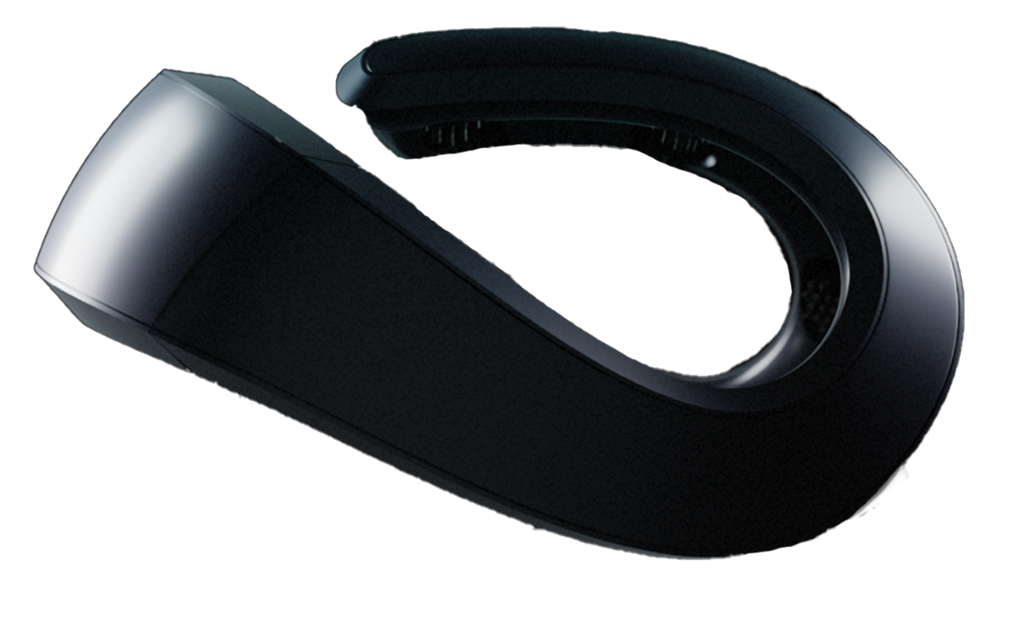
The Neurosity Crown's electrode configuration includes four sensors that cover parietal territory: CP3 and CP4 over central-parietal cortex, and PO3 and PO4 over parieto-occipital cortex. These positions span both hemispheres, which is critical for detecting lateralized attention signals. CP3/CP4 sit right over the somatosensory cortex and anterior parietal lobe, ideal for P300 detection and sensorimotor rhythms. PO3/PO4 cover the region where spatial processing and visual processing overlap, capturing alpha ERD during spatial tasks and the posterior attention signals that researchers care about.
| Electrode Site | Brain Region | Key Signals | Crown Coverage |
|---|---|---|---|
| Pz | Midline parietal | P300 (maximum amplitude), parietal alpha | Interpolated from CP3/CP4 and PO3/PO4 |
| P3 / P4 | Left / right parietal | Lateralized alpha, attention asymmetry | Adjacent coverage via CP3/CP4 |
| CP3 / CP4 | Central-parietal | Somatosensory processing, mu rhythm, P300 | Direct Crown sensor positions |
| PO3 / PO4 | Parieto-occipital | Visual-spatial processing, alpha ERD, N2pc | Direct Crown sensor positions |
| P7 / P8 | Inferior parietal / temporal-parietal junction | N2pc, social cognition signals | Not directly covered |
With four sensors covering parietal cortex across both hemispheres, the Crown provides the electrode geometry needed to track the strongest parietal EEG phenomena: bilateral alpha power, hemispheric alpha asymmetry during spatial attention, and P300 responses to unexpected or relevant stimuli. Through the JavaScript and Python SDKs, you can access raw EEG at 256Hz from these parietal channels, run power spectral analysis to track alpha in real time, or build your own attention-monitoring experiments.
Many brain-computer interface paradigms rely on signals that are strongest at parietal sites. P300 spellers use the parietal P300 as their core control signal. Motor imagery BCIs detect changes in the mu rhythm (8-12 Hz) over central-parietal cortex. Spatial attention BCIs use lateralized alpha asymmetry between left and right parietal electrodes. Having good parietal coverage isn't optional for BCI work. It's fundamental.
The Parietal Lobe and the Future of Spatial Computing
There's a reason to pay attention to the parietal lobe right now, beyond pure neuroscience curiosity.
As technology moves toward spatial computing, augmented reality, virtual reality, and mixed reality, the parietal lobe's functions become directly relevant to interface design. Every AR headset that overlays digital information onto physical space is, in effect, trying to collaborate with your parietal lobe. It's adding objects to the spatial map your parietal cortex maintains. If the overlay doesn't match your brain's spatial model, you get disorientation, nausea, and cognitive strain.
EEG monitoring of parietal activity could provide real-time feedback about whether a spatial interface is working with the brain or against it. Is parietal alpha suppressing normally during spatial interaction, indicating healthy engagement? Or is it oscillating erratically, suggesting the brain's spatial model is confused? Are P300 responses to virtual objects comparable to those elicited by physical objects, suggesting the brain is treating them as "real"?
These are not hypothetical questions. Researchers are already combining EEG with VR to study how the brain processes virtual environments, and the parietal lobe is at the center of those investigations.
For developers building the next generation of spatial interfaces, understanding parietal EEG signals isn't just academic trivia. It's a window into whether your users' brains are on board with what you're building.
The Region That Constructs Your Reality
Here's the thing about the parietal lobe that might keep you thinking after you close this tab.
Every conscious moment of your life, the parietal cortex is building a model. A model of where your body is, where everything else is, what deserves attention, and where the boundary between "you" and "not you" should be drawn. This model is so smooth, so automatic, that you never notice it's happening. You just experience it as reality.
But it isn't reality. It's a construction. A very good one, refined by millions of years of evolution, updated hundreds of times per second by billions of neurons. But a construction nonetheless.
The evidence for this is everywhere once you look. Hemispatial neglect shows that half of space can disappear from the model without the person noticing. Balint syndrome shows that the spatial framework itself can collapse, leaving vision intact but unintegrated. Meditation shows that the self-other boundary can be softened by reducing parietal activity. And ordinary, everyday attention shows that the model is constantly being selectively edited, with some things highlighted and others suppressed, based on what the parietal lobe deems relevant.
The electrical signals that EEG picks up from parietal electrodes are, in a very real sense, the signatures of this construction process. Alpha rhythms that mark when the builder is resting. ERD that marks when it snaps to attention. P300 waves that mark when the model gets revised. Lateralized asymmetries that reveal which side of the blueprint is being worked on at this moment.
You can now measure these signals from a device you wear on your head. You can stream them in real time. You can build applications that respond to them. And in doing so, you can start to watch, for the first time, the invisible architecture that sits between you and the world you think you're seeing.
Your parietal lobe has been constructing your reality since the day you were born. It just never told you. Now, the electrical evidence is right there on the scalp, waiting to be read.