


What Is the Vagus Nerve?

There Is a Nerve in Your Body That Touches Almost Every Organ. And It Might Be the Reason You Can't Focus.
Right now, running from the base of your brainstem all the way down through your neck, past your heart, through your lungs, and into your gut, there is a nerve so long and so branching that ancient anatomists named it after the Latin word for "wandering."
The vagus nerve. Cranial nerve X. The wanderer.
It touches your heart. It wraps around your lungs. It talks to your stomach, your liver, your intestines. And here is the part that most people never hear about: roughly 80% of its fibers carry information upward, from your body to your brain. Not the other direction. Your vagus nerve is not primarily a command cable sending orders from headquarters down to the troops. It's a massive sensory pipeline, constantly streaming data about the state of your body up to your brain.
Your brain uses this information to decide something important: is it safe to think right now?
That question, whether your nervous system believes you are safe enough to allocate resources to complex cognition, turns out to be one of the most important factors in your ability to focus. And the vagus nerve is the one asking it.
The Longest Nerve You've Never Heard Of
Let's start with the basics, because the vagus nerve is genuinely one of the most fascinating structures in human anatomy.
You have 12 pairs of cranial nerves, nerves that emerge directly from the brain rather than from the spinal cord. Most of them handle specialized jobs in your head and face. The optic nerve carries visual information. The olfactory nerve handles smell. The facial nerve controls your expressions.
Then there's cranial nerve X. The vagus nerve looked at the other 11 cranial nerves staying tidy and local and said: I'm going on an adventure.
It exits the brainstem at the medulla oblongata, passes through a small opening in the skull called the jugular foramen, and then just keeps going. Down through your neck, branching into your larynx (which is why it affects your voice). Into your chest, where it wraps around the esophagus and sends branches to the heart and lungs. Through the diaphragm. Into the abdomen, where it fans out across the stomach, intestines, liver, and pancreas.
No other cranial nerve comes close to this range. The vagus nerve is like a fiber optic cable that connects your brain to your entire torso.
And the sheer scale of it hints at something important: the connection between your brain and your body is not a side channel. It's not supplementary. It is a superhighway, and the vagus nerve is the main road.
Two Nervous Systems, One Body
To understand why the vagus nerve matters so much for focus, you need to understand the autonomic nervous system. This is the part of your nervous system that runs on autopilot, handling all the things you don't consciously control: heart rate, digestion, breathing rate, pupil dilation, sweating.
The autonomic nervous system has two main branches, and they work like a gas pedal and a brake.
The sympathetic nervous system is the gas pedal. It's your fight-or-flight system. When a threat appears (or when your brain thinks a threat has appeared, which happens more often than you'd expect), the sympathetic system floods your body with adrenaline and cortisol. Your heart rate spikes. Your breathing quickens. Blood flows to your muscles. Digestion stops. Your pupils dilate. Your body is preparing to fight something or run from it.
The parasympathetic nervous system is the brake. It's your rest-and-digest system. When the threat passes, the parasympathetic system brings everything back down. Heart rate slows. Breathing deepens. Digestion resumes. Your body shifts from survival mode to recovery mode.
And the primary nerve of the parasympathetic system? The vagus nerve.
Here's the critical insight: focus is a parasympathetic activity. Not entirely, of course. You need some sympathetic activation to feel alert and motivated. But sustained, deep cognitive work requires your nervous system to be in a state that says "we are safe, we have resources, we can afford to invest energy in complex thought."
When your sympathetic system is dominant, whether because of actual danger, chronic stress, poor sleep, or too much caffeine, your brain shifts into a mode optimized for quick reactions, not deep thinking. Working memory shrinks. Attentional control weakens. The prefrontal cortex, the very region responsible for focus and executive function, gets partially taken offline as resources are redirected to threat-monitoring circuits.
The vagus nerve is the master switch that determines which mode you're in.
Vagal Tone: The Metric You Didn't Know You Needed
Scientists have a term for how strong and responsive your vagus nerve is: vagal tone.
High vagal tone means your parasympathetic system is strong. Your vagus nerve efficiently slows your heart rate, regulates your breathing, and keeps inflammation in check. You recover quickly from stress. Your body spends more time in the rest-and-digest state that enables deep cognitive work.
Low vagal tone means the opposite. Your parasympathetic brake is weak. After a stressful event, it takes longer for your heart rate to come back down. Your body stays in a heightened sympathetic state longer than it needs to. Chronic low vagal tone is associated with anxiety, depression, inflammation, digestive problems, and, critically for our purposes, poor attentional performance.
So how do you measure vagal tone?
The gold standard is heart rate variability, or HRV. This is the variation in time intervals between consecutive heartbeats. If your heart beats at exactly one beat per second, with metronomic precision, your HRV is low. If the intervals vary slightly (0.9 seconds, then 1.05 seconds, then 0.95 seconds), your HRV is high.
Counterintuitively, higher variability is better. A heart with high HRV is responding dynamically to input from the vagus nerve, speeding up slightly on inhale (when vagal influence decreases) and slowing down on exhale (when vagal influence increases). This beat-to-beat flexibility is a sign of a healthy, responsive autonomic nervous system.
Research published in Psychophysiology found that individuals with higher resting HRV performed significantly better on tasks requiring sustained attention, cognitive flexibility, and working memory. The effect was independent of age, fitness level, and baseline anxiety. High vagal tone doesn't just help you relax. It gives your brain the physiological foundation it needs to do its best work.
The numbers are striking. A 2021 meta-analysis in Neuroscience & Biobehavioral Reviews examined 123 studies on vagal tone and executive function. The conclusion: higher resting HRV was consistently associated with better performance on tasks requiring attentional control, inhibition, and cognitive flexibility. These aren't minor correlations. The relationship between vagal tone and cognitive performance is one of the strongest findings in psychophysiology.
Your Gut Has a Brain, and the Vagus Nerve Is the Phone Line
Now for the "I had no idea" moment.
Your gut contains roughly 500 million neurons. That's more neurons than in your spinal cord. This network is so complex and so autonomous that scientists call it the enteric nervous system, and some researchers refer to it as your "second brain."
Your gut neurons produce neurotransmitters. Lots of them. About 95% of your body's serotonin is manufactured in the gut, not the brain. Your gut bacteria also produce GABA (the brain's primary inhibitory neurotransmitter), dopamine, and norepinephrine.
And the primary communication channel between this gut brain and the brain in your skull? The vagus nerve.
This is the gut-brain axis, and it's not a metaphor or a wellness trend. It's a bidirectional communication system with the vagus nerve as its backbone. Roughly 80% of vagal fibers are afferent, meaning they carry signals from the gut upward to the brain. Your brain is, in a very literal sense, listening to your gut all day long.
Here's where this gets relevant to focus. Studies in both animals and humans have demonstrated that gut microbiome composition affects cognitive performance, mood, and stress reactivity, and that these effects depend on an intact vagus nerve. In a now-famous experiment, researchers showed that feeding mice a specific strain of Lactobacillus rhamnosus reduced anxiety-like behavior and altered GABA receptor expression in the brain. But when they severed the vagus nerve, the effect disappeared completely. The bacteria were still in the gut. The neurotransmitters were still being produced. But without the vagus nerve to carry the signal, the brain never got the message.
This finding reframes something we all intuitively sense. That "gut feeling" you get before a big presentation. The nausea that hits when you're stressed. The way certain foods seem to affect your ability to think clearly. These aren't psychological quirks. They are vagal signals, electrochemical information traveling from half a billion gut neurons up through the longest nerve in your body, directly into the brainstem regions that regulate arousal, attention, and mood.
Your ability to focus is not purely a brain-in-the-skull phenomenon. It's a whole-body computation, and the vagus nerve is the information bus.
Vagus Nerve Stimulation: From Epilepsy Treatment to Cognitive Enhancement
In 1997, the FDA approved an implantable device that wraps around the left vagus nerve in the neck and delivers electrical pulses to it. The original purpose was treating drug-resistant epilepsy. It worked. Seizure frequency dropped significantly in most patients.
But the researchers noticed something unexpected. Many patients reported improvements in mood, memory, and mental clarity that went beyond what you'd expect from seizure reduction alone. This led to FDA approval for treatment-resistant depression in 2005, and it kicked off a wave of research into what happens when you boost vagal activity deliberately.
The proposed mechanism is elegant. Vagus nerve stimulation increases the release of norepinephrine from the locus coeruleus, a small brainstem nucleus that acts as the brain's alertness switch. Norepinephrine, in the right amounts, sharpens attention, strengthens memory encoding, and improves signal-to-noise ratio in cortical circuits. Too little and you're drowsy. Too much and you're anxious. The vagus nerve helps calibrate the dose.
Now, you don't need an implanted device. Over the past decade, researchers have developed non-invasive transcutaneous vagus nerve stimulation (tVNS), which stimulates the auricular branch of the vagus nerve through the skin of the ear. The ear, it turns out, is one of the few places on your body's surface where vagal nerve fibers are accessible.
Studies on tVNS have shown improvements in associative memory, sustained attention, and cognitive flexibility. A 2019 study in Brain Stimulation found that just 30 minutes of tVNS improved performance on an attention task and increased P300 amplitude, an EEG-measurable brainwave component associated with attention and working memory.
That last point is important: the effects of vagal stimulation show up in brainwave data. The vagus nerve is a body nerve that changes brain activity in ways you can measure with EEG.
| Method | Type | Evidence for Cognitive Benefits | Accessibility |
|---|---|---|---|
| Implanted VNS | Invasive (surgical) | Strong evidence for memory and mood improvement | Medical procedure only |
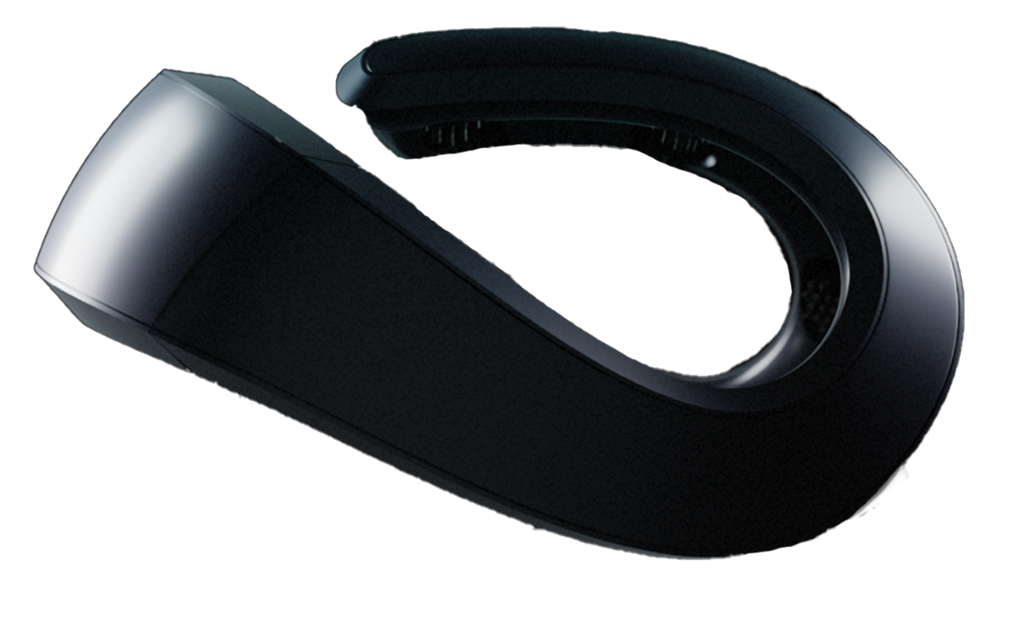
| Transcutaneous VNS (tVNS) | Non-invasive (ear clip) | Growing evidence for attention and memory | Commercial devices available |
| Slow breathing exercises | Behavioral | Well-established for HRV improvement and focus | Free, anywhere, anytime |
| Cold exposure | Behavioral | Evidence for acute vagal activation | Free but uncomfortable |
| Meditation | Behavioral | Strong evidence for vagal tone improvement | Free with practice |
How to Train Your Vagus Nerve (Practical Techniques That Actually Work)
The good news about vagal tone: it's trainable. Like a muscle, the more you engage the vagus nerve, the stronger and more responsive it becomes. Here are the techniques with the strongest evidence behind them.
Slow Diaphragmatic Breathing: The Most Powerful Tool You Already Have
Your breathing is the only autonomic function you can consciously control. And when you deliberately slow your breath, you directly activate the vagus nerve.
Here's why. When you inhale, your heart rate slightly increases (sympathetic activation). When you exhale, the vagus nerve activates and your heart rate slightly decreases. By extending your exhale relative to your inhale, you are literally pressing the parasympathetic brake harder and more often.
The optimal protocol, based on research, is roughly 6 breaths per minute. That's a 5-second inhale and a 5-second exhale, or a 4-second inhale and a 6-second exhale if you want to emphasize the vagal-activating exhale phase. This specific breathing rate has been shown to maximize something called respiratory sinus arrhythmia, the natural fluctuation in heart rate that tracks breathing and reflects vagal activity.
A 2017 study in Frontiers in Human Neuroscience measured brainwave changes during slow breathing and found increased theta power in frontal midline regions, a brainwave signature associated with focused attention and cognitive control. Slow breathing didn't just calm the body. It changed the brain's electrical activity in ways that support focus.
Inhale through your nose for 4 seconds. Exhale slowly through your nose for 6 seconds. Repeat for 5 minutes. That's 30 breath cycles. Research shows this duration is sufficient to measurably increase HRV and shift your autonomic balance toward parasympathetic dominance. Do this before a focus session, during a break, or anytime you notice your attention fragmenting. Your vagus nerve responds to this pattern within the first few cycles.
Cold Exposure: The Dive Reflex and Vagal Activation
When cold water contacts your face, something remarkable happens. Your heart rate drops. Your breathing slows. Blood redirects from your extremities to your core. This is the mammalian dive reflex, an ancient survival mechanism that activates when your brain thinks you might be submerging in cold water. It's mediated almost entirely by the vagus nerve.
You don't need to jump in a frozen lake. Splashing cold water on your face, taking a 30-second cold shower, or even holding an ice pack against the sides of your neck (near the vagus nerve's path) triggers a vagal response. A 2018 study showed that regular cold exposure over several weeks increased resting HRV, suggesting it trains vagal tone over time, not just during the exposure.
Meditation: Building the Long Game
If breathing exercises give you an acute vagal boost, meditation builds the long-term infrastructure. Regular meditation practice, particularly mindfulness meditation, is associated with sustained increases in resting vagal tone. This means your baseline parasympathetic activity rises over weeks and months of practice.
The mechanism likely involves both direct vagal activation (through the slow, regulated breathing that accompanies meditation) and top-down regulation from the prefrontal cortex, which strengthens its modulatory connection to the brainstem autonomic centers.
A 2013 study by Bethany Kok and Barbara Fredrickson found that people who practiced loving-kindness meditation showed progressive increases in vagal tone over nine weeks, and these increases predicted improvements in positive emotions and social connection. The vagus nerve, the researchers concluded, is part of a positive feedback loop: higher vagal tone supports better emotional and social functioning, which in turn promotes behaviors that further increase vagal tone.
Singing, Humming, and Gargling: The Throat Connection
The vagus nerve innervates the muscles of the larynx and pharynx. When you sing, hum, chant, or even gargle vigorously, you activate these muscles and stimulate the vagus nerve through mechanical vibration.
This is likely why chanting traditions exist in nearly every contemplative practice across cultures. The monks weren't reading psychophysiology papers. But their bodies knew something that science has only recently confirmed: sustained vocalization activates the parasympathetic system and promotes a state of alert calm.
What Brainwaves Reveal About Your Vagal State
Here's where the brain-body connection becomes visible.
Your vagal state doesn't just affect your body. It changes your brainwave patterns in measurable ways. When your parasympathetic system is dominant (high vagal tone), your brain produces different electrical patterns than when your sympathetic system is running the show.
alpha brainwaves (8-13 Hz) increase when you are calm and focused. High vagal tone is associated with stronger alpha production, particularly over posterior and frontal regions. This makes intuitive sense: alpha waves reflect a brain that is alert but not anxious, engaged but not stressed.
theta brainwaves (4-8 Hz) in frontal midline regions increase during states of focused attention and during practices that activate the vagus nerve, like slow breathing and meditation.
Beta activity (13-30 Hz), particularly high beta, tends to decrease when vagal tone is high. Excessive high-beta activity is often associated with anxiety and rumination, the cognitive signature of a sympathetic-dominant state.
gamma brainwaves (30+ Hz), associated with insight, learning, and cross-regional brain communication, show more organized patterns in people with higher vagal tone. This suggests that the parasympathetic state doesn't just calm the brain. It actually improves the quality of neural communication.
The relationship is bidirectional. Vagal tone affects brainwave patterns, and brain states affect vagal activity through the descending pathways from the prefrontal cortex to the brainstem. When you successfully enter a state of focused attention, your prefrontal cortex sends signals down through the brainstem that increase vagal output, which further stabilizes the body state that supports focus.
This is a virtuous cycle. And it's one you can see in real-time if you have the right tools.
The Neurosity Crown's calm score reflects a brain state closely linked to parasympathetic dominance. When your vagal tone is high and your nervous system is in the rest-and-digest mode that supports deep thinking, the brainwave patterns the Crown detects shift toward the alpha and theta signatures associated with calm, focused attention. Tracking your calm score over time gives you an indirect but meaningful window into how well your vagus nerve is doing its job.
The Vagus Nerve, the Crown, and the Future of Brain-Body Monitoring
For most of history, if you wanted to understand your nervous system, you had two options: go to a research lab, or guess.
The vagus nerve has been studied for over a century, but the idea that ordinary people could track the neural signatures it influences was pure science fiction until recently. Now, consumer EEG devices can capture the brainwave patterns that shift with autonomic state, and wearables can track HRV. But there's a gap between these two data streams. Heart rate variability tells you about your body. Brainwave data tells you about your brain. The vagus nerve is the bridge between them.
The Neurosity Crown measures brainwave activity through 8 EEG channels at 256Hz, covering frontal, central, and parietal regions. This captures alpha, theta, beta, and gamma activity across both hemispheres. The Crown's real-time focus and calm scores give you an accessible metric for the brain states that high vagal tone supports.
For developers and researchers, the Crown's JavaScript and Python SDKs provide raw EEG data, power spectral density, and frequency-band breakdowns that let you build applications correlating brainwave state with physiological measures like HRV. The N3 chipset handles all signal processing on-device, meaning your data stays private. And with MCP integration, you can feed brain-state data into AI tools like Claude and ChatGPT for real-time analysis.
Imagine building an application that pairs HRV data from a chest strap with EEG data from the Crown, giving you a real-time dashboard of both your vagal state and your brain state. You could see, for the first time, how a breathing exercise changes your autonomic balance and how that change ripples upward into your brainwave patterns. You could track how a meditation practice shifts both your HRV and your calm score over weeks. You could identify the specific body-brain states where your focus peaks and learn to recreate them on demand.
That's not a distant future. That's a buildable project, right now, with existing technology and open-source tools.
The Wandering Nerve and the Focused Mind
There's something deeply satisfying about the fact that the nerve named for "wandering" turns out to be essential for the opposite: staying focused.
The vagus nerve has been working for you since before you were born. It slowed your fetal heart rate. It kickstarted your digestion after your first meal. It calms you after every stressful moment of every day. It carries signals from half a billion gut neurons up to your brain, giving your central nervous system a continuous status report on the state of your body.
And it does all of this invisibly. You've never felt your vagus nerve fire. You've never consciously directed its activity (though now you know that a slow exhale does exactly that). For your entire life, this wandering nerve has been quietly maintaining the physiological conditions that make thought possible.
Every time you take a deep breath and feel your mind clear. Every time you splash cold water on your face and feel a jolt of alertness. Every time you finish meditating and notice that your thinking is sharper. That's your vagus nerve doing its job. That's the body creating the conditions for the brain to do its best work.
Focus has never been purely a brain problem. It's a whole-body state, mediated by a nerve that ancient anatomists could see but never fully understood. We are only now starting to measure it, train it, and build technology that responds to it.
The wanderer, it turns out, has been keeping you grounded all along.