


What Is Digital Minimalism? A Neuroscience Perspective

Your Brain on 2,600 Touches Per Day
In 2016, research firm Dscout tracked the phone behavior of 94 Android users for five straight days. They didn't ask people to estimate their usage. They measured it directly, logging every tap, swipe, and click.
The average participant touched their phone 2,617 times per day. The top 10% of users exceeded 5,400 touches. That's once every 6 seconds during waking hours.
Here's what makes this number so striking: each one of those touches is a neurochemical event. Your brain doesn't just passively receive information from a screen. It responds with a cocktail of neurotransmitters. Dopamine when something novel appears. Cortisol when bad news lands. Norepinephrine when a notification breaks your concentration. Your phone isn't a tool you use. It's a device that modulates your brain chemistry thousands of times a day.
Cal Newport, a computer science professor at Georgetown, coined the term "digital minimalism" in his 2019 book of the same name. His argument wasn't that technology is bad. It was that most people's relationship with technology is accidental. Nobody sat down and decided that checking Instagram 47 times per day was a good use of their one wild and precious life. It just happened. The apps were designed to make it happen.
But Newport's case was philosophical. He argued from values. The neuroscience tells the same story from a completely different angle, and it's even more compelling. Because when you look at what chronic digital overstimulation does to your brain's structure and function, "digital minimalism" stops sounding like a lifestyle choice and starts sounding like neuroprotection.
Your Brain's Attention System Was Not Built for This
To understand why digital minimalism matters, you first need to understand the system it's protecting. Your brain has two primary attention networks, and they've been in a tug-of-war since before smartphones existed.
The Focused Attention Network
The dorsal attention network (DAN) is your brain's spotlight. It activates when you deliberately focus on something: reading a paper, writing code, listening to someone speak. It involves the frontal eye fields, intraparietal sulcus, and regions of the prefrontal cortex. When the DAN is running smoothly, you experience what psychologists call "sustained attention" and what the rest of us call "actually getting things done."
The DAN requires something that's increasingly rare: unbroken time. It takes an average of 23 minutes and 15 seconds to return to a task after a distraction, according to research from Gloria Mark at UC Irvine. That's not because you're lazy. It's because the DAN needs to rebuild context. Every interruption forces your prefrontal cortex to dump its working memory and start reloading.
The Novelty-Seeking Network
The ventral attention network (VAN) is your brain's motion detector. It activates in response to unexpected stimuli: a sudden noise, a flash of movement, a notification buzz. Evolutionarily, this network kept you alive. That rustling in the bushes might be a predator. Your brain prioritized novelty detection for a very good reason.
The problem is that your phone triggers the VAN constantly. Every notification, every vibration, every new email or message activates a network designed to detect threats in the savanna. Your VAN doesn't know the difference between a charging lion and a Slack message. It fires the same way for both.
The Tug-of-War
Here's where it gets interesting. The DAN and VAN are inversely correlated. When one is highly active, the other suppresses. You can't be in deep focused attention and high novelty alertness at the same time. Your brain has to choose.
In a pre-digital environment, the DAN won most of the time. Sustained activities like hunting, cooking, building, and conversation dominated your day. The VAN would occasionally interrupt for something genuinely important, then quiet down.
In a digital environment, the VAN is winning. And it's not a fair fight. Your phone delivers novel stimuli on a schedule optimized by some of the smartest engineers on the planet to trigger the VAN as frequently as possible. Variable reinforcement, social validation signals, breaking news alerts. Each one is a VAN activation that suppresses the DAN.
Over time, this chronic VAN activation doesn't just interrupt your focus. It retrains your brain. The neural pathways for sustained attention weaken from disuse. The pathways for novelty-seeking strengthen. Your brain literally becomes better at being distracted and worse at concentrating.
The Dopamine Trap: Why Your Phone Feels Like a Slot Machine
The dopamine system is one of the most misunderstood parts of neuroscience. Most people think dopamine is the "pleasure chemical." It's not. Dopamine is the anticipation chemical. It fires not when you get a reward, but when you expect one might be coming.
This distinction is everything.
Dopamine doesn't spike when you find a great post on social media. It spikes when you open the app, because your brain has learned that there might be something good in there. The scroll itself is the dopamine event, not the content you find.
This is identical to the mechanism behind slot machine addiction, which neuroscientist Natasha Schull documented extensively in her book Addiction by Design. Slot machines work not because they pay out often (they don't) but because they pay out unpredictably. Each pull of the lever activates the dopamine system because this time might be the jackpot.
Your social media feed is a slot machine with infinite reels. Sometimes you find something hilarious, insightful, or emotionally moving. Most of the time you don't. But the possibility is always there, and that possibility is what keeps the dopamine system engaged.
Over months and years of this pattern, something measurable happens in the brain. A 2018 study published in NeuroImage: Clinical found that participants who scored higher on smartphone addiction scales showed reduced dopamine receptor availability in the striatum, the brain's reward processing center. Their reward systems had been downregulated. They needed more stimulation to feel the same level of satisfaction.
This is tolerance. The same mechanism that drives substance addiction. Not identical in severity, but identical in mechanism. Your brain adapts to chronic overstimulation by turning down its own sensitivity.
What Neuroscience Tells Us About the Digital Minimalist Brain
So what happens when you go the other direction? What does the brain look like when you deliberately reduce digital noise?
Attention Networks Rebalance
A 2019 study in Nature Communications examined the brain activity of participants before and after a five-day wilderness retreat with no digital devices. Using fMRI, the researchers found significant changes in resting-state functional connectivity. The dorsal attention network showed increased internal connectivity, meaning it was operating more efficiently. The default mode network, which overlaps with mind-wandering circuits, showed reduced hyperactivity.
Five days. No phones. Measurable brain changes.
The participants reported improved attention, reduced anxiety, and greater feelings of well-being. But the imaging data showed something the self-reports couldn't capture: their attention networks had physically reorganized toward a more focused baseline.
Cortisol and the Stress Response
Every time you encounter stressful information on your phone (news alerts, argumentative comments, work emails at 10pm) your hypothalamic-pituitary-adrenal (HPA) axis activates and cortisol floods your system. This is your body's stress response, and it was designed for occasional acute threats.
Chronic cortisol elevation, the kind produced by constant exposure to stressful digital content, is associated with hippocampal volume reduction (worse memory), prefrontal cortex thinning (worse decision-making), and amygdala sensitization (more anxiety). A 2021 study in Psychoneuroendocrinology found that participants who took a one-week social media break showed significantly reduced cortisol levels compared to the control group.
The brain doesn't distinguish between the stress of a real-world confrontation and the stress of reading about a political crisis on Twitter. The cortisol response is the same. Digital minimalism isn't about avoiding information. It's about protecting your HPA axis from a volume of stress signals that your biology was never designed to handle.
Prefrontal Cortex Recovery
The prefrontal cortex (PFC) is the brain region most vulnerable to chronic digital overload and most responsive to digital reduction. The PFC handles executive function: planning, impulse control, working memory, and sustained attention.
Research by Adam Gazzaley at UCSF has shown that heavy media multitasking is associated with reduced gray matter density in the anterior cingulate cortex, a key PFC structure involved in cognitive control. But Gazzaley's work also shows that this isn't permanent damage. Attention training, the kind that naturally happens when you remove constant digital interruption, can restore PFC function.
EEG studies capture this restoration beautifully. When PFC function improves, you see increased frontal theta power (associated with cognitive control) and improved theta-to-beta ratios (a marker of attentional regulation). These are exactly the brainwave signatures that shift when someone moves from a state of scattered, reactive attention to focused, intentional thinking.
The Practice: What Digital Minimalism Actually Looks Like
Newport's digital minimalism framework isn't about willpower or deprivation. It's about intention. And neuroscience supports his core recommendations in specific, measurable ways.
The 30-Day Digital Declutter
Newport recommends starting with a 30-day period where you step away from optional technologies. Not essential ones (you still need to reply to work emails) but the optional layer: social media, news apps, YouTube rabbit holes.
From a neuroscience perspective, 30 days aligns well with what we know about neuroplasticity timescales. Synaptic changes in response to new behavioral patterns begin within days. Structural remodeling, the kind that shows up on imaging, typically becomes detectable within 4-8 weeks. A 30-day declutter sits right in the window where functional improvements are solidifying and structural changes are beginning.
Intentional Technology Selection
After the declutter, you add back only technologies that serve a specific, clearly defined purpose. This isn't arbitrary. It maps directly onto how the prefrontal cortex works.
The PFC is a goal-directed system. It works best when you give it clear objectives. "I'm opening this app to check if my meeting was rescheduled" activates the dorsal attention network with a specific target. "I'm opening this app because I'm bored" activates the ventral attention network and the dopamine-seeking reward circuit.
The same technology, used differently, produces completely different neurochemical responses. Digital minimalism doesn't change what you use. It changes how your brain processes the act of using it.
Solitude and Default Mode
Newport emphasizes the importance of solitude, which he defines as time free from input from other minds. No podcasts, no social media, no texting. Just your own thoughts.
Neuroscience explains why this matters. Your default mode network (DMN), the brain's "resting state" network, handles some of your most important cognitive functions: consolidating memories, processing emotions, generating creative insights, and constructing your sense of self. But the DMN only fully activates during true mental downtime.
If you fill every spare moment with inputs (scrolling while waiting for coffee, podcasting while walking, news while eating) your DMN never gets its turn. The result is a brain that struggles with creative thinking, has difficulty processing emotional experiences, and feels a persistent, low-level sense of cognitive fatigue.
Regular solitude gives the DMN its airtime. And the creative and emotional benefits follow.
Measuring the Shift: EEG as a Digital Wellness Tool
Here's where this conversation moves from theory to something you can actually verify.
The brainwave changes associated with digital minimalism, increased alpha power, improved theta-to-beta ratios, reduced high-beta anxiety markers, are all detectable with EEG. And consumer EEG has reached a level of quality where you don't need a university lab to track them.
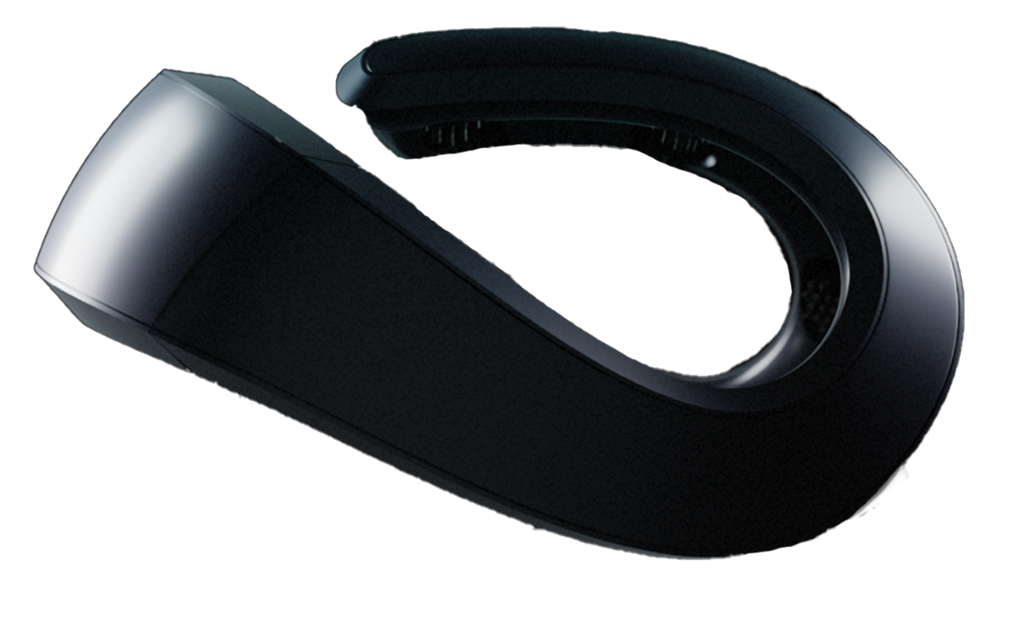
The Neurosity Crown's 8 channels cover the key regions involved in attention and emotional regulation: frontal areas (F5, F6) where the dorsal and ventral attention networks are orchestrated, central areas (C3, C4) involved in sensorimotor processing, centro-parietal areas (CP3, CP4) where attention and awareness converge, and parieto-occipital areas (PO3, PO4) where alpha rhythms are most prominent.
At 256Hz, the Crown captures the full frequency range relevant to digital wellness research. The built-in focus and calm scores provide accessible summaries, but the raw data access through JavaScript and Python SDKs allows for deeper analysis. You could track your frontal alpha asymmetry before and after a week of reduced screen time. You could log your theta-to-beta ratios across days where you used social media heavily versus days where you didn't. You could build a personalized dashboard that shows, in real numbers, what your digital habits are doing to your brain.
Through the Neurosity MCP, your brainwave data can interface with AI tools like Claude for pattern analysis over time. Imagine a system that identifies which digital activities are associated with your best focus states and which ones correlate with increased anxiety markers. That's not a hypothetical. The hardware and software to build it exist right now.
Your Brain Is Keeping Score
The most profound insight from the neuroscience of digital minimalism is this: your brain is always adapting to whatever you give it. Feed it constant novelty and fragmented stimulation, and it optimizes for distraction. Give it focused, intentional engagement with things that matter, and it optimizes for depth.
This isn't a metaphor. It's measurable. The attention networks, the dopamine circuits, the cortisol response, the prefrontal cortex. Each one reshapes itself based on how you spend your hours.
Newport wrote that digital minimalism asks you to be intentional about technology instead of reactive. Neuroscience tells us why that distinction matters so much. Intentional use activates the brain's executive systems. Reactive use activates its survival systems. Same phone, same apps, completely different neurology.
The 2,617 daily phone touches didn't happen because those 94 study participants decided they were valuable. They happened because the technology was designed to capture attention, and the brain's novelty-detection systems were happy to oblige. Digital minimalism is the conscious decision to redirect that neurological energy toward things that actually make your life better.
Your neurons don't care about your values. They care about repetition. They strengthen whatever pathways get used most. The question digital minimalism raises is the same question neuroscience has been trying to answer for decades: given that your brain will optimize for whatever you practice, what exactly do you want to get better at?