


Keto vs. Neurofeedback for Mental Clarity

Your Brain Runs on 20 Watts. What If You Changed the Power Source?
Here's a number that should stop you: your brain accounts for roughly 2% of your body weight but consumes about 20% of your total energy. It's the most metabolically expensive organ you own by a huge margin, burning through about 20 watts of power at any given moment. That's enough to dimly light a bulb.
And for roughly 200,000 years of human existence, that organ has run on one primary fuel: glucose. Sugar. Broken down from whatever food our ancestors could find, ferried across the blood-brain barrier, and burned by 86 billion neurons to keep the whole operation running.
Then, about a century ago, a handful of doctors trying to treat children with severe epilepsy stumbled onto something strange. When they dramatically cut carbohydrates and replaced them with fat, forcing the body to produce an alternative fuel called ketones, the seizures often stopped. The children's brains were running on different fuel, and the electrical storms quieted.
That discovery eventually became the ketogenic diet. And in the last decade, millions of people with no history of epilepsy have adopted it for a different reason: they claim it makes them think more clearly.
At the same time, another approach to mental clarity has been quietly building its evidence base for over 50 years. Neurofeedback doesn't change what your brain burns. It changes how your brain fires. By monitoring your brain's electrical patterns in real time and feeding that information back to you, neurofeedback trains your neurons to produce the patterns associated with focused, clear cognition.
Two completely different philosophies. One says: change the fuel. The other says: train the engine. Both claim to deliver mental clarity. But they're operating on such fundamentally different mechanisms that comparing them reveals something important about what "mental clarity" actually is and where it comes from.
Your Brain's Fuel Problem (And Why Ketones Exist)
To understand why anyone thinks changing their diet could sharpen their thinking, you need to understand something about how neurons get their energy.
Your neurons are, metabolically speaking, extremely demanding and surprisingly inflexible. Most cells in your body can burn glucose, fatty acids, amino acids, or ketones. Neurons are pickier. Under normal conditions, they rely almost exclusively on glucose. They don't store it. They can't make it. They need a constant supply delivered through the bloodstream, across the blood-brain barrier, and into each cell, every second of every day.
This creates a vulnerability. When blood glucose drops (because you skipped a meal, or because your body overshot with insulin after a carb-heavy lunch), your neurons feel it immediately. That mid-afternoon fog, the post-lunch inability to hold a thought, the feeling of your brain running through molasses? That's not laziness. That's a fuel supply problem. Your neurons are brownout-ing because the glucose delivery system has hiccups.
Here's where ketones enter the picture.
When you dramatically reduce carbohydrate intake (typically below 20-50 grams per day), your liver starts converting fatty acids into molecules called ketone bodies: primarily beta-hydroxybutyrate (BHB), acetoacetate, and acetone. These ketones can cross the blood-brain barrier and serve as an alternative fuel for neurons.
And here's the part that gets keto advocates excited: ketones may actually be a better fuel for neurons in some ways. BHB produces more ATP (the molecular energy currency) per unit of oxygen consumed than glucose does. A 2004 study by Veech and colleagues published in the IUBMB Life journal found that ketone metabolism produces roughly 28% more energy per molecule of oxygen than glucose metabolism. Your brain gets more energy bang for its metabolic buck.
Ketones also provide a steadier fuel supply. Instead of the peaks and valleys of glucose that depend on when you last ate and how much insulin your pancreas released, ketones maintain a more consistent blood level during sustained ketosis. No spikes. No crashes. Just a steady stream of fuel.
The ketogenic diet wasn't invented for mental clarity. It was invented for survival.
In the 1920s, doctors at the Mayo Clinic noticed that fasting sometimes stopped epileptic seizures. But you can't fast forever. So Dr. Russell Wilder proposed a diet that would mimic the metabolic state of fasting, keeping carbs so low that the body would produce ketones continuously. He called it the ketogenic diet.
It worked remarkably well. About 50% of epilepsy patients who tried it saw their seizure frequency cut in half. About 10-15% became completely seizure-free. This was in the 1920s, before modern anti-epileptic drugs existed.
What's relevant here is WHY it worked. Epileptic seizures are, at their core, a problem of brain electrical activity. Neurons fire in massive, synchronized bursts that they shouldn't. The ketogenic diet somehow stabilizes this electrical activity. It changes the way neurons fire. This isn't just about fuel. Ketones appear to directly influence the brain's electrical patterns.
That observation is what makes the keto-clarity connection more than just a story about energy metabolism. If ketones change brain electrical activity enough to stop seizures, could they also change it in subtler ways that affect everyday cognition?
What Keto Actually Does to Your Brainwaves
The epilepsy connection hints at something deeper than "better fuel equals better thinking." And this is where it gets genuinely interesting.
Research using EEG has shown that ketosis produces measurable changes in brain electrical activity in people who don't have epilepsy.
A 2018 study by Mujica-Parodi and colleagues published in PNAS found that ketone supplementation stabilized brain networks and reduced signal variability in fMRI and EEG recordings. The researchers described it as a shift from "noisier" to "cleaner" neural signaling. Networks that had been destabilized by glucose metabolism seemed to settle into more consistent patterns when ketones were available.
Studies on long-term ketogenic dieters have shown shifts in EEG frequency band power. Several research groups have reported increases in gamma band activity (above 30Hz) during sustained ketosis. Gamma waves are associated with high-level cognitive processing, binding of information across brain regions, and moments of insight. An increase in gamma power doesn't guarantee you'll think more clearly, but it's a signature that shows up in states of heightened cognitive processing.
There's also evidence of changes in theta band activity (4-8Hz). Some studies report decreased frontal theta during ketosis, which is interesting because elevated frontal theta is one of the most reliable EEG markers of brain fog, mind-wandering, and inattention. If keto reduces that theta excess, that alone could account for subjective feelings of improved clarity.
But, and this is important, the evidence is still thin. Most of these EEG studies have small sample sizes, short durations, and lack proper controls. The epilepsy research is strong (decades of data, large trials, clear outcomes). The "keto for cognitive enhancement in healthy people" research is in its early stages. We have plausible mechanisms, interesting preliminary data, and a mountain of anecdotal reports. We do not yet have the kind of large, well-controlled, long-term studies that would let us say with confidence exactly how much ketosis improves mental clarity in people who aren't epileptic.
What we can say: ketosis changes brain electrical activity. EEG shows it. Whether those changes consistently translate to better cognition in healthy adults is a question that hasn't been fully answered.
Now Flip the Script: What If You Train the Brain Directly?
Neurofeedback takes an entirely different approach to mental clarity. It doesn't care what your brain is burning for fuel. It cares about the electrical patterns your brain is producing, and it teaches you to change them.
Here's how it works, and it's elegantly simple once you see it.
Your brain produces electrical oscillations at different frequencies, and those frequencies map to different cognitive states. beta brainwaves (13-30Hz) dominate during alert, focused thinking. alpha brainwaves (8-13Hz) appear when you're relaxed and disengaged. Theta waves (4-8Hz) increase during drowsiness and mind-wandering. Gamma waves (above 30Hz) fire during complex cognitive processing.
"Mental clarity" isn't one thing. It's a pattern. Specifically, it's a pattern where beta activity is appropriately elevated, theta activity isn't excessive, and your brain maintains clean, organized oscillations rather than a noisy mess of competing signals.
Neurofeedback shows you these patterns in real time. Through a computer display, an audio tone, or some other feedback signal, you can see (or hear) what your brain is doing right now. When your brain produces the target pattern (more beta, less excess theta), you get positive feedback. When it drifts toward a foggy, scattered pattern, the feedback changes.
And your brain learns. Not through willpower. Not through conscious effort. Through the same basic mechanism by which you learned every other skill you've ever acquired: operant conditioning backed by neuroplasticity. When a behavior produces a reward, the brain circuits responsible for that behavior get strengthened.
One of the most counterintuitive things about neurofeedback is that you don't need to "try" to change your brainwaves. In fact, trying too hard often makes it worse, because effortful straining increases muscle tension and cortical noise. The most effective neurofeedback happens when you relax and let your brain discover the pattern on its own, the way a child learns to balance on a bicycle not through intellectual analysis but through feedback and practice. Your brain is the best pattern-recognition system in the known universe. Give it real-time information about its own state, and it will figure out how to optimize.
The evidence base for neurofeedback is substantial, particularly for attention. A 2019 meta-analysis by Enriquez-Geppert and colleagues published in Frontiers in Human Neuroscience reviewed 17 randomized controlled trials and found that neurofeedback training produced significant improvements in attention and executive function. These weren't subtle effects visible only to statisticians. Participants showed measurable improvements on sustained attention tasks, reduced reaction time variability, and better performance on working memory tests.
For ADHD brain patterns specifically, neurofeedback has been studied in over 300 clinical trials spanning more than 40 years. The American Academy of Pediatrics rated it as a "Level 1 Best Support" intervention for ADHD in 2012. That's the highest evidence rating the organization gives.
But the application extends beyond clinical populations. Healthy adults who complete neurofeedback protocols show improvements in sustained attention, working memory, and processing speed. Peak performance researchers have used it with athletes, musicians, and military personnel. The mechanism is the same in all cases: teach the brain to produce cleaner, more organized electrical patterns, and cognitive performance improves.
The Mechanism Gap: What Each Approach Actually Changes
Here's where the comparison gets really revealing.
The ketogenic diet and neurofeedback both affect brain electrical activity. But they're pulling completely different levers.
Keto changes the metabolic environment. By switching from glucose to ketones, you alter the biochemical context in which neurons operate. Ketones affect neurotransmitter levels (they increase GABA synthesis, the brain's primary inhibitory neurotransmitter), membrane potential stability, and mitochondrial efficiency. The brain's electrical patterns change as a downstream consequence of these metabolic shifts. It's indirect. You change the fuel and the chemical environment, and the electrical patterns adjust in response.
Neurofeedback changes the electrical patterns directly. Through operant conditioning and neuroplasticity, you train specific neural circuits to fire in specific patterns. The metabolic substrate is irrelevant. Whether your brain is burning glucose, ketones, or a mix of both, neurofeedback targets the oscillatory patterns themselves. It's like the difference between improving a car's performance by switching to premium gasoline versus taking the car to a driving school and learning better technique. Both might make you faster. But one changes the input, and the other changes the skill.
This distinction matters for a practical reason: the effects have different onset times, different sustainability profiles, and different levels of specificity.
Head to Head: The Comparison You Actually Need
Let's lay this out systematically, because the differences are more stark than you might expect.
| Dimension | Ketogenic Diet | Neurofeedback |
|---|---|---|
| What it changes | Brain's fuel source (glucose to ketones) | Brain's electrical firing patterns directly |
| Mechanism | Metabolic: alters neurotransmitters, membrane stability, mitochondrial function | Neuroplastic: operant conditioning of neural oscillations |
| Onset time | 2-6 weeks for full adaptation (keto flu in weeks 1-2) | Changes observable in first 3-5 sessions (days to weeks) |
| Evidence for mental clarity | Moderate: strong epilepsy data, early-stage healthy cognition data | Strong: 50+ years of research, 300+ ADHD trials, healthy adult studies |
| Specificity | Broad: affects entire brain metabolism | Targeted: trains specific frequency bands at specific brain regions |
| Sustainability | Requires ongoing dietary restriction | Trained patterns persist after protocol ends (brain learns permanently) |
| Side effects | Keto flu, nutrient deficiencies, kidney stress, social difficulty | Occasional headache or fatigue after sessions, generally minimal |
| Measurability | Ketone blood/breath testing for metabolic state; EEG for brain effects | EEG directly measures the trained variable |
| Monthly cost | $50-200+ in dietary changes | $0-50 with a personal EEG device after initial purchase |
| Reversibility | Fully reversible (stop diet, return to glucose metabolism) | Partially permanent (trained patterns tend to persist) |
| Who it helps most | People with blood sugar instability, metabolic issues, or epilepsy | People with dysregulated brainwave patterns, attention issues, or brain fog from neural causes |
A few things jump out from this comparison.
Onset time is dramatically different. Keto requires a brutal adaptation period. During the first 1-3 weeks, most people experience worse cognition, not better. Your brain is literally going through fuel withdrawal. Headaches, brain fog, irritability, difficulty concentrating. They call it "keto flu" for a reason. You have to feel dumber before you might feel sharper. Neurofeedback, by contrast, can produce measurable brainwave changes within the first few sessions. You won't master it in a day, but you also won't spend two weeks feeling like your IQ dropped 20 points.
Sustainability follows opposite patterns. Keto requires permanent dietary restriction. Stop eating keto, and within days your brain switches back to glucose metabolism. The benefits (if they exist for you) disappear with the diet. Neurofeedback works like learning a skill. Once your brain has learned to produce more organized patterns, that learning persists. Multiple studies show that EEG changes from neurofeedback protocols remain stable at 6-month and even 2-year follow-ups. Your brain doesn't "unlearn" how to focus, just like you don't unlearn how to ride a bicycle.
Measurability tilts heavily toward neurofeedback. This one's subtle but important. With keto, you can measure your ketone levels (through blood, breath, or urine tests), and that tells you whether you're metabolically in ketosis. But it doesn't tell you whether ketosis is actually improving your brain function. You can be in deep ketosis and still have scattered, foggy brainwave patterns. The metabolic state and the cognitive state are correlated but not identical.
With neurofeedback, EEG measures the exact variable you're training. There's no gap between the metric and the outcome. If your neurofeedback goal is to increase beta and reduce theta, you can see whether that's happening in real time, on every single session. The measurement IS the intervention.
The "I Had No Idea" Moment: Ketones Literally Change Your Brain's Electrical Resistance
Here's something that almost nobody outside of neuroscience research knows, and it connects keto and EEG in a way that's genuinely surprising.
Ketone bodies don't just provide alternative fuel. They change the biophysical properties of neurons themselves.
A 2006 study by Ma and colleagues published in the Journal of Neuroscience demonstrated that BHB (the primary ketone body) directly activates potassium channels in neurons. These are called KATP channels, and they're basically valves that control how easily a neuron fires. When BHB opens more of these channels, it raises the threshold for neuronal firing. Neurons become less likely to fire randomly and more likely to fire only when they receive strong, coordinated input.
Think about what that means. Ketones are literally changing the electrical resistance of individual neurons. They're making each neuron a stricter gatekeeper, less prone to noisy, random firing and more responsive to coherent signals.
This is almost certainly part of why the ketogenic diet works for epilepsy. Seizures are the ultimate example of noisy, uncoordinated neural firing. Raise the firing threshold across billions of neurons, and you reduce the probability of runaway excitation cascades.
But it also suggests a mechanism for mental clarity that goes beyond "better fuel." If ketones make neurons less noisy, the brain's overall signal-to-noise ratio improves. Signals that matter (the thought you're trying to hold, the problem you're trying to solve) become relatively stronger compared to the background chatter. Your brain becomes a quieter room where important conversations are easier to hear.
And here's the kicker: you can see this on EEG. A quieter brain, one with less random firing, shows up as reduced high-frequency noise in the EEG signal and cleaner oscillatory peaks in the frequency bands that matter. It's measurable. It's objective. And it's one of the most compelling pieces of evidence that keto's effects on cognition are real and not purely placebo.
Why Measurement Changes Everything
This brings us to the elephant in the room for both approaches.
How do you know if either one is actually working for you?
The keto community relies heavily on subjective self-report. "I feel sharper." "My brain fog lifted." "I'm thinking more clearly." These reports are genuine. People aren't making them up. But subjective experience is a terrible measurement tool. Placebo effects in cognitive enhancement studies are enormous. If you've invested weeks of suffering through keto flu, reorganized your entire diet, and spent hundreds of dollars on specialty foods, you want it to work. That expectation bias alone can produce subjective feelings of improved clarity without any actual cognitive change.
The neurofeedback community has it slightly better because EEG measurement is built into the intervention. But without careful protocol design, you can still fool yourself. Are you actually changing your resting brainwave patterns, or are you just getting better at producing the target pattern during training sessions while reverting to your baseline the other 23 hours of the day?
The solution to both problems is the same: objective, continuous EEG measurement.
If you're trying keto for mental clarity, you need a way to compare your brainwave patterns before, during, and after achieving stable ketosis. Not how you feel. What your neurons are actually doing. Are your frequency band ratios shifting? Is your gamma power increasing? Is your frontal theta dropping? Without this data, you're navigating by feel in the dark.
If you're doing neurofeedback, you need a way to verify that training effects are persisting outside of sessions. You need to track your resting-state EEG over days and weeks to confirm that the patterns you're training are becoming your brain's new normal.
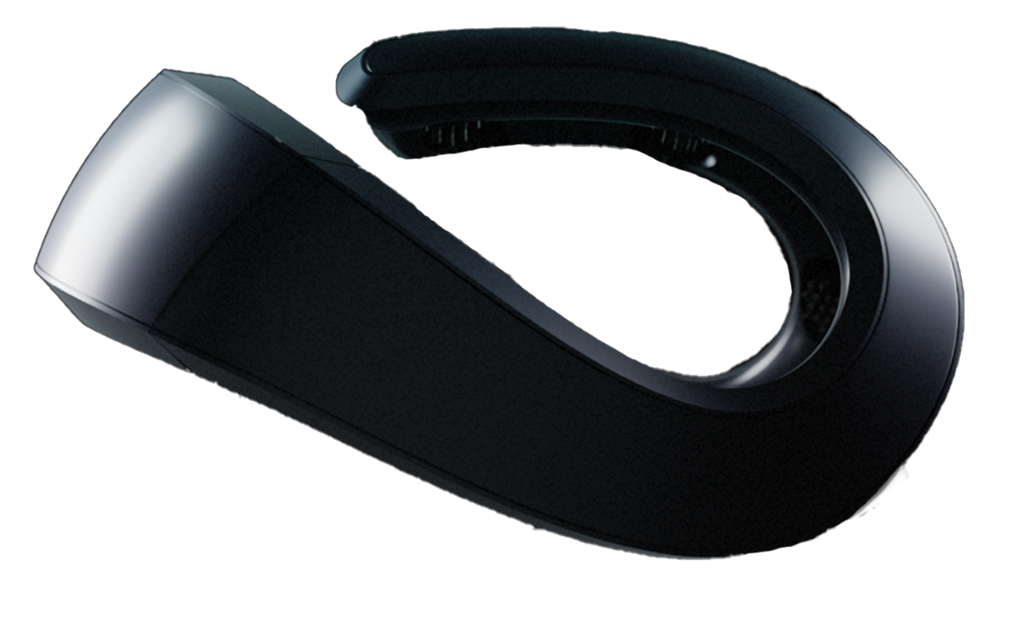
The Neurosity Crown sits at the intersection of both approaches. With 8 EEG channels positioned at CP3, C3, F5, PO3, PO4, F6, C4, and CP4, it captures brain electrical activity across all four cortical lobes at 256Hz.
For keto experimenters, the Crown can track frequency band changes across your adaptation period. Monitor your theta-to-beta ratio before starting keto, during the adaptation phase, and after reaching stable ketosis. See whether your gamma power actually increases. Get objective data on whether the diet is changing your brain's electrical activity or just changing your beliefs about it.
For neurofeedback practitioners, the Crown provides the real-time EEG data needed for training protocols, plus the ability to track whether those trained patterns persist throughout the day. The JavaScript and Python SDKs let developers build custom neurofeedback applications, and MCP integration means AI tools like Claude can help analyze your brainwave trends over time.
One device. Both use cases. Because ultimately, the question "is this making my brain work better?" has an answer that lives in your EEG data, not in your feelings about your EEG data.
The Combinatorial Argument (And Its Limits)
Some biohackers in the optimization community have started combining keto with neurofeedback, reasoning that if one changes the fuel and the other trains the patterns, doing both should be additive.
The logic is appealing. And it might be right. If ketones improve your brain's signal-to-noise ratio by raising neuronal firing thresholds, that quieter baseline could make neurofeedback training more effective. You'd be training an already-cleaner system to be even more organized. It's plausible.
But we don't have clinical trials testing this specific combination in healthy adults. What we have are individual reports and small case series from biohacking clinics. That's not nothing, but it's not strong evidence either.
What we do have, and this is genuinely useful, is the ability to test it yourself with proper measurement. If you have access to continuous EEG monitoring (like the Crown provides), you can run your own n=1 experiment with real data. Track your brainwave patterns on your normal diet. Start keto and continue monitoring through the adaptation period and into stable ketosis. Then add neurofeedback sessions and track whether the combined approach produces changes that neither one produces alone.
This isn't as rigorous as a randomized controlled trial. But it's infinitely more rigorous than "I feel clearer," which is what most people are going on right now.
So Which One Should You Try?
The honest answer depends on something most comparison articles won't admit: these two approaches are solving different problems, and the right choice depends on what's causing YOUR brain fog.
If your mental clarity issues correlate with meals, if you get sharp after not eating for a while and foggy after carbs, if your energy and focus crash predictably after lunch, if you've been diagnosed with insulin resistance or metabolic syndrome, then your clarity problem might genuinely be a fuel problem. The ketogenic diet addresses fuel problems directly. It's worth trying, with proper medical guidance and ideally with EEG monitoring so you can verify it's working.
If your mental clarity issues are chronic and not meal-dependent, if you're foggy even when your blood sugar is stable, if you can't sustain focus regardless of what you ate, if your issue is more about attention regulation than energy, then neurofeedback targets the problem more precisely. You don't have a fuel problem. You have a pattern problem. And you need a pattern-level intervention.
If you're not sure, start with measurement. Before changing your diet or starting a neurofeedback protocol, establish a baseline. Wear an EEG device like the Crown for a week and track your brainwave patterns at different times of day, before and after meals, during focused work and during brain fog. Look at your data. Is your theta spiking after carb-heavy meals? That points toward a fuel issue. Is your theta chronically elevated regardless of what you ate? That points toward a pattern issue.
Let the data tell you which intervention makes sense. That's more reliable than any article on the internet, including this one.
The Bigger Picture: We Can Finally See What Works
Here's the thing that makes this whole comparison different from what it would have been even ten years ago.
For most of human history, "mental clarity" has been a subjective experience. You either felt sharp or you didn't, and everything you did to change that (diet, supplements, meditation, exercise, nootropics) was evaluated by how you felt afterward. Which meant that placebo effects, expectation biases, and mood fluctuations contaminated every judgment you made about every intervention you tried.
We're at the beginning of the end of that era. EEG technology has reached a point where a consumer device on your desk can measure the brainwave patterns associated with focused, clear cognition in real time. Not in a lab. Not with a $50,000 research system. At home. While you work.
This means that the keto vs. neurofeedback debate doesn't have to stay a debate. It can become an experiment. Your experiment. With your brain. Producing your data.
Maybe keto changes your brainwaves in a way that works for your particular neural architecture. Maybe neurofeedback produces faster, more durable results. Maybe the combination is better than either one alone. Maybe neither works and your brain fog is actually from sleep deprivation or chronic stress or a medication side effect you hadn't considered.
The point is: you can find out. The electrical activity of your brain is not a mystery locked behind the walls of a research university. It's a signal. It's readable. And for the first time, the device that reads it is something you can own.
Your brain has been running for your entire life without anyone, including you, watching the dashboard. Keto and neurofeedback are both attempts to tune the engine. But tuning without measurement is guessing. And your brain is too important, too complex, and too individual to optimize by guessing.
So before you pick a side in this debate, pick a measurement tool. Then let your own neurons settle the argument.