


Crown vs. EPOC X: Which EEG Headset Actually Wins?

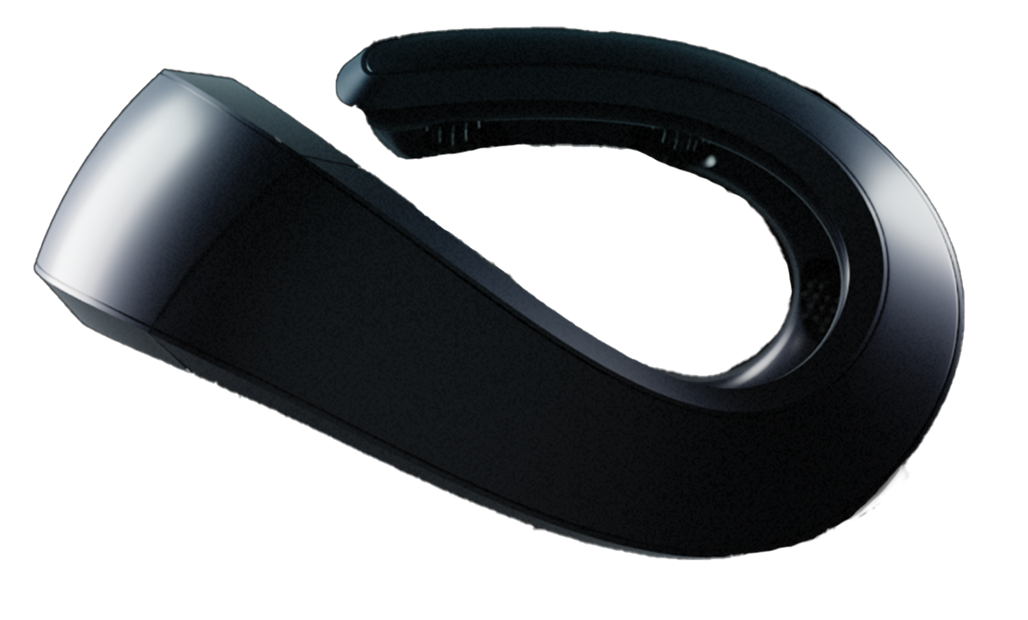
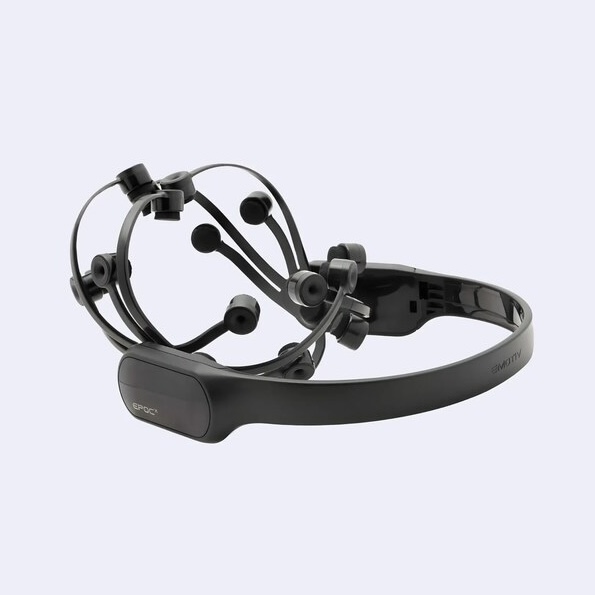
Two Philosophies, Two Very Different Buyers
There's a moment in every curious person's life when they realize they want to read brain signals. Maybe they watched a friend demo a neurofeedback app. Maybe they read a study on attention and frontal theta. Maybe they wondered what their own flow state actually looks like in their brain. Maybe they thought, "What if I could give ChatGPT access to my brain data in real time?"
Whatever the spark, the next step is the same: you start shopping for an EEG headset. And if you've done any research at all, two names eventually surface. The Neurosity Crown. And the Emotiv EPOC X.
These aren't just two products. They're built for two very different people.
The Crown is built for almost everyone interested in using brain data: neurofeedback enthusiasts, creators exploring brain-responsive experiences, knowledge workers tracking focus, biohackers testing supplements, researchers running mainstream EEG protocols, and developers building brain-powered applications. It handles the hard parts (signal processing, artifact rejection, automatic powerline noise removal, an SDK that talks to modern tools and AI) so the user doesn't have to.
The EPOC X is built for a narrower, specific kind of person: researchers with an existing Emotiv workflow who need 14-channel coverage at canonical 10-20 positions, labs doing spatial analysis that specifically requires temporal or occipital sites, and teams comfortable with Emotiv's developer license tiers and commercial royalty model. If you're in that group, the EPOC X is genuinely the right tool. If you're not, you'll be paying a subscription to see your own raw signal and redoing your setup every time you sit down.
That's the honest version. Let's break down where each device actually lives.
Why We Built the Crown in the First Place
The reason we started Neurosity wasn't that serious EEG hardware didn't exist. It was that the hardware that did exist couldn't power real-world applications.
Three problems showed up over and over.
Signal quality outside the lab. Saline-based research headsets produce clean signal in a controlled lab session. In a real-world setting, with normal hair, ambient EM noise, and sessions that last longer than fifteen minutes, those workflows fall apart. Pads dry out. Impedance drifts. The same headset that gave you publishable data in a quiet lab room gave you noise at your desk.
Setup speed. Hydrating pads and verifying contact across a dozen-plus electrodes is a workable ritual for a research session you sit down for once a week. It's a non-starter for an application someone uses every day.
Static software. Hardware shipped with the software it shipped with. New capabilities meant new product SKUs. The headset on your head couldn't acquire a new feature without you buying the next generation of the device.
The Crown is the device we wished existed for the world we actually live in. Dry electrodes that take two minutes to seat and stay seated for hours. An on-board N3 chipset that runs a full operating system, so raw brain data stays on your head and new capabilities ship as over-the-air updates to hardware already in the field. Native MCP support, for example, didn't arrive as a new product. It arrived as an update. SDKs that run in the browser, on a server, and on mobile. And one price, with no recurring subscription, no per-user royalty, and no tier you have to climb before you can access your own raw signal.
What You're Actually Comparing
Before getting into specs, it helps to understand what each device is.
The Neurosity Crown is an integrated brain-computer interface. It's a single product: headset, processor, electrodes, firmware, on-device operating system, SDK, and a suite of companion apps, all designed to work together. You take it out of the box, put it on your head, connect it to Wi-Fi, and start getting brain data in a few minutes. The Crown runs its own N3 chipset hosting a full on-device operating system that processes EEG signals locally, which means your raw brain data doesn't have to leave the hardware unless you explicitly want it to. New capabilities like native MCP support ship as over-the-air updates to hardware already in the field.
The Emotiv EPOC X is a 14-channel saline-based research headset. The headband holds articulating sensor arms, each ending in a felt pad that you hydrate with saline solution before every session. The device streams raw signal over Bluetooth Low Energy or a proprietary 2.4GHz USB dongle to a local Cortex service running on your host computer. That Cortex service handles signal processing, authentication, and license validation against Emotiv's cloud. It's been around long enough to appear in a large share of published consumer-EEG research, and it has a developer ecosystem, but that ecosystem is organized around license tiers rather than open access.
The Specs, Side by Side
Numbers matter. Let's put them on the table.
| Feature | Neurosity Crown | Emotiv EPOC X |
|---|---|---|
| EEG Channels | 8 (fixed positions) | 14 (fixed positions) |
| Electrode Positions | CP3, C3, F5, PO3, PO4, F6, C4, CP4 | AF3, F7, F3, FC5, T7, P7, O1, O2, P8, T8, FC6, F4, F8, AF4 |
| Brain Coverage | Frontal, central, parietal, occipital | Frontal, temporal, lateral parietal, occipital (no central/motor strip) |
| Sample Rate | 256 Hz | 128 Hz or 256 Hz (configurable; 2048 Hz internal, downsampled) |
| Electrode Type | Dry flexible rubber | Saline-soaked felt pads |
| On-Device Processing | (N3 chipset with on-device OS) | (Cortex runs on host, communicates with Emotiv cloud) |
| Connectivity | Wi-Fi + Bluetooth | Bluetooth LE + proprietary 2.4GHz USB dongle |
| Weight | 228g | 170g |
| Battery Life | ~3 hours | ~9 hours (USB dongle) / ~6 hours (BLE) |
| Setup Time | ~2 minutes | 5 to 10 minutes (hydrate 14 saline pads, apply, check contact) |
| Raw EEG Access | (official SDK, no license tier) | (requires Cortex Professional Developer license; custom pricing) |
| Official Developer SDK | JavaScript (Web, Node.js, React Native for iOS & Android), Python, BrainFlow, LSL, OSC, MCP | Cortex API (WebSocket, localhost), desktop-first (macOS, Windows, Ubuntu, Raspberry Pi). Mobile support listed as Beta. |
| Commercial App Royalty | None | 20% on apps that exceed 1,000 users or $250,000 in annual revenue |
| Native AI Integration (MCP) | ||
| No Software Subscription | (one-time hardware purchase) | (EmotivPRO Lite free / Standard $89/mo / Team $224.08/mo; raw EEG export requires paid tier) |
| Price (Hardware) | $1,499 | $999 (one-time, no bundled subscription) |
These numbers tell a story, but they don't tell the whole story. The real differences show up when you actually try to use these devices.
Why Channel Count Is Not Just a Number
Fourteen channels versus eight sounds like a clear win for the EPOC X. And on paper, in one narrow sense, it is.
Your brain has four main lobes: frontal (planning, decision-making, executive function), parietal (sensory integration, spatial awareness), temporal (language, memory, auditory processing), and occipital (vision). Different cognitive states produce distinct electrical signatures in different lobes. And there's a fifth region that matters a lot for BCI work: the central strip running along the top of the head, home to the motor cortex and the sensorimotor rhythms used in motor-imagery control.
The EPOC X's 14 channels spread across the perimeter of the head. You get strong frontal coverage (AF3, AF4, F3, F4, F7, F8), good temporal coverage (T7, T8, FC5, FC6), lateral parietal sites (P7, P8), and both occipital positions (O1, O2). For studies that care about temporal-lobe activity (language, emotional responses) or occipital activity (visual evoked potentials, SSVEP-based interfaces), that layout is genuinely hard to beat at this price.
The Crown's 8 channels (CP3, C3, F5, PO3, PO4, F6, C4, CP4) cover all four lobes from a different angle. You still get frontal and parietal information, plus you get the central/motor strip (C3, C4) and the central-parietal boundary (CP3, CP4). That's where motor imagery, mu-rhythm suppression, and sensorimotor-rhythm neurofeedback live. The EPOC X skips this region entirely.
So the honest comparison isn't "14 is more than 8." It's "which regions do you actually need." If your work depends on O1/O2 or T7/T8 at canonical positions, the EPOC X is the better layout. If your work touches the motor cortex or the central-parietal boundary (focus, calm, kinesis, motor BCI), the Crown's placements matter more than the raw channel count.
There's also a practical reality worth naming. Reviews in the BCI literature repeatedly describe diminishing returns beyond a certain point: the jump from 2 channels to 8 is enormous, the jump from 8 to 16 is incremental, and the jump from 16 to 32 is often barely measurable for real-world, non-clinical applications. Those extra six channels on the EPOC X are real, but they're also six more pads to hydrate, six more contact checks, and six more potential noise sources every time you sit down.
Setup and Daily Reality: Saline vs Dry
This is where the two devices diverge the most in day-to-day use.
The Crown uses dry flexible rubber electrodes. You put it on, the app shows you signal quality for each channel, you adjust the fit if anything looks noisy, and you're recording. The whole process takes about two minutes. No gel, no saline, no consumables.
The EPOC X uses saline-soaked felt pads at all 14 sensor positions. Before every session, you remove the pads, soak them in saline solution, reattach them to the articulating sensor arms, put the headset on, and verify contact at each pad. Over the course of a session, the pads dry out, which means impedance drifts and signal quality degrades. For a research lab running structured sessions, that's fine. It's exactly what's always been done. For someone trying to wear EEG while they work, create, or think, it's a ritual that adds up fast.
This is not a knock on saline sensors. Saline is in every clinical EEG lab in the world for a reason: lower skin-electrode impedance means cleaner raw signal. The Crown makes a different trade. It uses dry electrodes, which have inherently higher raw-signal impedance, and then compensates through on-device signal processing, fixed and optimized electrode positions, and automatic powerline noise removal. In real-world conditions, the Crown often delivers more usable data because the setup is repeatable without effort.
If you're running 50-participant lab studies with standardized preparation, the EPOC X's saline trade is a reasonable one. If you're the one participant, and you're the one doing the prep every morning, dry electrodes change the experience fundamentally.
The Software Story: Open SDK vs License Tiers
Hardware gets the attention in comparison articles. Software is where you actually live with a device. And this is where the Crown vs EPOC X comparison tilts sharply.
The EPOC X Experience
For a non-developer user, the EPOC X is designed around Emotiv's consumer apps and the EmotivPRO desktop application. EmotivPRO is a real research tool: polished visualization, session recording, marker streams, and basic analysis. EmotivPRO has its own subscription tiers:
- Lite is free, but limited.
- Standard is $89/month or $1,068/year.
- Team is $224.08/month or $2,689/year.
- Performance is contact-sales pricing.
Raw EEG recording and export requires a paid tier.
For a developer, the EPOC X talks to the Cortex API, a WebSocket service that speaks JSON and runs as a local process on your host computer. Cortex connects to the headset over BLE or the USB dongle, handles authentication against Emotiv's cloud, and exposes data streams to your application.
Cortex has its own license tiers:
- Registered Developer is free. You get Mental Commands, Frequency Bands, Facial Expressions, Motion, and low-resolution (0.1 Hz) Performance Metrics. Raw EEG is not included.
- Professional Developer (custom pricing, not publicly listed) unlocks the Raw EEG API and high-resolution (2 Hz) Performance Metrics.
- Emotiv applies a 20 percent royalty on commercial apps that exceed 1,000 users or $250,000 in annual revenue.
Put together, the practical reality is: access to raw EEG for development requires a paid license, and building a commercial product on EPOC X comes with a royalty once it starts to work.
The Crown Experience
The Crown takes the opposite approach. It has built-in experiences (focus-responsive audio, meditation apps) for non-developer users. But the device was architected as a development platform.
Out of the box, you get:
- Raw EEG data streaming at 256Hz across all 8 channels
- FFT analysis and power spectral density across standard frequency bands (delta, theta, alpha, beta, gamma)
- Computed metrics including focus scores, calm scores, and kinesis (motor intention detection)
- Signal quality indicators for each channel
- Accelerometer data for head movement and position
All of this is accessible through first-party SDKs in JavaScript (Web, Node.js, React Native for iOS and Android) and Python, plus BrainFlow, LSL, OSC, and MCP. There is no license tier. There is no per-user royalty. There is no subscription.
Documentation is public. APIs are stable. If you can write code, you can build brain-powered applications. For non-coders, the Crown's mobile and web apps plus the MCP integration with AI tools mean you can still do meaningful things without ever touching a terminal.
Ask yourself: "Do I want to pay a subscription to see my own raw EEG, and a royalty on anything I build commercially?" If no, the Crown is the only serious option between these two devices. The EPOC X was designed around a licensing model. The Crown was designed around an SDK.
Privacy and Security: Who Sees Your Brain?
Brain data is some of the most intimate data that exists. Your brainwaves contain information about your attention, emotional state, cognitive load, and neurological health. Where that data lives, how it gets there, and who can access it matters enormously.
The biggest difference between these two devices is not where signal processing happens. It's who is allowed to read from the headset in the first place.
No device-level account
Hardware-level encryption
The EPOC X: Host-Trust Model
The EPOC X is an analog front end with a radio. It digitizes biosignals at the scalp, streams them over Bluetooth Low Energy or a proprietary 2.4GHz USB dongle, and hands the stream off to a Cortex service running locally on your host computer. From there, processing, authentication, and licensing all happen on the host, with calls out to Emotiv's cloud for license validation and select features.
There is no device-level account on the headset. Pairing happens at the host. Which means the security boundary isn't the device, it's the machine Cortex is running on. Whoever controls that machine controls the stream. Emotiv doesn't publicly document which specific DSP steps run on-device, on the host, or in the cloud, so the safe read is: some of each, and the cloud is in the loop.
For a research lab operating inside IRB protocols with institutional IT, this model is workable. For a consumer-facing application, or a developer building something that will run on other people's heads, the lack of device-level access control is a meaningful gap.
The Neurosity Crown: Claimed, Authenticated, Encrypted
The Crown is architected around authenticated access from day one.
When you first set up the Crown, you claim the device by tapping the back of the headset with your phone. NFC pairs the Crown to your Neurosity account, and from that point on no one else can connect to your device or read its data. If you lose the device, it stays bound to you.
Once claimed, the Crown streams data over both Wi-Fi and Bluetooth, and both transports are encrypted and restricted to apps authenticated against your account. Unlike the EPOC X, there is no "whoever runs the host software" implicit trust boundary. Access is explicitly bound to your account.
On top of the access control, the N3 chipset includes hardware-level encryption and runs the signal processing pipeline on-device: automatic powerline noise removal (50Hz or 60Hz, with no user configuration), feature extraction, and metric computation. Your raw brainwave data doesn't leave the device unless you explicitly choose to stream it to an application you control.
This isn't a privacy policy. It's architecture. If you're building anything that handles other people's brain data (a research study, a clinical pilot, a commercial product), this difference stops being philosophical and starts being a compliance question.

Developer Tools: Where the Gap Becomes a Canyon
If you're reading this guide because you want to build something, this section matters most.
The Neurosity Crown was built by developers for developers. Alex Castillo and I (AJ Keller) came from Netflix engineering and Boeing respectively. We designed the Crown with the assumption that people would want to do things with brain data that we hadn't thought of yet. That philosophy shows up in every layer of the developer experience.
What You Can Build with the Crown
With the Crown's JavaScript SDK, you can subscribe to real-time data streams in a few lines of code:
const neurosity = new Neurosity();await neurosity.login({ email, password });// Stream raw EEGneurosity.brainwaves("raw").subscribe(brainwaves => {console.log(brainwaves);});// Stream focus scoresneurosity.focus().subscribe(focus => {console.log(focus);});
This opens up a broad range of applications:
- Neurofeedback apps that provide visual, auditory, or haptic feedback based on specific brainwave patterns
- Productivity tools that track focus states throughout the workday and identify deep work versus distraction
- Meditation trainers that respond to specific frequency bands across specific brain regions
- Brain-controlled interfaces using kinesis (motor imagery detection) to control software with thought
- Research pipelines using BrainFlow, LSL, or OSC for integration with eye trackers, motion capture, or other biosensing devices
- AI-powered brain apps through the Crown's MCP server, which lets Claude, ChatGPT, and other AI tools access your brain data in real time
The SDK runs in the browser, in Node.js, and on mobile through React Native. You can ship a web app, a desktop app, an iOS or Android app, a server-side pipeline, or an AI integration from the same codebase. There is no license fee. There is no per-user royalty. There is no "you crossed a threshold, now you owe 20 percent" tier.
What You Can Build with the EPOC X
Emotiv's Cortex API is a WebSocket service that runs as a local process on your host computer. It handles the connection to the headset, authenticates against Emotiv's cloud, and exposes data streams to your app. Cortex officially supports desktop platforms (macOS 12+, Windows 10/11, Ubuntu 22.04+, Raspberry Pi), with iOS and Android referenced in knowledge-base articles as Beta rather than listed as first-class targets on the main developer downloads page.
The Cortex API is capable. It reflects Emotiv's research heritage: sessions, training profiles, subscription-based data streams. If you're a Python or C++ developer building a desktop research tool, it works.
But the developer economics shape everything. In the free Registered Developer tier, you get Mental Commands, Frequency Bands, Facial Expressions, Motion, and low-resolution Performance Metrics. You do not get raw EEG. Raw EEG requires the Professional Developer license, for which pricing is not publicly listed. And once your commercial app passes 1,000 users or $250,000 in annual revenue, a 20 percent royalty applies.
The bigger gap, though, isn't the licensing model. It's AI. There's no Emotiv equivalent of the Crown's MCP server, no native way to feed EPOC X data into Claude, ChatGPT, or any other AI tool without building the middleware yourself.
Real-World Use Cases: Who Should Buy What
Let's get concrete. Here's who each device is actually for.
-
A neurofeedback enthusiast. The built-in focus and calm scores, brain-responsive audio, and accessible SDK give you a usable neurofeedback experience whether you code or not, with no subscription gating your access to your own data.
-
A creative professional exploring brain-responsive work. The dry electrodes, two-minute setup, and JavaScript SDK mean you can wear the Crown while you work, code, paint, or compose, and wire the signal into whatever creative tool you already use.
-
Someone who wants daily brain data. The 2-minute setup, dry electrodes, and 3-hour battery cover a typical focused work session. The Crown is what you wear while you actually do things. Saline-pad preparation every morning is a non-starter for this use case.
-
A knowledge worker tracking focus. Focus scores are computed on-device and surfaced through the Crown's apps. No Cortex license. No 0.1 Hz / 2 Hz resolution tier. Just a score you can build around.
-
A researcher running mainstream EEG protocols. BrainFlow and LSL integration, raw 256Hz data across all 8 channels, and hardware-encrypted storage make the Crown suitable for research pipelines outside a clinical setting. If your protocol doesn't specifically require O1/O2 or T7/T8 at canonical positions, the Crown's layout covers the bases.
-
An AI developer integrating cognitive state. Native MCP support means your AI applications can access brain data through a standardized protocol, not custom middleware. No other consumer EEG device we're aware of offers this out of the box.
-
A developer building brain-powered applications. No license tier. No royalty. JavaScript, Python, React Native for iOS and Android, BrainFlow, LSL, OSC, MCP. You can go from idea to working prototype in a day.
-
A researcher replicating an existing Emotiv protocol. If your study design was built around EPOC's 14-channel layout, and the literature you're citing used Emotiv hardware, the EPOC X is the device that matches.
-
Running spatial analyses that require specific temporal or occipital sites. T7/T8, P7/P8, and O1/O2 at canonical 10-20 positions are part of the EPOC X's default montage and not part of the Crown's. If your work depends on those exact sites, this is a real advantage.
-
Already invested in Emotiv's software ecosystem. If your lab has established EmotivPRO workflows, trained Mental Command profiles, or published pipelines that use Cortex, the switching cost is meaningful and staying with EPOC X is the rational call.
-
Comfortable with the subscription and royalty model. If your institution already covers EmotivPRO subscriptions, you already hold a Cortex Professional Developer license, and a 20 percent royalty on commercial revenue is acceptable to your budget, the EPOC X's licensing model is less of a friction for you than it is for most readers of this guide.
AI Integration: Where the Gap Matters Most Long-Term
This deserves its own section because it represents the widest gap between these two platforms, and it's the gap that will matter most over the next five years.
As of 2026, the Neurosity Crown is the only consumer EEG device we're aware of that ships with an official, vendor-supported MCP server out of the box. What that means in practice: you can connect your Crown to Claude, ChatGPT, or any MCP-compatible AI tool, and that tool can access your real-time cognitive state.
Think about what that enables. An AI coding assistant that notices your focus score dropping and suggests taking a break. A writing tool that adapts its suggestions based on whether you're in a creative flow state or an analytical one. A study app that identifies the times of day when your brain is most receptive to learning and schedules your hardest material accordingly.
These aren't theoretical applications. The Neurosity SDK and MCP server make them buildable today, by a single developer, in a weekend.
The EPOC X has no equivalent. You could, in theory, build a pipeline that streams EPOC X data to an AI application. But you'd be building the entire bridge yourself: Cortex authentication, signal extraction, feature transformation, real-time streaming into whatever protocol your AI tool speaks, plus handling the license tier your app sits in. That's a team project measured in months, and every user you add has to have a Cortex license running on their machine.
The Crown gives you the bridge between brain data and AI as a finished piece of infrastructure. That's not a small thing. That might be the most important thing.
Battery, Comfort, and Daily Reality
Let's talk about wearing these devices.
Battery life favors the EPOC X on paper. The EPOC X runs about 9 hours on the USB dongle, or about 6 hours over Bluetooth. The Crown runs about 3 hours. For long research sessions or extended recordings, the EPOC X has the endurance advantage. For most consumer and developer use cases, where you're working in 90-minute focus blocks and charging between, the Crown's battery is enough.
Weight favors the EPOC X too. At 170g, the EPOC X is lighter than the Crown's 228g. But weight distribution matters more than total weight. The EPOC X has articulating sensor arms radiating out from a central hub, which some users find top-heavy. The Crown's headphone-like form factor distributes weight across the head in a way that's designed for extended wear.
Comfort depends on what you're doing. The EPOC X is a research-grade headset designed for seated lab sessions. The Crown is a wearable BCI designed to be worn while working, coding, meditating, or creating. For focused work at a desk, the Crown's weight is a non-issue (you probably already wear headphones for hours at a time). For a 6-hour standardized lab recording, the EPOC X's longer battery and lower weight do matter.
Setup ritual is the biggest daily-use difference. Dry electrodes that seat in two minutes vs. saline pads that have to be hydrated, applied, and checked at 14 positions every session. For research, this is a minor tax. For anyone else, it's the difference between "I wear this" and "I wore this a few times."
Price and Value: What Are You Actually Buying?
This one deserves care because the hardware price is not the whole story.
The Emotiv EPOC X costs $999 as a one-time hardware purchase. No subscription is bundled. To actually do anything with the data, you need one of the following:
- EmotivPRO Lite (free): limited features.
- EmotivPRO Standard ($89/month, $1,068/year): raw EEG recording and export.
- EmotivPRO Team ($224.08/month, $2,689/year): team-oriented features.
- Cortex Registered Developer (free): no raw EEG, low-resolution Performance Metrics, subject to a 20 percent royalty once you exceed 1,000 users or $250,000 in annual revenue.
- Cortex Professional Developer (custom pricing): raw EEG API, high-resolution metrics.
If all you want is the built-in consumer experience on MyEmotiv, the $999 is what you pay. If you want to see raw EEG for personal research, you're subscribing to EmotivPRO. If you want to build a commercial application, you're on the Cortex developer tier, and 20 percent of your revenue above the threshold goes to Emotiv.
The Neurosity Crown costs $1,499 as a one-time purchase. That includes the device, the SDK, the companion apps, the on-device operating system, hardware encryption, and native MCP integration. No EmotivPRO equivalent. No Cortex license. No per-user royalty. The Crown's value grows as the ecosystem grows. Native MCP support, for example, arrived as a free over-the-air update to hardware already in the field, not a new product SKU or a subscription tier.
If your use case genuinely requires the EPOC X's 14-channel montage and you already have the EmotivPRO subscription covered, the economics work out. For everyone else, the Crown's one-price model is the more honest deal.
So, Which EEG Headset Wins?
For almost everyone reading this, the Crown is the right answer. Whether you're a neurofeedback enthusiast, a creator exploring brain-responsive experiences, a knowledge worker tracking focus, a biohacker testing what actually works on your brain, a researcher running mainstream EEG protocols, or a developer building brain-powered applications, the Crown's combination of dry electrodes, 8-channel coverage across all four lobes including the motor strip, on-device signal processing, automatic powerline noise removal, BrainFlow and LSL integration, native MCP for AI tools, and a single price with no subscription or royalty gets you from "I have an idea" to "I have a working thing" faster than the EPOC X does. It also keeps growing through over-the-air updates.
The Emotiv EPOC X is the right answer for a narrower, specific group: researchers replicating an existing EPOC-based protocol, labs running spatial analyses that specifically require T7/T8, P7/P8, or O1/O2 at canonical 10-20 positions, and teams already invested in EmotivPRO and Cortex workflows. That's a real group, and the EPOC X serves it well. It's just narrower than "research EEG" as a category makes it sound.
Buy the Crown if you want the iPhone of EEG devices. Whole-brain coverage including the motor strip. On-device signal processing with automatic powerline noise removal. Hardware-level encryption that keeps your data on your head. Open SDKs with no subscription fees. Native AI integration through MCP. An operating system that gets smarter over time. A platform, not a tier.
Buy the EPOC X if your protocol specifically requires its 14-channel canonical montage, you have the Cortex and EmotivPRO workflow already in place, and the subscription and royalty model is acceptable to your context.
Your brain consumes about 20 watts of metabolic energy right now, roughly what a dim light bulb draws. That energy drives electrical activity patterns, measured at the scalp in microvolts, that encode everything you're thinking, feeling, and paying attention to. The only question is what you're going to build with it.