


Crown vs. Muse S: Which EEG Headset Actually Wins?

Two Philosophies, Two Very Different Buyers
There's a moment in every curious person's life when they realize they want to read brain signals. Maybe they watched a friend demo a neurofeedback app. Maybe they read a study on meditation and alpha rhythms. Maybe they wondered what their own flow state actually looks like in their brain. Maybe they thought, "What if I could give ChatGPT access to my brain data in real time?"
Whatever the spark, the next step is the same: you start shopping for an EEG headset. And if you've done any research at all, two names keep surfacing. The Neurosity Crown. And the Muse S.
These aren't just two products. They're built for two very different people.
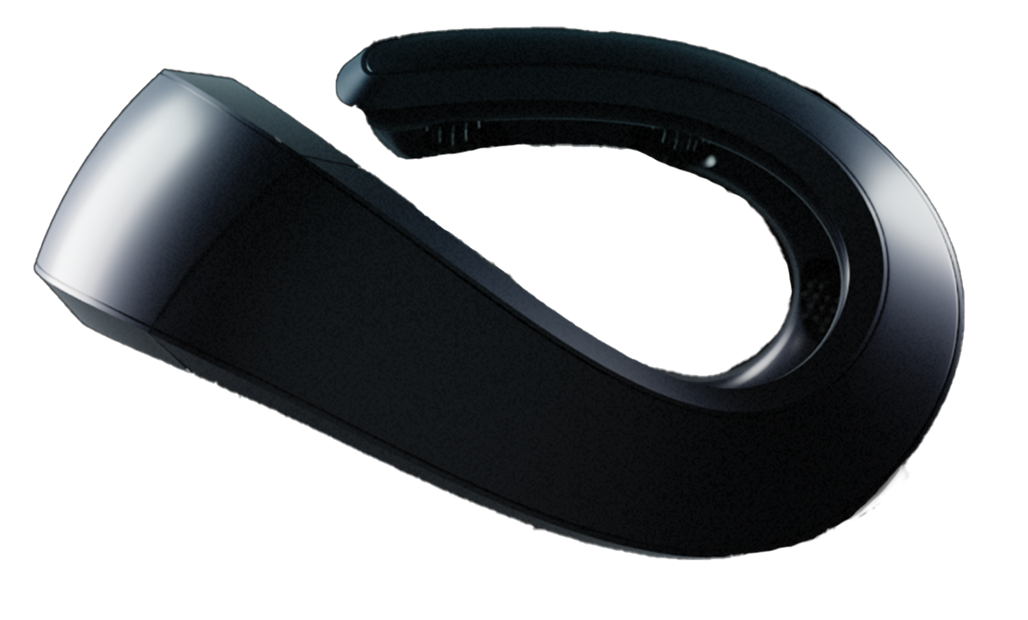
The Crown is built for almost everyone interested in using brain data: neurofeedback enthusiasts, creators exploring brain-responsive experiences, knowledge workers tracking focus, biohackers testing supplements, researchers running mainstream EEG protocols, anyone who wants access to their own raw brain signal, and developers building applications on top of it. It wins on the three things that matter most when you want to actually see what your brain is doing: brain coverage (8 channels across all four lobes), signal quality (on-device N3 processor with automatic powerline noise removal), and privacy (your data is processed and encrypted on the headset itself, never streamed raw to a phone or a cloud server).
The Muse S is a well-designed consumer product built around a curated experience. InteraXon's app covers guided meditation, overnight sleep tracking, and light focus feedback, and it does that job well. It's a polished appliance: put it on, open the app, follow along. The tradeoffs are the three things above. Four primary sensors at frontal and temporal positions can only see part of the picture, even for the states Muse targets. Signal processing happens on the paired phone rather than on the headband itself, which carries real costs for latency and data fidelity (more on the architecture below). And the experience lives inside InteraXon's app, gated by a Muse Premium subscription, with no official way to get at the raw signal or build anything custom.
That's the honest version of this comparison. Let's break it down, no sales pitch. Just signal.
Why We Built the Crown in the First Place
Before there was a Neurosity, Alex Castillo and I were developers trying to build brain-responsive applications on top of what already existed. We bought an Emotiv EPOC. We bought an OpenBCI Cyton. We bought the original Muse. And we hit the same walls with every one of them: Bluetooth packets dropping mid-session and corrupting recordings, no reliable path to cloud-backed or remote neurofeedback, raw brain data leaving the device for processing we couldn't audit, developer tooling built for researchers instead of application builders, and subscription fees layered on top of already-expensive hardware.
The original Muse sparked a specific kind of frustration: the device itself was beautiful and the meditation experience was genuinely well-made, but every time we wanted to do something the app didn't do, we hit a wall. There was no SDK. Raw data was inaccessible. The device was an appliance, not a platform.
The Crown is the device we wished existed. Wi-Fi for reliable streaming and cloud-backed applications, plus Bluetooth for local use when that's what you need. An on-board N3 chipset running a full operating system, so raw brain data stays on your head and new capabilities ship as over-the-air updates instead of requiring new hardware. SDKs that run in both the browser and on the server. And one price, with no recurring fees.
That history is why this comparison isn't abstract for me. Every criterion in this guide traces back to a specific thing that didn't work when we were trying to build with somebody else's hardware.
What You're Actually Comparing
Before we get into specs, it helps to understand what each device is at a fundamental level.
The Neurosity Crown is an integrated brain-computer interface. It's a single product: headset, processor, electrodes, firmware, on-device operating system, SDK, and suite of apps, all designed to work together. You take it out of the box, put it on your head, connect it to Wi-Fi, and start getting brain data. The Crown runs its own N3 chipset hosting a full on-device operating system that processes EEG signals locally, meaning your raw brainwave data never has to leave the hardware unless you explicitly want it to. New capabilities, like native MCP support, ship as over-the-air updates to hardware already in the field.
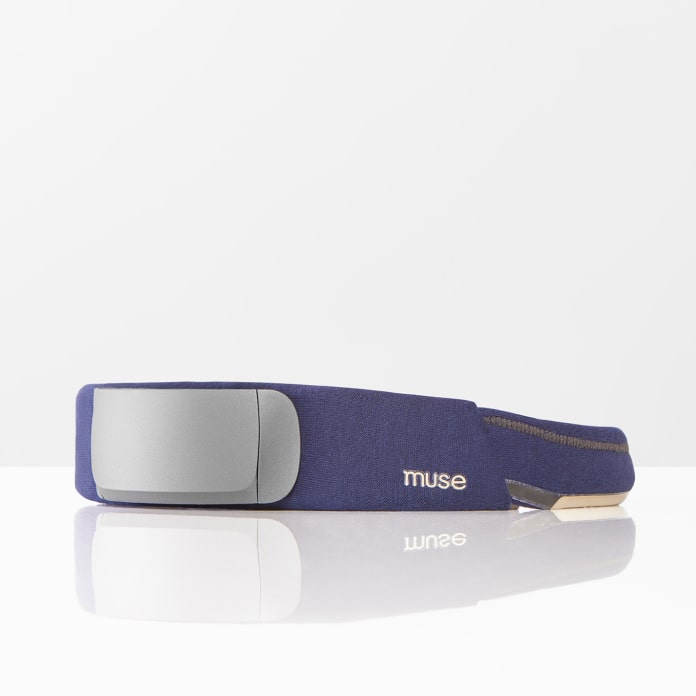
The Muse S (Gen 2) is a soft fabric meditation headband from InteraXon, designed around guided meditation and overnight sleep tracking. It has 4 primary EEG channels (plus 2 amplified auxiliary channels) at positions AF7, AF8, TP9, and TP10, paired with a PPG sensor, gyroscope, and accelerometer. It pairs with the Muse app over Bluetooth. Raw EEG samples stream from the headband to the phone, where the app runs all the real-time processing: meditation scoring, sleep staging, focus metrics. Most of these features require a Muse Premium subscription on top of the $399.99 hardware cost. InteraXon also sells the newer Muse S Athena ($474.99, launched March 2025, adds fNIRS), but this comparison focuses on the Gen 2.
That headband-to-phone architecture has two real costs. The first is latency: every piece of brain data has to cross a Bluetooth hop before the app can respond, adding milliseconds before feedback loops close. For neurofeedback, where the whole point is fast, tight feedback, that delay matters. The second is signal fidelity: Bluetooth is a lossy wireless channel with known packet drops, especially in noisy RF environments or when the phone deprioritizes the connection. If 100% of the raw samples don't reach the phone intact, the metrics computed from them are working with gaps. On-device processing on the Crown avoids both problems: the signal is processed where it's captured, with nothing in between.
Here's the key mental model: the Crown is an open brain-computer platform with whole-brain coverage and on-device processing. The Muse S is a curated consumer wearable with a polished app and partial-brain coverage.
The Specs, Side by Side
| Feature | Neurosity Crown | Muse S (Gen 2) |
|---|---|---|
| EEG Channels | 8 (fixed positions) | 4 primary + 2 amplified auxiliary |
| Electrode Positions | CP3, C3, F5, PO3, PO4, F6, C4, CP4 | AF7, AF8, TP9, TP10 |
| Brain Coverage | Frontal, central, parietal, occipital (all four lobes) | Frontal + temporal only |
| Sample Rate | 256 Hz | 256 Hz |
| Electrode Type | Dry flexible rubber | Dry silver-conductive |
| Additional Sensors | Accelerometer | PPG, gyroscope, accelerometer |
| On-Device Processing | Yes (N3 chipset with on-device OS) | Basic signal processing only |
| Connectivity | Wi-Fi + Bluetooth | Bluetooth only |
| Weight | 228g | ~41g |
| Battery Life | ~3 hours | ~10 hours |
| Form Factor | Over-head crown design | Soft fabric headband |
| Designed for overnight wear | ||
| Raw EEG Access | (official SDK) | (native SDK, separate commercial license for monetized apps) |
| Official Developer SDK | JavaScript (Web, Node.js, React Native for iOS & Android), Python, BrainFlow, LSL, OSC, MCP | iOS, Android, Windows, macOS (commercial applications require a separate commercial license) |
| Native AI Integration (MCP) | ||
| No Subscription Required | (Muse Premium for full features) | |
| Price | $1,499 | $399.99 (hardware) + Muse Premium subscription |
These numbers tell a story, but they don't tell the whole story. The real differences show up when you actually try to use these devices.
Why Channel Count Is Not Just a Number
Four channels versus eight channels might sound like a modest difference. It is not.
Your brain has four main lobes: frontal (planning, decision-making, executive function), parietal (sensory integration, spatial awareness), temporal (language, memory, auditory processing), and occipital (vision). Different cognitive states produce distinct electrical signatures in different lobes. Focus looks different in the frontal cortex than meditation looks in the parietal cortex.
The Muse S's four primary sensors (AF7, AF8, TP9, TP10) cover the front of your forehead and the area behind your ears. This gives you a window into frontal activity and some temporal activity. That's enough to detect broad states like "calm" versus "active" and to provide feedback during meditation.
The Crown's eight channels (CP3, C3, F5, PO3, PO4, F6, C4, CP4) span all four lobes. This means you can measure activity across the entire cortex simultaneously. You can detect frontal alpha asymmetry (a marker of emotional regulation), central mu rhythms (linked to motor intention and the basis for brain-controlled interfaces), parietal alpha (associated with relaxed awareness), and occipital activity (visual processing).
Think of it this way. If your brain is an orchestra, the Muse S gives you a microphone pointed at the violins and the cellos. You can hear what those sections are doing, and you can tell generally whether the orchestra is playing a quiet piece or a loud one. The Crown gives you a microphone on every section. You can hear the individual instruments, the relationships between them, and the structure of what's being played.
For meditation feedback, four channels is enough. For anything more complex, like building a neurofeedback app, detecting motor imagery, or feeding brain data into an AI model, you need spatial resolution across the whole brain.
The Software Story: Closed Appliance vs. Open Platform
Hardware gets attention in comparison articles. But software is where you actually live with a device. And this is where the Crown vs Muse S comparison gets really lopsided.
The Muse Experience
The Muse S is designed around the Muse app. You download the app, pair the device, and you're guided through meditation sessions with real-time audio feedback. The app translates your brainwave activity into weather sounds: calm brain, calm weather; distracted brain, stormy weather. It tracks meditation streaks, gives you points, and provides a library of guided sessions. Overnight, the sleep-tracking mode maps your brain activity and generates a morning report.
It's polished. It works. And for many people, that's exactly what they want.
For consumers, the Muse app is essentially the entire Muse experience. InteraXon does publish a native Muse SDK for iOS, Android, Windows, and macOS, provided under license for testing, prototyping, art projects, and personal exploration. Any commercial application (anything you or your business intends to monetize) requires applying under a separate commercial license. There's no browser, Node.js, or Python path, and community tools like Mind Monitor, Muse LSL, and BlueMuse are still what most developers reach for when they want to stream raw data into their own stack. Those tools work, but they can lag behind firmware updates and carry no official support.
The Muse S also doesn't surface raw EEG data through its own app. You see meditation scores and session summaries. The actual brainwave data stays behind the curtain. And most of what the app does well is gated behind the Muse Premium subscription, including the meditation library, sleep tracking, detailed session reports, and longitudinal history.
The Crown Experience
The Crown takes the opposite approach. It has built-in experiences (focus-responsive audio and meditation apps). But the device was architected from the ground up as a development platform.
Out of the box, you get:
- Raw EEG data streaming at 256Hz across all 8 channels
- FFT analysis and power spectral density across standard frequency bands (delta, theta, alpha, beta, gamma)
- Computed metrics including focus scores, calm scores, and kinesis (motor intention detection)
- Signal quality indicators for each channel
- Accelerometer data for head movement and position
All of this is accessible through first-party SDKs in JavaScript (Web, Node.js, React Native) and Python, plus BrainFlow, LSL, OSC, and MCP. Documentation is public. APIs are stable. If you can write code, you can build brain-powered applications. And for non-coders, the Crown's mobile and web apps plus the MCP integration with AI tools mean you can still do meaningful things without ever touching a terminal.
Ask yourself one question: "Do I ever want to do anything beyond what a meditation app provides?" If yes (raw data, custom protocols, brain-responsive code, AI integration, research), the Crown is the only serious option between these two devices. The Muse S was designed specifically to not be that.

Privacy and Security: Who Sees Your Brain?
Brain data is some of the most intimate data that exists. Your brainwaves contain information about your attention, emotional state, cognitive load, and neurological health. Where that data lives, how it gets there, and who can access it matters enormously.
The biggest difference between these two devices is not where data is processed. It's who is allowed to read from the headset in the first place.
No device-level account
Hardware-level encryption
The Muse S: Open Bluetooth Stream
The Muse S broadcasts its EEG data over Bluetooth to any client that subscribes to it. That's how unofficial tools like Mind Monitor, Muse LSL, and BlueMuse are able to work in the first place: they connect to the headband, subscribe to the data characteristics, and start reading brain data. There's no device-level account, no claim process, no cryptographic binding between the headset and a specific user.
In practice, that means if someone else is in Bluetooth range and knows what they're doing, they can read from your headband while you're wearing it. This is great for hackability and for the open-source community that has built around Muse. It is also a meaningful privacy trade-off if you hadn't considered it.
On top of that, the raw EEG leaves the headband every session to reach the paired phone, where the Muse app does the real-time signal processing (meditation scoring, sleep staging, focus metrics). Session summaries, scores, history, and account information then sync to InteraXon's cloud servers. Raw EEG itself is not uploaded by the stock app.
The Neurosity Crown: Claimed, Authenticated, Encrypted
The Crown is architected around authenticated access from day one.
When you first set up the Crown, you claim the device by tapping the back of the headset with your phone. NFC pairs the Crown to your Neurosity account, and from that point on no one else can connect to your device or read its data. If you lose the device, it stays bound to you.
Once claimed, the Crown streams data over both Wi-Fi and Bluetooth, and both transports are encrypted and restricted to apps authenticated against your account. Unlike Muse, there is no public Bluetooth service that a stranger in the room can subscribe to.
On top of the access control, the N3 chipset includes hardware-level encryption and runs the signal processing pipeline on-device: automatic powerline noise removal (50Hz or 60Hz, with no user configuration), feature extraction, and metric computation. Your raw brainwave data doesn't leave the device unless you explicitly choose to stream it to an application you control.
This isn't a privacy policy. It's architecture. If you're building anything that handles other people's brain data (a research study, a clinical pilot, a commercial product), this difference stops being philosophical and starts being a compliance question.
Developer Tools: Where the Gap Becomes a Canyon
If you're reading this guide because you want to build something, this section matters most.
The Neurosity Crown was built by developers for developers. Alex Castillo and I (AJ Keller) came from Netflix engineering and Boeing respectively. We designed the Crown with the assumption that people would want to do things with brain data that we hadn't thought of yet. That philosophy shows up in every layer of the developer experience.
What You Can Build with the Crown
With the Crown's JavaScript SDK, you can subscribe to real-time data streams in a few lines of code:
const neurosity = new Neurosity();await neurosity.login({ email, password });// Stream raw EEGneurosity.brainwaves("raw").subscribe(brainwaves => {console.log(brainwaves);});// Stream focus scoresneurosity.focus().subscribe(focus => {console.log(focus);});
This opens up a broad range of applications:
- Neurofeedback apps that provide visual, auditory, or haptic feedback based on specific brainwave patterns
- Productivity tools that track focus states throughout the workday and identify deep work versus distraction
- Meditation trainers that go beyond guided sessions by responding to specific frequency bands across specific brain regions
- Brain-controlled interfaces using kinesis (motor imagery detection) to control software with thought
- Research pipelines using BrainFlow, LSL, or OSC for integration with eye trackers, motion capture, or other biosensing devices
- AI-powered brain apps through the Crown's MCP server, which lets Claude, ChatGPT, and other AI tools access your brain data in real time
That last one deserves special attention. The Crown's MCP integration means your brain data can become context for AI conversations. Imagine asking Claude to analyze your focus patterns over the past hour, or building an AI assistant that adapts its communication style based on your current cognitive state. This isn't hypothetical. The MCP server exists today, and developers are building on it.
What You Can Build with the Muse S
InteraXon does ship an official Muse SDK for iOS, Android, Windows, and macOS. It's provided under license for personal and exploratory use (testing, prototyping, art projects). Anything you intend to monetize requires applying under a separate commercial license. If your project fits that model and you're building a native app, the SDK is a real option.
Outside of that path, most developers still reach for community tools like Mind Monitor (OSC streaming to Max/MSP, TouchDesigner, or custom software) or muse-lsl (Lab Streaming Layer). These are workable, but they can lag behind firmware updates, carry no official support, and still only surface 4 primary channels from frontal and temporal positions.
The bigger gap isn't the SDK. It's AI. There's no Muse equivalent of the Crown's MCP server, no native way to feed Muse data into Claude, ChatGPT, or any other AI tool without building the middleware yourself. And there's no browser or Node.js SDK, so building a web app on Muse data means cobbling together unofficial pipelines.
Real-World Use Cases: Who Should Buy What
Let's get concrete. Here's who each device is actually for.
-
A developer building brain-powered applications. The SDK, on-device processing, and native MCP integration give you a development platform, not just a data source. You can go from idea to working prototype in a day.
-
A creative professional or neurofeedback enthusiast. The built-in focus and calm scores, brain-responsive audio, and accessible SDK give you a usable neurofeedback experience whether you code or not.
-
Someone who wants daily brain data. The 2-minute setup, dry electrodes, and 3-hour battery cover a typical focused work session. The Crown is what you wear while you actually do things.
-
An AI developer integrating cognitive state. Native MCP support means your AI applications can access brain data through a standardized protocol, not custom middleware. No other consumer EEG device we're aware of offers this out of the box.
-
A researcher running mainstream EEG protocols. BrainFlow and LSL integration, raw 256Hz data across all 8 channels, and hardware-encrypted storage make the Crown suitable for research pipelines outside a clinical setting.
-
Someone who wants a curated consumer app for meditation, sleep, or light focus feedback. InteraXon has spent over a decade polishing the Muse app experience: guided meditation sessions, weather-based audio biofeedback, overnight sleep tracking, and daily focus reports. If that curated experience is exactly what you want, the Muse S does it well.
-
Someone who specifically wants overnight sleep tracking with EEG. The Muse S was designed to be worn in bed, at ~41g in a soft fabric headband. The Crown, at 228g with a rigid frame, is not designed for sleeping in.
-
Someone comfortable trading brain coverage, signal quality, and data ownership for app polish and price. The Muse S hardware costs less upfront and the app experience is well-made. If you're confident you'll never want more than what InteraXon's app provides, those tradeoffs won't affect you. Note that full features require the Muse Premium subscription.
AI Integration: Where the Gap Matters Most Long-Term
This deserves its own section because it represents the widest gap between these two platforms, and it's the gap that will matter most over the next five years.
As of 2026, the Neurosity Crown is the only consumer EEG device we're aware of that ships with an official, vendor-supported Model Context Protocol (MCP) server out of the box. What this means in practice: you can connect your Crown to Claude, ChatGPT, or any MCP-compatible AI tool, and that tool can access your real-time cognitive state.
Not "export a CSV and upload it to an AI chatbot." Not "write custom middleware to pipe data from your EEG into an API." Direct, real-time, bidirectional communication between your brain and an AI.
Think about what that enables. An AI coding assistant that notices your focus dropping and suggests a break. A writing tool that adapts to whether you're in a creative flow state or an analytical one. A study app that identifies the times of day when your brain is most receptive to learning. A meditation trainer that actually understands what your brain is doing, not just what an app scripted.
The Muse S has no equivalent to this. Connecting Muse data to an AI tool would mean building the entire infrastructure yourself: signal processing, feature extraction, authentication, real-time streaming, and a custom MCP-like protocol. That's a team project measured in months.
Battery, Comfort, and Daily Reality
Specs matter. But so does the lived experience of actually using a device day after day.
Battery life is the clearest tradeoff. The Muse S lasts about 10 hours. The Crown lasts about 3 hours. Context matters, though: the Crown is designed for focused work sessions, not all-day wear. A typical use case is a 30-minute to 2-hour session of focused work, neurofeedback training, or development. The Crown's fast-charge gets you back to full quickly. The Muse S's 10-hour battery makes sense for its use case: meditation sessions plus overnight sleep tracking.
Comfort depends on what you're doing. The Muse S is a soft fabric headband with a small plastic module on the forehead, and at 41g it's light enough to wear lying down. The Crown is noticeable, like wearing headphones. For meditation and overnight sleep tracking, the Muse S form factor wins. For focused work at a desk, the Crown's weight is a non-issue (you probably already wear headphones for hours at a time).
| Daily Factor | Neurosity Crown | Muse S |
|---|---|---|
| Battery Life | ~3 hours (fast charge) | ~10 hours |
| Weight | 228g | ~41g |
| Typical Session | 30 min to 2 hours (focus, dev, research) | 10-30 min (meditation) / overnight (sleep) |
| Overnight Use | Not designed for it | Yes, designed for sleep tracking |
| Portability | Carry case recommended | Rolls up, fits anywhere |
The "I Had No Idea" Moment: What 8 Channels Actually Reveals
Here's something most people don't realize until they see it for the first time.
When you look at raw EEG data from 8 channels spread across your entire scalp, you discover that your brain is not doing one thing at a time. Different regions are doing different things simultaneously, and those differences tell a story.
During a focused coding session, for example, you might see elevated beta activity (13-30 Hz) over the frontal cortex (channels F5 and F6), indicating active executive function. At the same time, you might see suppressed alpha (8-13 Hz) over the parietal cortex (channels CP3 and CP4), indicating that your brain has turned down its "idle" mode in those regions. And over the central channels (C3 and C4), you might see characteristic mu rhythm patterns that shift when you move your hands on the keyboard.
All of that is happening at once. In your brain. Right now.
With 4 frontal/temporal sensors, you see the frontal beta. That's it. You miss the parietal alpha suppression. You miss the motor cortex activity. You miss the cross-regional dynamics that make brainwave data genuinely interesting and useful.
A burst of alpha over the frontal cortex means something completely different than a burst of alpha over the occipital cortex. With 4 sensors in two regions, you can't distinguish between them. With 8 sensors across four regions, you can. It's the difference between reading one page of a book and reading the whole chapter.
Price and Value: What Are You Actually Buying?
The Muse S Gen 2 costs $399.99. Full meditation and sleep features require a Muse Premium subscription on top of that. The Muse S Athena (launched March 2025, adds fNIRS for blood oxygenation) is $474.99, with the same subscription model. The Neurosity Crown is $1,499, a one-time cost with no subscription, including the SDK, companion apps, on-device OS, hardware encryption, MCP integration, and lifetime over-the-air updates.
On a pure dollar-per-sensor basis, the Crown delivers twice the EEG channels. But the real value difference is not in the sensor count. It's in what you can do with the device over time.
With the Muse S, you're buying into InteraXon's curated consumer app. Your $399.99 plus Premium gets you guided meditations, overnight sleep tracking, focus reports, and a comfortable headband. That's the ceiling. You can't extend it. You can't build on it. You can't officially see the raw signal behind the scores.
With the Crown, you're buying the hardware and the platform. Whole-brain coverage, on-device signal processing, hardware-level encryption, raw EEG via an official SDK, BrainFlow and LSL support, native MCP for AI tools, and a device that acquires new capabilities through over-the-air updates. The Crown's value grows as the ecosystem grows. Native MCP support, for example, arrived as a free OTA update to hardware already in the field, not a new product SKU.
If all you want is meditation and sleep tracking, the Muse S is the better value. If you want to build, research, integrate with AI, or do anything that isn't guided meditation, the Crown is the only option that grows with you.
So, Which EEG Headset Wins?
For almost everyone reading this, the Crown is the right answer. Whether you're a developer building brain-responsive applications, a creator exploring neurofeedback, a knowledge worker tracking focus, a biohacker testing what actually works on your brain, or a researcher running mainstream EEG protocols, the Crown's combination of 8-channel coverage, on-device OS and signal processing, automatic powerline noise removal, BrainFlow and LSL integration, native MCP for AI tools, and straightforward setup gets you from "I have an idea" to "I have a working thing" faster than anything else in this comparison. And it keeps growing through over-the-air updates.
The Muse S is the right answer for people who want InteraXon's curated consumer experience for meditation, sleep tracking, or light focus feedback, and who are comfortable trading brain coverage, on-device processing, and data ownership for the polish of that app. That's a real group, and the Muse S serves them well.
Buy the Crown if you want the iPhone of EEG devices. Whole-brain coverage across all four lobes. On-device signal processing with automatic powerline noise removal. Hardware-level encryption that keeps your data on your head. Open SDKs with no subscription fees. Native AI integration through MCP. An operating system that gets smarter over time. A platform, not a curated app.
Buy the Muse S if InteraXon's curated consumer app (meditation, sleep, light focus feedback) is what you want, and you're confident you won't want to see beyond what the app shows you.